


Don’t Be Shy. Give Blueberries a Try
By Donnetta Wilhelm, Colorado Master Gardener
When thinking about growing small fruits in Colorado, blueberries don’t rise to the top of the list. They require specific growing conditions: acidic soil with a pH of 4.0 to 5.5. and Colorado soils are alkaline, with a pH of 7.0 to 8.3. However, a gardener with an adventurous spirit can overcome this with a little effort and planning, and will be rewarded with a delectable addition to the garden. Blueberries are loaded with vitamins C and K, manganese, potassium, and fiber. They are low in calories, rich in antioxidants, and widely considered a superfood.

Persistent and resourceful gardeners have grown blueberries using three essential components:
- Selecting planting materials with a pH of 5.5 or below,
- Keeping the root zone consistently moist year-round, and
- Shielding the bushes from drying winter winds.
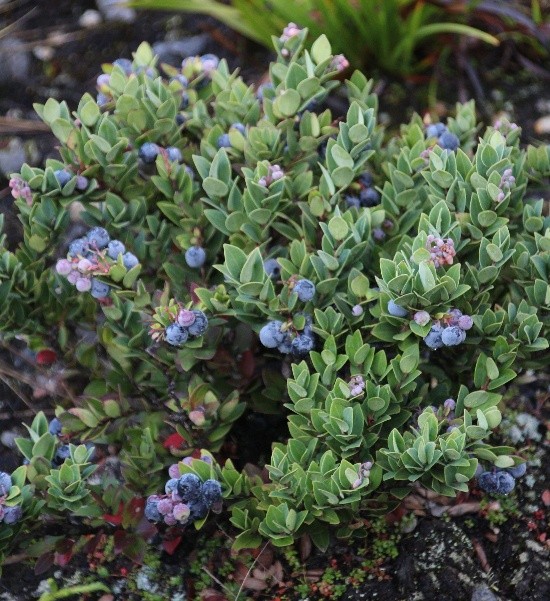
Sphagnum peat moss is available at local garden centers and has a pH of 3.5 to 5.5. This can be used as the main planting medium in several ways:
- The bale planting method involves digging a hole for the plastic-wrapped sphagnum peat moss bale. Punch large holes in the bottom of the plastic and place the bale in the hole. Cut an “X” in the plastic top and plant a bare-root blueberry in the peat moss. Re-close the “X” with tape, leaving a 3-inch hole in the middle for the trunk. Run drip irrigation by feeding the line through so it sits between the peat bale and the plastic.
- The soil replacement method removes existing soil from a planting area to a depth of 3 feet. Replace it with 1/3 good commercial topsoil, 1/3 sphagnum peat moss, and 1/3 shredded pine bark. Submit a sample of the mix to a soil testing lab for pH testing before planting.
- The raised bed method uses a bed at least 3 to 4 feet wide and as long as desired. Depth should also reach 3 feet to prevent blueberry roots from entering native alkaline soil. Use the same specialized soil mix as in the soil replacement method. Another option is a converted water trough found at farm stores and drainage holes drilled in the bottom. For these methods, blueberry varieties such as Blueray, Elliott, Patriot, Northblue, Northsky, and Burgundy are reliable choices.

Smaller-sized and dwarf varieties are good for the container planting method. Use half-barrel planters or a large 24″ plastic pot with additional drainage holes. Fill the container with the soil mix mentioned above. Containers can be sunk into the ground or used above ground, making sure to winterize appropriately. Recommended container varieties include Peach Sorbet, Blueberry Glaze, Jelly Bean, Midnight Cascade, and Sapphire Cascade.
Whatever the method, keep soil consistently moist during the growing season. Check the top inch of soil for dryness before watering. Mulch around the base to conserve moisture and keep the roots cool. Fertilize with a balanced fertilizer for acid-loving plants in early May and July. Check soil acidity annually and amend as needed. Wrap dormant plants in burlap or sheets to protect from winter winds. Water during dry winters as needed.
With one in three U.S. households growing food at home or in community gardens, even the most common fruits are often overlooked as a garden food source. Adding fruit to the home garden is well worth the effort. CSU has helpful resources that can help a beginning fruit grower understand trellising, pests and disease control, fertilization, pruning, and harvesting.