


From the Hort Desk – Managing a Home Landscape in a Drought
By John Murgel, CSU Extension Specialist, Horticulture and Natural Resources

We are pleased to have guest author, John Murgel, CSU Extension Specialist in Douglas County, contribute a timely article on managing landscapes in a drought. Thank you, John!
Generally speaking, Colorado’s Front Range is a dry place. Not technically a “high desert,” but definitely high and dry. In more or less normal years, watering makes it easy to pretend we live somewhere wetter. The irrigation runs at night while we sleep; the trees, green grass, and lush woodland flowers seem to proliferate effortlessly. A year like this year, when our make-believe rainstorms are curtailed, reminds us that our landscapes might not actually fit the regional climate very well.
Now it’s one thing if you are starting from scratch and can pick plants for the ideal xeriscape. Dozens of available plants can sail through drought—a person planting a new garden can be set up for success in low-water conditions. For most of us, though, particularly in older neighborhoods, landscapes are something we’ve inherited. We might not have time or money to start over, and we might not want to give up the established tree canopy or the heirloom perennials we have come to love. Maybe the lawn is needed for recreation. Whatever your reason for watering, you’ll want to make sure that you’re watering plants in a way that makes sense for permanent landscapes: deeply and infrequently. You’ve probably heard that before. What does it actually mean? When watering a landscape, the goal is to soak the entire soil volume that can be exploited by roots and then to wait as long as possible before doing it again.
This may seem like an odd time to share my great-aunt’s recipe for sugar cookies. It’s simple, though, and they’re delicious, so here goes: mix 2 cups of flour, 2 cups of sugar, 2 teaspoons of baking powder, a pinch of salt, and 3 minutes of milk.
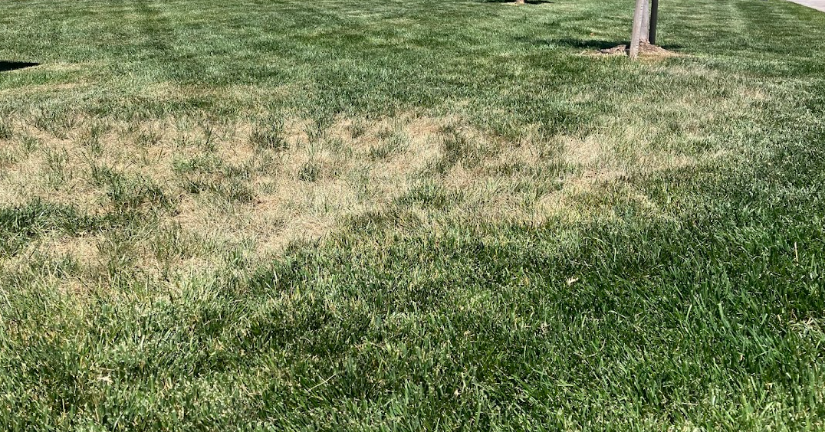
Confused? We’ve had a lot of panicked calls at the Extension office this year about “only” watering the lawn two days a week. Measuring water in days makes as much sense as measuring milk in minutes—neither is a unit for liquid volume. The first step to knowing if you’re watering your plants efficiently is to know how much water you’re actually giving them. I once maintained a garden of waterwise plants; we watered with high efficiency “stream rotors.” The irrigation was set to run for 15 minutes every three days. You might think that watering two or three times a week is ideal, but knowing the frequency per week by itself doesn’t tell you how much you’re watering. The irrigation heads’ precipitation rate is required information; and for high efficiency heads it can be quite low. In this case, it was a half-inch per hour, which meant that the garden was being supplied with an eighth of an inch of water every three days – just enough to promote fungal pathogens and evaporate, but not enough to actually penetrate the soil even a tiny bit. Our high-efficiency watering was actually 100% water waste.
Depending on your soil texture, soaking the root zone could take an inch or more of water. To figure out how long it takes to apply an inch, you can do some arithmetic from your water bill (an inch of water is around 2/3 of a gallon per square foot), or you could put a rain gauge on the lawn while the sprinklers run. If you’re really feeling fancy, you can look up the precipitation rate of your irrigation heads online (you’ll need the brand, model, and water pressure). Be sure to check your irrigation system for leaks, poorly adjusted heads, or other maintenance issues regularly. Since many systems run at night, make checks part of the regular routine, rather than waiting for problems to manifest as dead plants, high water bills, or both.
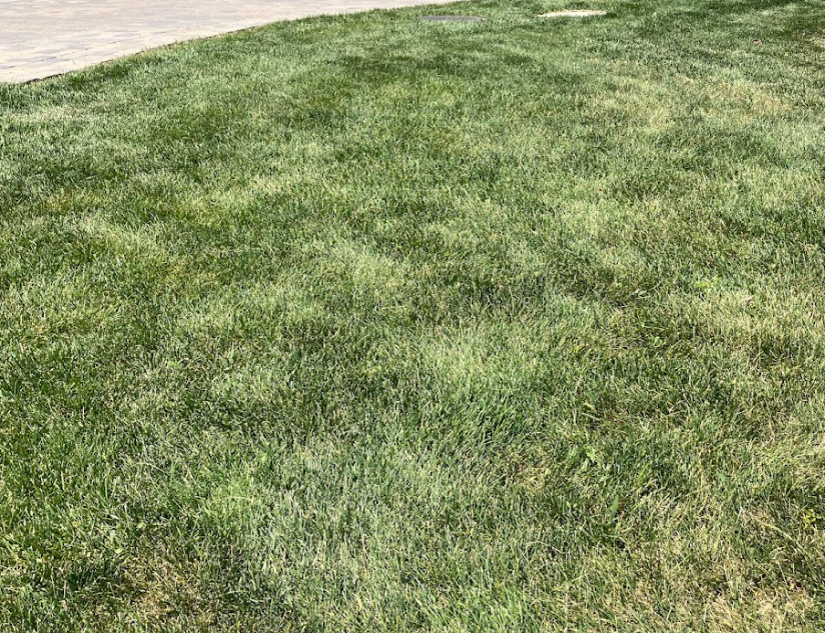
If soaked deeply, trees, shrubs, perennials, and even lawns can last several days before they need more water; maybe even a longer time than for what your irrigation clock can be set. Which is a great reason to forget the irrigation clock and run the sprinklers manually, when the plants are thirsty. A colleague is fond of reminding gardeners, “plants don’t waste water, people do.” Never has a lawn turned on its own sprinkler system! How do you know when plants need water? For lawns, look for a silvery cast and “footprinting” – when walking across the lawn leaves obvious prints that last longer than just a few minutes. For perennials, watch for curling leaves and wilting, then bronzing, poor growth, and at the extreme, scorched leaf edges. Trees and shrubs show similar symptoms, though it is harder to notice wilting since the woody portions can’t bend, only the green shoots and leaves. When you see what appear to be early symptoms of water stress, make sure the soil is dry, then apply the deep soak. The frequency of watering will depend on the plants, but for an established perennial bed, it could be once in three weeks. For lawns, it could be a week or more between waterings.
Soaking the soil deeply encourages roots to proliferate deeply, which means that plants are more resilient in the long run. It’s a win-win.
To maximize your water efficiency, follow these additional steps: First, make sure you’re using enough mulch in your garden beds and around trees and shrubs. Aim for a depth of four inches. Not only will that prevent evaporation, it will significantly suppress weeds. Second, if the irrigation system was laid out for a landscape that has been modified, update it! You want each zone on an irrigation system to be watering plants that have similar water needs, a principle called “hydrozoning” (i.e. the lawn should be on a different zone than a xeriscape bed). Consider redirecting downspouts into landscape areas to capitalize on natural precipitation events. Lastly, when you do need to update the landscape or replace plants, choose drought-tolerant species. With a little time and attention, you can keep your landscape thriving through this drought (and the next one) – no pretending required.