


Drought’s Impact on Fall Colors
By Amy Gibson, Colorado Master Gardener

This year’s drought will have a direct impact on the timing and scope of our leaf peeping season. The lack of water, coupled with warm nighttime temperatures, will most likely lead to earlier color change and a shorter show of color.
Why do leaves change color? It’s a combination of light, temperature and available water. As the days get shorter, photosynthesis, the production of sugars that depend on sunlight, begins to slow down in response to the change in the amount of light. This leads to a reduction in chlorophyll, the pigment that supports photosynthesis and gives leaves their green color. As chlorophyll is reduced, other pigments in the leaves begin to show.

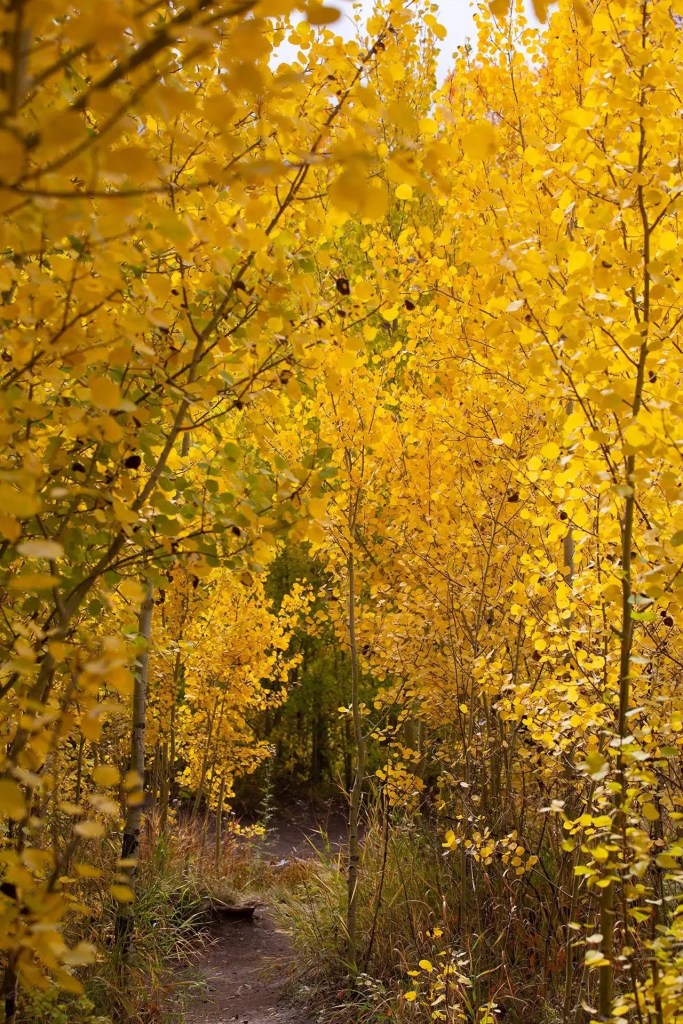
Yellow and orange leaf colors are produced by xanthophylls and carotenoid pigments that also aid in photosynthesis. They are present all year but only become visible when the green chlorophyll stops being produced. Aspen trees are a beautiful example of this change.
An abundance of sugar in the leaves of some trees leads to the production of vivid anthocyanin pigment, which produces red, purple and crimson colors. We see these pigments in dogwood and scrub oak.
Dryer summer and fall weather will inhibit the production of sugar in the leaves, due to the lack of moisture in the soil normally taken up by the leaves. The vivid reds are less likely to occur, and the yellows and oranges may be muted and will not have the staying power they have in most years. The lack of moisture in the leaves will also cause them to turn brown and drop sooner.
Another factor that impacts the color and timing of fall foliage is temperature. Cooler overnight temperatures encourage brighter colors and better color endurance. According to the National Oceanic and Atmospheric Administration (NOAA), July and August saw record overnight temperatures along with extended periods of warmer than usual overnight lows in the Denver/Boulder area. These warm overnight temperatures are likely to affect the quality of fall color along the front range.
Trees that are already stressed due to lack of water are likely to see an even earlier color change or possibly go straight to brown and drop their leaves early.
According to the Colorado State Forest Service, the average peak viewing dates start in mid-September for Northern Colorado, late September for Central Colorado, and late September to early October for Southern Colorado, with higher elevations turning earlier.
If you are planning on taking a leaf peeping tour, keep an eye on the weather and don’t wait too long once the leaves start their autumn show.