


Unusual Fall-Planted Bulbs for Your Spring Garden
By Valerie Seale, Colorado Master Gardener
After the cold winter months along the Front Range, gardeners eagerly look forward to signs of spring with bright pops of color emerging from their gardens. Bulbs are nature’s answer to vibrant spring color, if you plan ahead in the fall.
Popular spring-blooming bulbs that are planted in the fall include anemone, crocus, crown imperial (Fritillaria), hyacinth, iris, narcissus (daffodil and jonquil), ornamental onion (Allium), striped squill (Puschkinia scilloides), Siberian squill (Scilla siberica), and tulips. When selecting, planting and caring for bulbs:
- Purchase bulbs that are large, firm, dormant (no green shoots), and disease-free.
- Break up dry, compacted clay soil with a light amount of compost. Add a small amount of granular fertilizer with a high phosphorus and moderate to low nitrogen content; i.e., an N-P-K ratio of 4-10-6.
- Plant at a depth of 2 to 2.5 times the bulb’s height in heavy clay soils, and 3 to 4 times its height in sandy soils, pointed end up, flat bottom with roots down.
- Deep soak the soil after planting. Water during winter if nature provides scant snow or rain.
- Continue to water the bulbs while they bloom and actively grow. Cut spent flowers at the bottom of their stalks to let the bulbs recover their energy. Remove remaining foliage once it has completely dried.
- Note that certain bulbs can be toxic to animals if eaten. If you plan on placing bulbs in areas with pet access, research the bulbs on toxic plant websites such as https://www.aspca.org/pet-care/aspca-poison-control/toxic-and-non-toxic-plants.
Less-familiar bulbs can provide your spring garden with unique bursts of colors and shapes. They might even prompt your neighbors to ask, “What’s that eye-catching plant in your yard?”
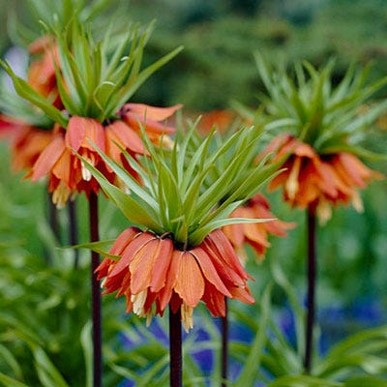
Red Crown Imperial (Fritillaria imperialis ‘Rubra’)
This regal beauty displays striking hanging clusters of orange-red flowers tucked under a crown of spiky green foliage. It’s a mid-spring bloomer, with lasting foliage that continues the intrigue into summer. Plant in a partially-shaded location, at a 45° angle to avoid rot.
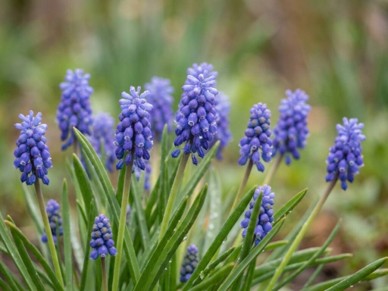
Grape Hyacinth (Muscari armeniacum)
A lesser-known hyacinth species, grape hyacinths are smaller and more delicate. Their deep blue flower clusters resemble upside-down grapes with a mild fragrance. This mid-spring bloomer can spread to form drifts of colorful colonies.
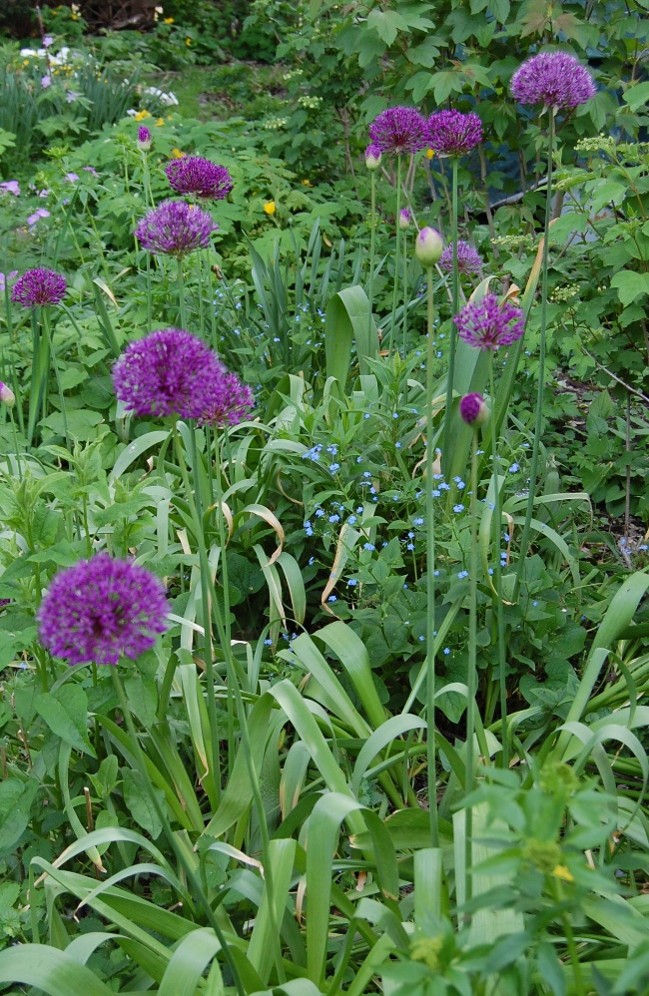
Ornamental Onion (Allium)
The ornamental onion’s large, ball-shaped clusters of purple or white flowers atop 3-to-4-foot stems bloom in late spring. Space the bulbs 6 to 8 inches apart to allow room for its 1-foot-long leaves. This type of onion is best planted at the back of beds or borders with other perennial flowers.
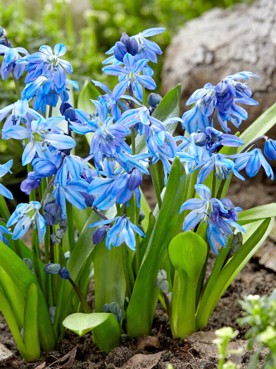
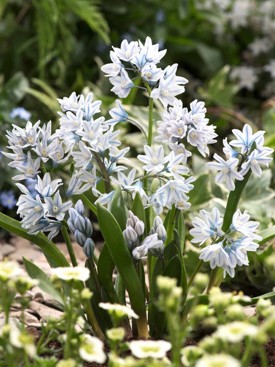
Siberian Squill (Scilla siberica) and Striped Squill (Puschkinia scilloides)
The nodding, blue, bell-shaped flowers of Siberian squill herald the beginning of spring. Naturalizing from seed, this wildflower creates stunning gentian blue floral drifts. It is very attractive when combined with striped squill under the canopy of an early spring-blooming serviceberry tree.
Striped squill is a bright little bulb with white flowers traced with lines of blue. It shares traits with Siberian squill, but features lightly scented blooms.
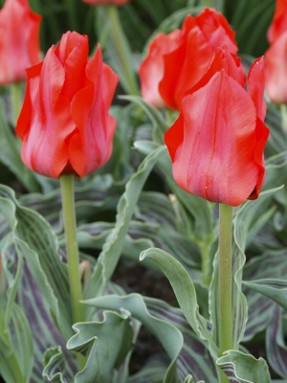
Red Riding Hood Tulip (Tulipa greigeii ‘Red Riding Hood’)
One of the earliest blooming tulips, ‘Red Riding Hood’ is a popular dwarf species tulip known for scarlet-red flowers and green leaves with purplish-brown stripes. Blooming early-to-mid spring, it also provides continuing interest with its unusual and attractive foliage.