


Putting the Garden to Bed

Hard to believe, it’s that time of year again. Our plants have given us their best over the season and with the first chilling night, they’re past their prime. With some prudent clean-up this fall, we can help prevent disease and insect problems in the Pea Patch next year:
- Remove all stems, vines, leaves and other litter from the garden after final harvest. This will reduce hiding places for insect pests, like squash bugs, thrips and flea beetles, and can keep diseases, such as powdery mildew and tomato spotted wilt, from building up.
- Don’t forget to dispose of any diseased or bug-infested perennial weeds like bindweed, mallow and nightshade, too. If left behind, they can be the source of reinfections next year.
- Fall is a great time to till or cultivate the garden and add composted organic matter. You could even add some chopped up leaves from your trees. Cultivating in fall can also expose clusters of grasshopper eggs helping reduce next year’s population.
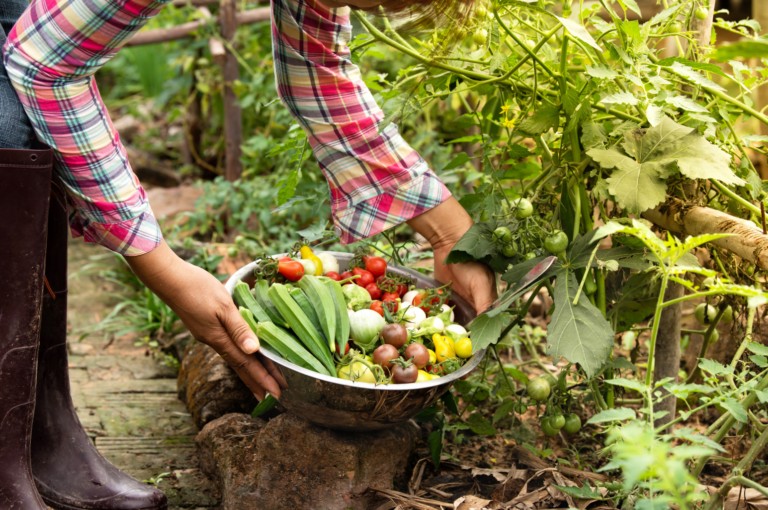
Our gardening community has donated nearly 1,580 lbs of fresh veggies to our food bank partners. Thank you!
Donation pick ups continue on Tuesdays and Thursdays by 10:00 AM and Sundays by 1:00 PM until the garden has nothing left to give.
Collecting Seed from Your Garden

For those who would like to try saving seed from your garden — or maybe you already do — there are a few things to consider so you aren’t surprised or disappointed by the veggies you get next year.
Vegetable seeds come in two forms: open-pollinated and hybrid varieties.
Open-pollinated varieties are either self- or cross-pollinated and usually grow back true to type when the seeds are replanted. “Heirloom” varieties are open-pollinated.
Hybrid varieties are controlled crosses of closely related but genetically different plants designed to enhance features like disease resistance, increased vigor and increased yield. Hybrid seed packets are almost always designated “F-1,” “F-1 Hybrid” or “Hybrid.” Crossing two hybrid plants, which pollinators and the wind can do, often produces either sterile seed or seed that won’t grow into plants that are true to type.
The upshot of all of this is you’ll get the most reliable results when collecting seed from open-pollinated vegetables like tomatoes, peppers, eggplant, tomatillos and legumes. Some that don’t yield good results are corn and curcubits like cucumbers, squash, melons and pumpkins because they so readily cross-pollinate.
Here are a few simple tips for harvesting seed from most vegetables:
- Harvest seeds when the vegetable is fully mature but not rotten.
- Separate the seeds from the flesh or pulp and let them air dry on wax paper or a wax-coated paper plate for several days. Keep out of direct sunlight in a place with low humidity (humidity in Colorado is generally low enough that that you won’t need to use a seed drier but it could speed up the process).
- Once the seed is clean and dry, store it in a paper envelope and seal in a plastic bag. Don’t forget to label it with the variety and date collected. Seeds can also be frozen in airtight containers so the moisture in the freezer doesn’t affect the moisture content of the seeds.
Interested in learning more? This article from CSU Extension explains more about how to save seeds and includes a handy table showing how vegetables are pollinated so you know which is which.
This is our last edition of the season. We hope you enjoyed the Pea Patch Dispatch. Are there topics or questions you’d like us to cover next year? Please send your thoughts and suggestions to cmgppatch@gmail.com. See you next spring!
Get the latest news and hot topics for gardeners
Subscribe to Arapahoe Extension’s Garden Buzz newsletter and get up-to-date information delivered to your inbox all year.