

Noxious Weed Facts
- Canada thistle is a creeping perennial that spreads by roots AND seeds, so it can bounce back fast.
- Infestations can reduce usable forage because cattle usually won’t graze near it.
- Pull early and often (monthly for years) and bag/dispose flower heads to prevent seed. Best results come from mechanical and chemical control together.
This creeping perennial reproduces from vegetative buds in its root system and from seed. It infests crops, pastures, rangeland, roadsides and non-crop areas.
Canada thistle reduces forage in pastures and rangeland because cattle typically will not graze near infestations.
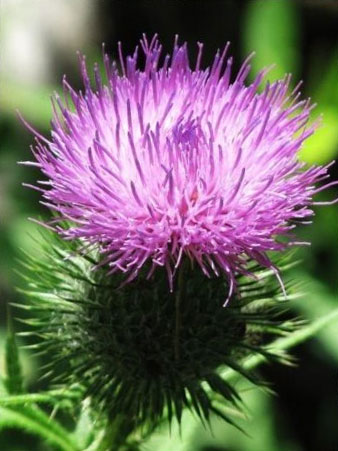
Identification: Grows 2-4′ tall. Leaves are oblong, spiny, bright green, and slightly hairy on undersurface. Flowers occur in small clusters of 1 to 5 flowers. They are about 1 cm in diameter, tubular-shaped, and vary from white to purple in color.
Treatment: Hand pull before thistle flowers/should be done monthly over several years; do not allow plant to go to seed (bag/dispose of any flower heads). Combining mechanical and chemical control methods is the best form of Canada thistle management.
Please note that some native thistles are not noxious plants.
Contact Gilpin County Extension for herbicide recommendations.