


Noxious Weed Facts
- Musk thistle is a biennial—it spends year one as a low rosette, then bolts and flowers in year two, and dies after setting seed.
- One plant can produce ~20,000 seeds, so letting even a few bloom can quickly turn into a bigger patch.
- Best control is “stop the bloom” – pull, dig, or spray before purple flowers show.
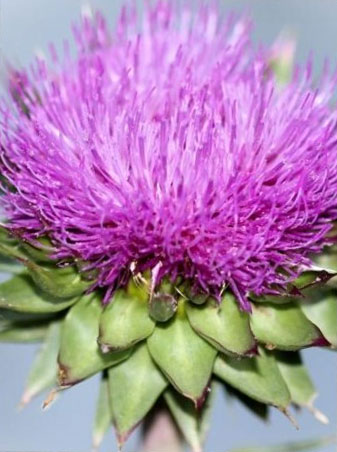
Musk thistle is a non-native biennial forb that reproduces solely by seed. Preventing seed production is key to successful control. Pull, dig, or spray before you see any purple flowers.
This plan occurs in pastures, rangeland, roadsides, and non-crop areas.
If you pull the plant when flowers are showing purple, bag flower heads to prevent spreading seeds. The rest of the plant doesn’t need to be bagged because it won’t re-root.
Rosettes usually large and compact with large, corky taproot that is hollow near the crown. Leaves have consistent shape, sometimes with a frosted appearance around the leaf margins, and often have a cream-colored midrib.
Contact Gilpin County Extension for herbicide recommendations.
Important Notes:
- Musk thistle is a prolific seed producer (20,000 per plant)
- It produces spreading heads
- Very prickly (wear gloves)
Please note that there are some native thistles, which are not noxious plants.