


Quick Facts
- Not all thistles are “bad.” Colorado has about 20 native thistle species and they are important for wildlife. Native thistles are not noxious weeds and shouldn’t be killed.
- Fast ways to spot natives vs. noxious: Noxious thistles are often very dense stands or very tall (up to ~6 ft). Native thistles are usually short and show up as single plants or small groups (2–4). Above timberline a thistle is likely native.
- A thistle with a white (or very pale) flower is often native. Examples in Gilpin include Prairie/Platte thistle (Cirsium canescens), Mountain thistle (C. scopulorum), Meadow/Elk thistle (C. scariosum), and Fish Lake/Fringed thistle (C. clavatum) (buff-colored flowers, common locally).
Native Thistles in Gilpin County
You’ve learned about how bad some thistles can be for our environment. You’re primed and ready to pull or spray. Good for you! But before you target all thistles, remember that there are 20 native thistle species in Colorado, and these play an important role for wildlife. Native thistles should not be killed, because they are not noxious weeds.
How do you tell a native thistle from a noxious thistle?
Generally, if the stand of thistles is very dense or very tall (6’), it is usually noxious.
If you are above timberline and see a thistle, it’s probably native.
Native thistles tend to be short, and are usually only found as individual plants or in very small groups of 2-4 plants.
A thistle with a white flower (the FLOWER, not the fluffy dandelion-like seeds), is probably native.
Photos of native thistles in Gilpin County
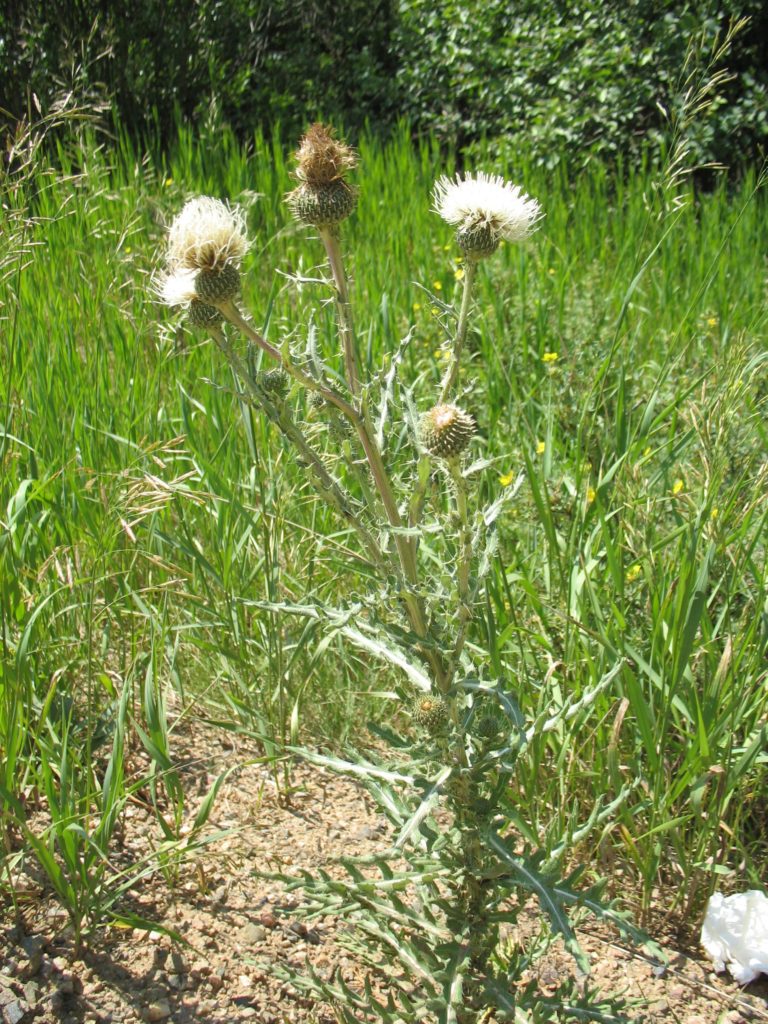
Prairie or Platte thistle Cirsium canescens – native. This thistle is light pink (or even white). Also note the white line on the bracts. Leaves are blue-green.
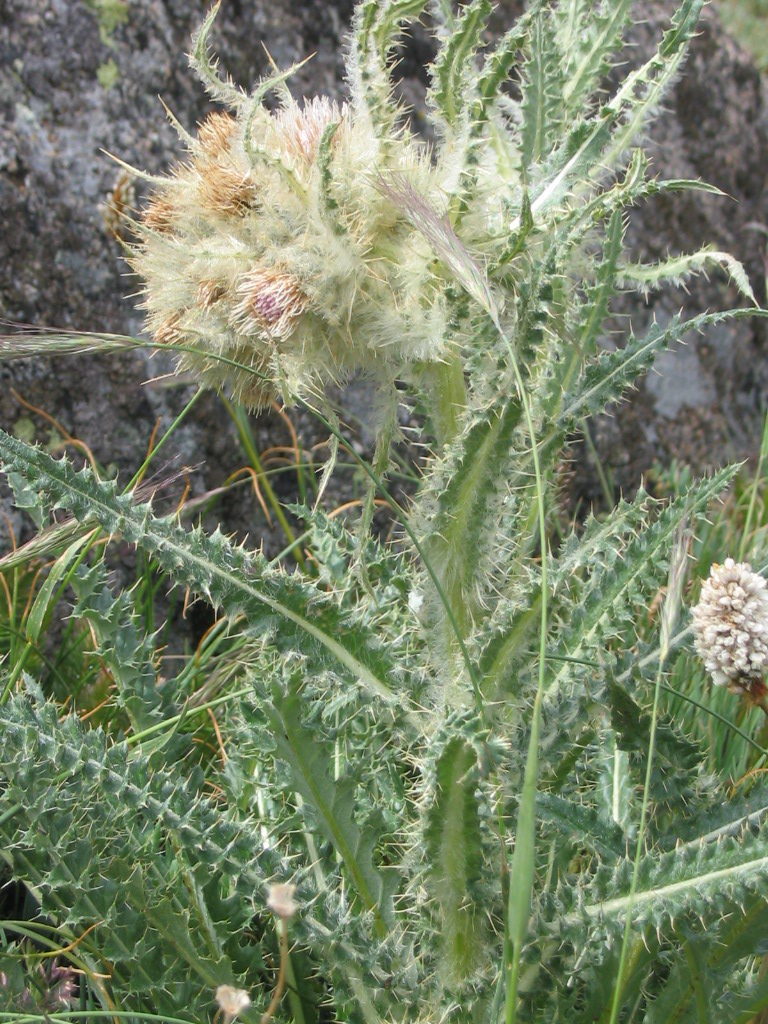
Mountain thistle Cirsium scopulorum – native. Found in subalpine and alpine.
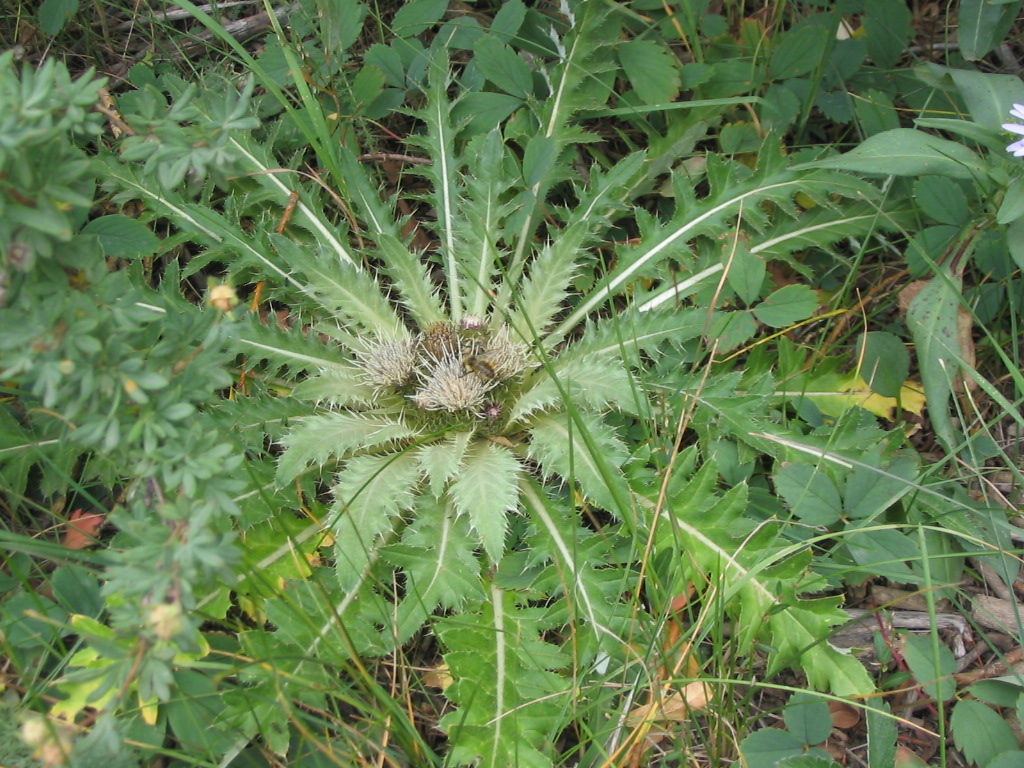
Meadow or Elk thistle Cirsium scariosum – native. This thistle can either be stemless (as pictured), or have a short stem.
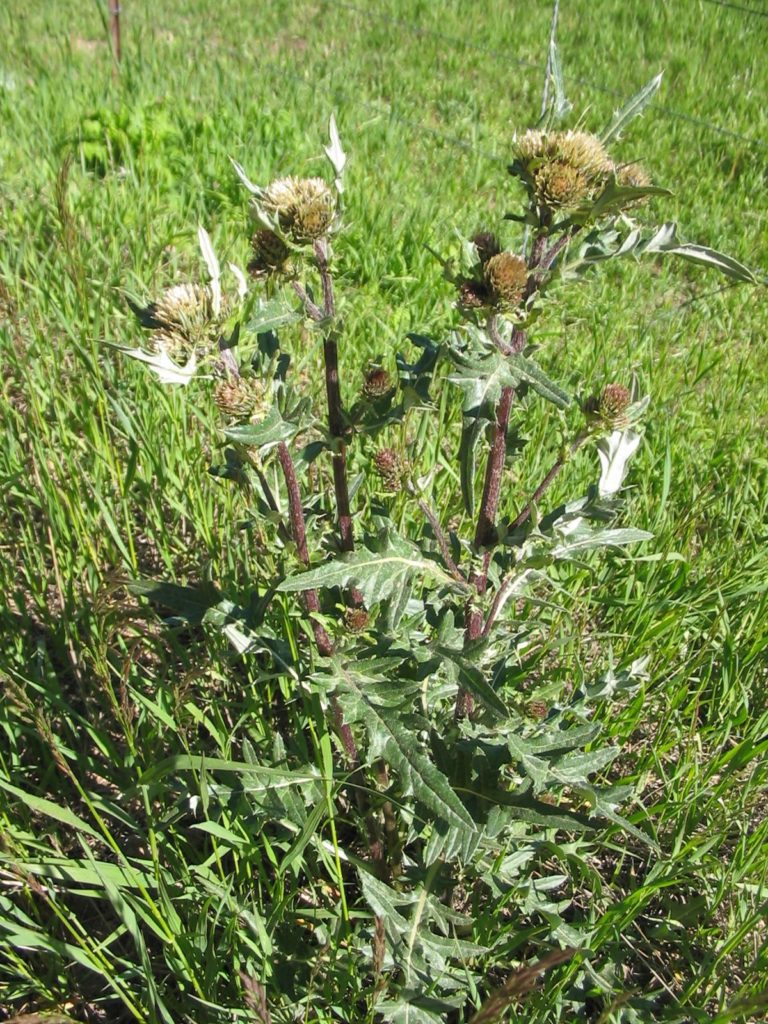
Fish Lake/Fringed thistle Cirsium clavatum – native. Note: reddish stem and whitish brown flowers. This is very commonly found in Gilpin County. Flowers are buff-colored.