


Noxious Weed Facts
- Oxeye daisy has a classic white daisy look. Usually solitary.
- Flowers are 1–3″ wide with 15–30 white ray flowers.
- Reproduces by seed and root fragments. Seeds can stay viable 38+ years. One flower head can make up to 200 seeds.
- Hand-pull/dig when soil is moist. Get as much root as possible. Bag/dispose of flower heads.
Oxeye daisy is a creeping, short-lived perennial that grows 10″-2′ tall.
The lower leaves are spoon-shaped, toothed, and with long leaf stem. Upper leaves are narrow, toothed, and clasp stem. Flowers are 1-3″ in diameter, with 15 to 30 white ray flowers, and mostly solitary.
One flower head can produce up to 200 seeds.
Repeat hand pulling or digging when soil is moist and infestations are small. Oxeye daisy is fairly shallow rooted. Pull up as much of the root as possible. If removed during or after flowering, bag and dispose of flower heads.
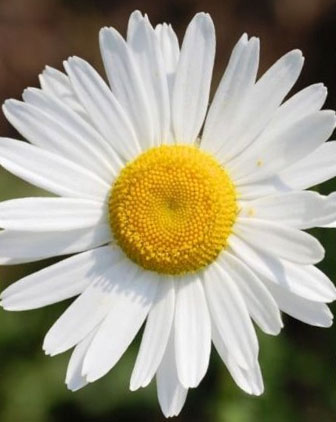
This plant spreads vegetatively from roots, root fragments, or by seed. Seeds may be viable for up to 38 years or more. Infestation sites need to be monitored for at least 10 years after last flowering plant has been eliminated and treatments repeated when necessary.
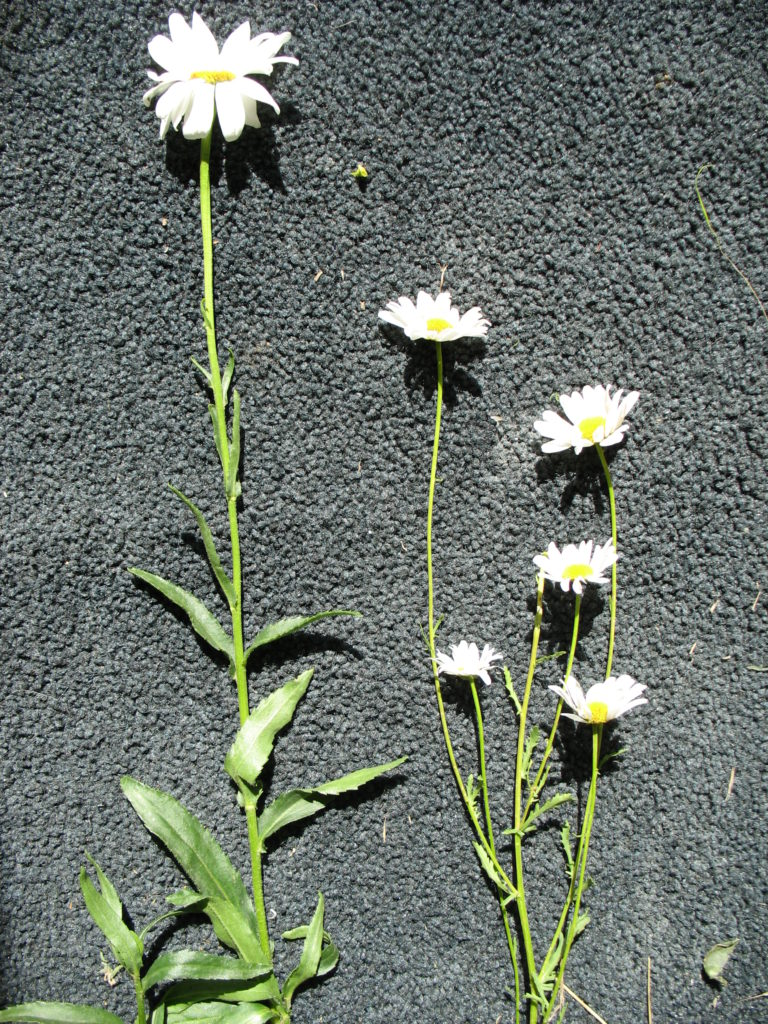
Contact Gilpin County Extension for herbicide recommendations.
Important notes:
- Highly invasive
- Prolific seed production
- Pushes out native plants
State law information
If you live in a “containment” area, it does NOT mean you can let the daisy grow freely on your property. Containment means that you need to suppress the weed (reduce its vigor and seed production) and keep it from spreading any further. If at all possible, it should slowly be eradicated, but work must be done every year nonetheless.
Native daisies and asters are good alternatives.