


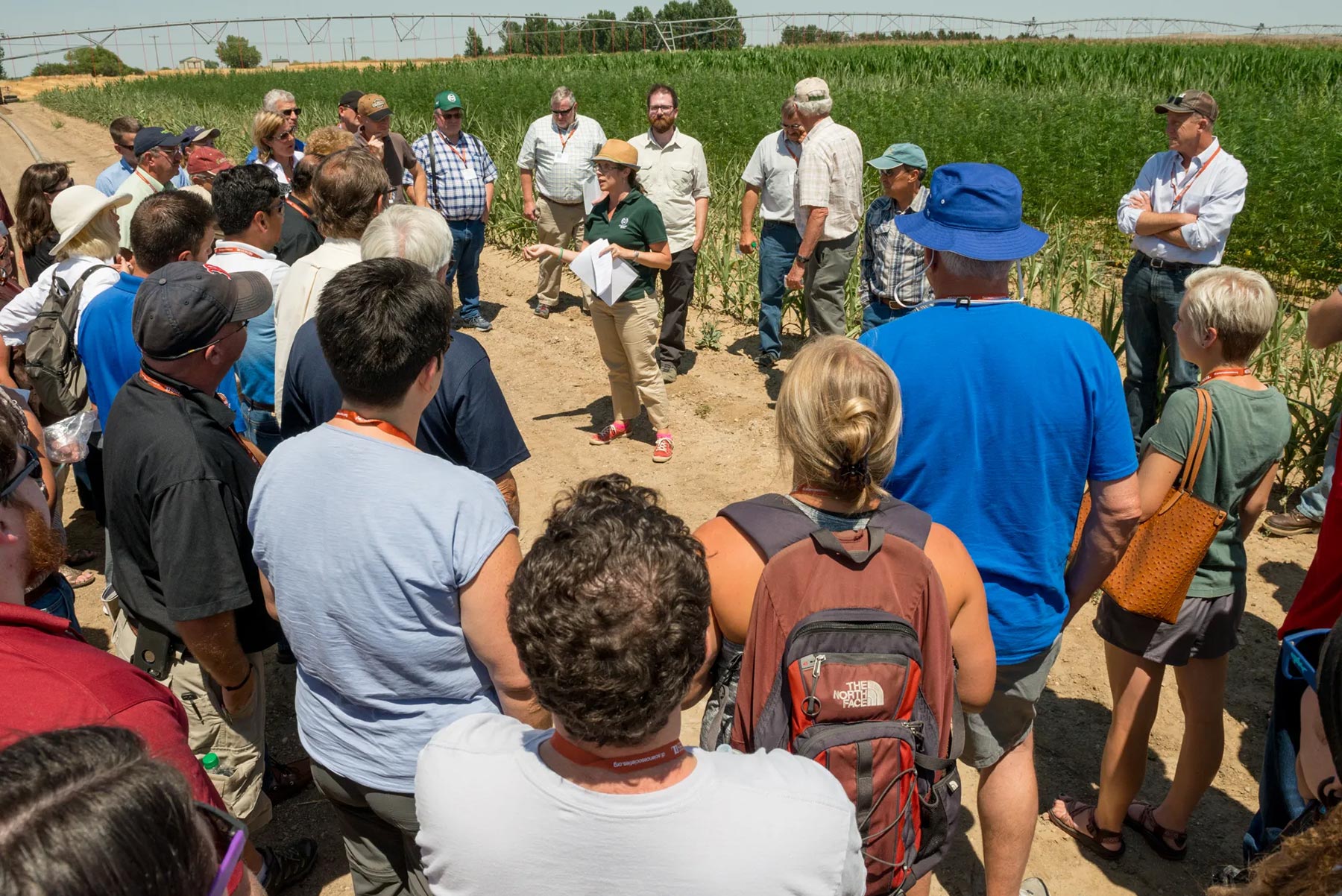
CSU Extension Faculty
How Extension serves
Educate. Create. Connect.
CSU Extension faculty appointments, evaluations, and promotion standards are centered around the three core duties of extension faculty – educate, create, and connect.
Educate
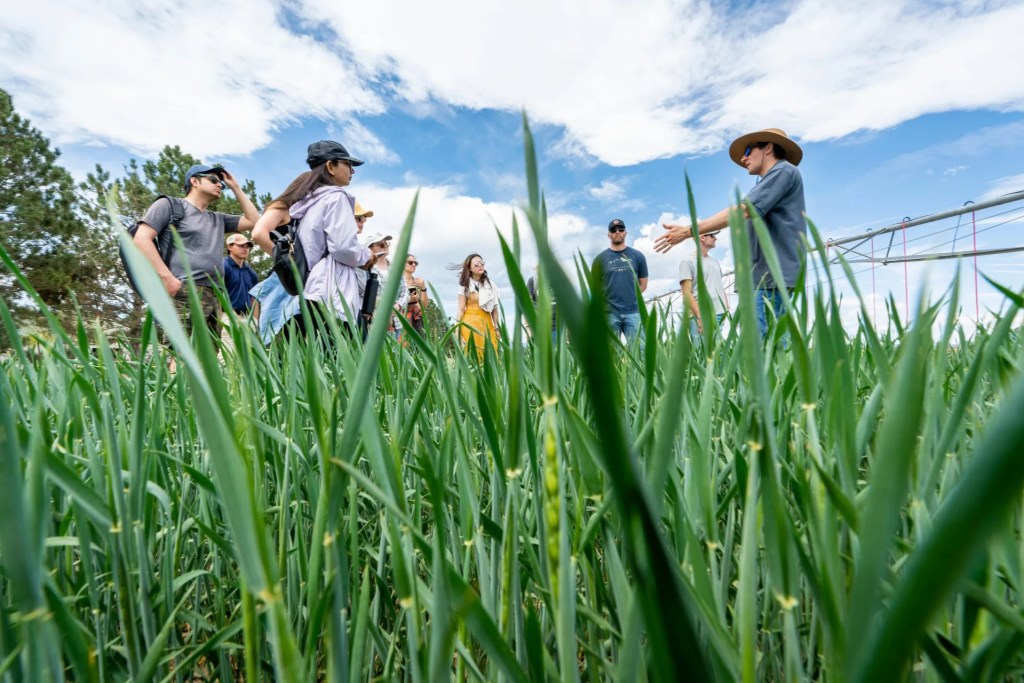
Educate includes the categories of non-credit engaged teaching, providing consultation, and technical assistance. The following expectations refer to all aspects of educational program delivery in both online and residential settings.
Community-engaged teaching is valued, and examples include service-learning, community-engaged research, and online and off-campus education. For engaged teaching, innovation can be demonstrated by evidence of peer review; awards; grants to improve content; and demonstration of adaptation or improvement. Specifically, candidates will design, develop, and implement onsite and online non-credit Extension teaching, educational programming, and other non-credit courses of instruction.
Other examples of professional practice relate to continuing, professional, and executive education. CSU Extension faculty with the primary role of educate will provide engaged teaching, technical assistance, evidence-based guidance, facilitation, consultation, and other services and educational methods and interventions to learners of all ages and that are accessible to historically underrepresented individuals and groups.
Create
Faculty are expected to engage in a systematic, sustained program of create activities with measurable efforts made toward applied, participatory research, and engaged scholarship that, each year, promote progress in core themes relevant to that faculty member’s program of applied and participatory research. Impact and ability to communicate impact are key factors in demonstrating performance.
There are several guidelines for create, but the most significant are applied, participatory research, grant funding, and a record of engaged scholarship. A major test of the quality of is peer review, and this includes the receipt of funding to support a program of create activities, as well as publication of that work (examples included in the Continuum of Engaged Scholarship).
Faculty will design, develop, and implement innovative and research-informed educational programs, products, services, materials, curricula, tools, applications, practices, demonstrations, and other resources. This includes engaged scholarship, applied research publications, presentations, products, and other scholarly products.
CSU Extension faculty will use evaluation and improvement measures, instruments, protocols, pilots, and analyses of educational programs, products, and services to generate meaningful impact with communities across Colorado, the United States, and around the world. The innovation and adaptation of educational content will be designed to meet the needs of diverse learners including traditionally underrepresented groups.
Connect
Connect includes the categories of community and partner co-created, inclusive engagement, department and program service, college and university service, professional service, and community service and engagement. Connect accomplishments will be expressed not only in terms of hours of involvement, but in terms of leadership, scope, and depth of influence as well. Examples of expectations include:
- Working with diverse learners, clients, and volunteers to improve educational program, product, and service delivery effectiveness and impact
- Collaborating with partners and stakeholders, including advisory councils, advisory boards, elected officials, associations, other educational institutions, trade/professional groups, and government agencies to assess and apprehend individual, group, organizational, professional, and community needs
- Working with donors, customers, contractors, foundations, and funding agencies to procure additional resources and to account for and fulfill delivery requirements
- Facilitating communication media for the public, communities, and inclusive and targeted market segments to convey information, interpretation, and promotion of the value and availability of university educational programs, products, and services
- Connecting with colleagues, collaborators, and professional organizations to advance the work of Extension, the University, the profession, and the discipline
Administration
Some Extension Faculty positions require a certain level of administrative responsibilities in addition to educate, create and connect.
It is the responsibility of this position to facilitate the success of Extension efforts in the location or area they serve. They provide leadership and have responsibility to manage the administrative operations unit. They must direct the affairs of the unit to be consistent with all University policies and regulations and enforce them in a fair, honest, and trustworthy manner.
As leaders at Colorado State University, this position has the responsibility to foster the success of CSU Extension and the overall university through relationships with many stakeholders including county partners. Actions and decisions should be consistent with building a high-quality Extension system and a world-class university.
It is the responsibility of this position, as university leader, to ensure that their unit is contributing positively to the greater good.
CSU Extension Faculty rank
| Instructor | Senior Instructor | Master Instructor | Assistant Professor | Associate Professor | Professor | |
| Minimum Educational Requirement | Bachelor’s Degree | Master’s Degree | Master’s Degree | PhD* | PhD* | PhD* |
| Minimum Years of Applicable Professional Experience | 0 | 5 | 10 | 0 | 5 | 10 |
*or terminal degree based in area of study
Additional criteria will be considered when determining a candidate’s Extension Faculty rank:
- Basic knowledge of educational technologies and their appropriate use in the development and delivery of educational programs
- Ability to supervise student or volunteer participation in applied research and Extension
- Ability to plan, organize, work, teach and interact with diverse populations, including stakeholders from different socio-demographic groups and with varied background knowledge of the discipline area associated with position
- Ability to plan and conduct applied research
- Ability to secure external funding in support of the land grant mission
- Ability to lead groups, plan, implement, facilitate, teach, and evaluate educational and outreach programs
- Knowledge and experience planning, conducting, and evaluating participatory Extension or non-formal education programs
- Education or training in discipline area associated with position
- Ability to collaborate with interdisciplinary research teams
- Designing, conducting, and evaluating education opportunities for learners
- Ability to supervise student or volunteer participation in applied research and Extension
- A record of engaged scholarship and evidence of maintaining such public scholarship
- Knowledge of educational technologies and their appropriate use in the development and delivery of educational programs
- Ability to plan, organize, work, teach and interact with diverse populations, including stakeholders from different socio-demographic groups and with varied background knowledge of the discipline area associated with position
- Ability to plan and conduct applied research
- Ability to secure external funding in support of the land grant mission
- Ability to lead groups, plan, implement, facilitate, teach, and evaluate educational and outreach programs
- Knowledge and experience planning, conducting, and evaluating participatory Extension or non-formal education programs
- Education or training in discipline area associated with position
- Ability to collaborate with interdisciplinary research teams
For additional information, please review the CSU Extension Faculty Code.