


Introduction
Goats are very popular animals for small acreages due to their small size, ability to browse, a relatively cheap diet and their fun, friendly nature. Goats can provide with meat, fiber, milk or other services like targeted grazing, which can be incorporated into a weed management plan, but goats are also often kept as pets.
As with any other domestic animal, breeds have been developed to fulfill the production needs of farmers. Dairy goat breeds are often the most popular. Some of them include the Nigerian Dwarf, Pygmy goats and Nubians. The Boer is a common meat goat, larger in size that can adapt well to rough terrains, while other more exotic goat breeds like the fainting goats are often kept as pets. Lately, the interest in targeted grazing has increased as well, so choosing goats that have a combination of good temperament, browsing skills and adaptability to different climates and terrains is crucial. Some of the most commonly used goat breeds for targeted grazing include the Alpine, Boer, Pygmy, Kiko and Spanish.
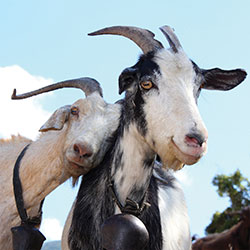
Shelter needs for goats
Goats don’t usually need very elaborate shelter set ups. A simple three-sided shed, facing away from winds usually provides enough protection from the elements. In general, you need to provide goats with a dry area , or add bedding to keep the area dry, access to feed and water, and enough ventilation in the summer months.
Fencing is a must to keep goats in their designated area and safe from predators, although you can expect goats to escape even the most elaborate fences at some point. Guardian animals are a good idea to keep goats safe from predators. Llamas, alpacas, donkeys and some dogs make great guardians as they have natural instincts to protect their herd from wild animals.
How many goats can you keep in your land?
A mature goat needs approximately 3.9 pounds of dry forage per day, or 1,423 pounds of forage per year. Dryland native pastures on loamy soils produce around 375 pounds of usable forage per acre per year (that means, without overgrazing the pasture). That means you would need approximately 4 acres of native dryland pasture to feed one goat without supplementing hay. Forage production varies depending on soil types, irrigation and grass types.
If you are expecting to purchase most of the feed for your goats rather than grazing, you can have more flexibility on how many goats you can keep on a given area, since pastures do not constitute most of the animal’s diet. Overgrazing can have severe consequences for your long-term goals, so if you are planning on grazing animals Click here to learn more about stocking rates and learn more about the capacity of your fields to supply forage.
The rule of thumb for all grazing animals is to “take half, leave half” of the grass height to avoid overgrazing, which leads to bigger issues with noxious weeds and soil erosion.
Raising sheep
Just like goats, sheep are multi-purpose animals that can be raised for meat, milk, fiber, targeted grazing or as companions. When choosing a breed of sheep to raise you may encounter with meat producing, wool producing ot hair sheep, often used for meat production.
Fencing is a crucial part of planning any animal grazed on pastures. A good perimeter fence to keep livestock contained and protected from predators, along with subdivision fencing to allow for pasture rotation (especially in small acreages) will help ensure your sheep are safe and your pastures are productive for a long time.
Housing requirements depend on the time of the year. Old barns, sheds, and hoop houses can provide good shelter for sheep year round. The most important thing is to keep housing on elevated, well-drained sites protected from the wind and easy access to water and feed. Sheep can also be kept outside on pasture year round, although you may need to provide some stockpile hay grazing during the winter months. Adult sheep can withstand cold temperatures well but lambs will require shelter during the first few months of their lives, especially during cold months. Sheep will likely need shade or shelter during the summer months. Make sure you can provide some shaded areas either through sheds or access to trees, hutches or other structures to keep them cool during the hottest hours of the day.
Be mindful of the common diseases, parasites and viruses that can affect your flock. Newly acquired animals or show sheep should be quarantined after an event. Parasites are a big threat for sheep. Proper deworming practices are crucial to keep a sustainable herd.
Targeted grazing
Targeted grazing has gained popularity as a method to control some noxious and invasive weeds using animals like goats, sheep and sometimes cattle. Grazing for weed management is a long process that requires great understanding of the weed’s lifecycle and animal behavior. Additionally, managers should also have good understanding of the desired vegetation. A good targeted grazing plan should suppress invasive weeds and provide competitive advantage to desirable vegetation, while also providing good forage for the grazing animals. Weed control by grazing is not a quick fix, it may take years to achieve full control
Sheep, cattle and goats can target different weed species depending on their eating behaviors. Identifying poisonous weeds is also crucial to create an effective grazing plan. If you are interested in learning more about targeted grazing the University of Idaho has a thorough guide for targeted grazing, whether you are wanting to start your own operation or just get an understanding of how this process works before you contact a targeted grazing company.