


Quick facts…
- The bed bug (Cimex lectularius) and its relatives (Family: Cimicidae) form a small group of bloodsucking insects.
- There is very little evidence demonstrating that bed bugs can vector diseases to humans.
- Bat and bed bugs have a short broad head, broadly attached to the prothorax, and an oval body.
- Bed bugs and their relatives are managed differently, so accurate identification to species is integral.
- Bed bug control is very difficult and requires all infested sites to be effectively treated at the same time.
- Insecticide resistance has increasingly become an obstacle to the management of bed bugs.
Introduction
The bed bug, bat bug and related species of the family Cimicidae, are blood-sucking insects that feed on birds and/or mammals. Five of the cimicid bugs are present in Colorado.
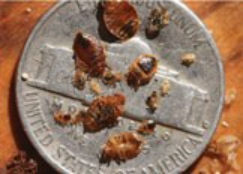
Figure 1: Various life stages and cast skins of bed bugs. Photo courtesy of Clemson University.
Bed bug (Cimex lectularius). The bed bug is a notorious species and is the only member of this insect family in Colorado that is adapted to living entirely with humans. For several decades following World War II, it was largely eradicated from the United States, existing in only small pockets. However, within the past decade it has had a tremendous resurgence. Bed bugs can be carried on furniture, luggage, and other materials. As such, problems with bed bugs tend to be most severe in apartments, motels and other sites that see high amounts of human traffic.
Bat bug (Cimex pilosellus). Prior to the recent increase in bed bugs, the bat bug was the most common representative of this group of insects found within homes in Colorado. Bat bugs develop in colonies of roosting bats, which sometimes occur in attics or behind walls of buildings. Bat bugs may move into human living areas and incidentally bite people, with such migrations particularly common when bats migrate or are eliminated from the building. However, in the absence of the bat hosts, these insects cannot reproduce and eventually die off.
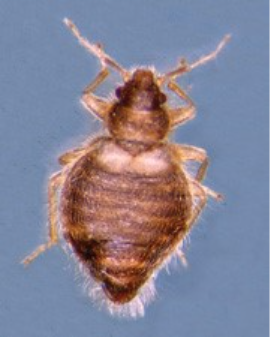
Figure 2: Hesperocimex coloradensis
Swallow bug (Oeciacus vicarius). The swallow bug is a parasite of cliff swallows and, less commonly, barn swallows. Problems with human bites occur in homes where swallows created nests during the previous summer. Swallow bug bites of humans tend to occur in late winter and spring, when the swallow bugs emerge from winter dormancy in anticipation of the return of their swallow hosts. The insects are largely dormant during the period between the time nests are abandoned in summer and just prior to the return of swallows the following spring.
Poultry bug (Haematosiphon inodorus). Poultry bugs are associated with chicken and other poultry. They hide during the day in cracks and crevices around the poultry roost and move out to feed at night. Human bites are rare and occur when people spend nights in close proximity to poultry roosting areas.
Hesperocimex coloradensis. Purple martins and, less commonly, woodpeckers and owls are hosts for H. coloradensis. This species is present in the southwestern areas of the state. Encounters with humans occur when bird hosts nest in buildings.
All of these species are generally similar in appearance. They are reddish-brown to grayish-brown with an oval body form and about 3/8-in long when full-grown. All are wingless, although small wing pads are present on the back. Their bodies are flattened when unfed, although they swell rapidly with a blood meal. The various species found in Colorado can be separated by patterns of hairs, wing pad structures, and other features that are summarized in Figure 1.

Figure 3: Bed bug during course of 12-minute feeding.
Bites
Bed bugs usually feed in the middle of the night while people sleep, and the bite is painless. They often feed for less than 10 minutes before the insect is satiated and returns to a hiding area to digest the meal. A line of bites may appear where several bed bugs have fed along the edge of a sheet or clothing lying next to the skin.
Although the bite is not immediately felt, people often react to the proteins of the bed bug saliva introduced during biting. Typically, a reddish swelling, (“wheal”) may develop, associated with some swelling and itching. There may be little response immediately following the bite with peak itchiness being noticed at about a week, then gradually declining. Repeated exposure to bed bug bites may produce more intensive reactions and itchiness. However, these reactions are highly variable and some people show little response while others react strongly. Regardless of the symptom that develops, there is nothing unique about bed bug bites that can be used for positive diagnosis. The detected presence of bed bugs is needed to determine if a reddish “bite” might be from bed bugs.
Fortunately, extensive testing has determined that bed bugs are incapable of transmitting human pathogens.
Bat bugs and swallow bugs also occasionally bite humans and there can be a similar range in reaction.
Life History and Habits of Bed Bugs
Female bed bugs cement their small, oval eggs in batches of about two to five eggs. Typical sites for egg laying might be along folds in the mattress, at joints of a bed frame, and behind molding. Ultimately a female may produce over 200 eggs during her months-long adult life span.
Eggs hatch in six to 10 days, depending on temperature, and the newly hatched nymphs will immediately seek out a host. While they prefer human hosts, bed bugs have been documented feeding on other warm-blooded animals (e.g. dogs, cats, rats). Feeding occurs in darkness, usually in the middle of the night, and bed bugs use carbon dioxide and heat to locate their host. A blood meal must be taken prior to each molt of the developing bed bug nymph. Blood meals are also required for production of each batch of eggs by the female.
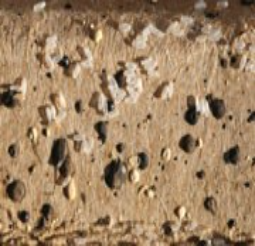
Figure 4: Bed bug egg shells and dried fecal spotting.
Under optimum conditions, bed bugs can become full-grown in about a month and a half, and adults typically live for about nine months. Cooler temperatures slow development and overall bed bug activity begins to decline with temperatures below ~60 F. However, bed bugs are quite resistant to starvation and adults have been known to survive a year without feeding. Nymphs can tolerate starvation for about three months. When food is available, bed bugs can continue to develop and reproduce year-round, producing three or four generations annually.
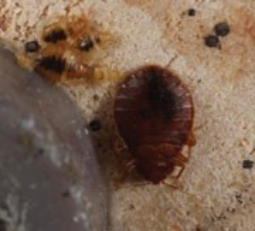
Figure 5: Bed bug adult and nymphs. Photo courtesy of Gary Alpert, Harvard University.
Bed bugs are concentrated in the near vicinity of the bed. Most will be found on the frame or mattress, as well as nightstands and inside other crevices that exist next to the bed. Among these harborage areas, bed bugs tend to be concentrated in clusters. When bed bug populations become high, they will disperse more widely throughout the room. Migrations to adjacent rooms can occur as bed bugs follow holes through walls, such as those produced for electrical wiring and plumbing.
Beds should be disassembled and closely inspected. Common areas where bed bugs will be found include seams of mattresses and joints of the bed frame. Bed bugs will also move into box springs and these must be turned over and opened for inspection. It is helpful to remove the fabric on the underside of the box spring to aid in inspection and treatment. Often the presence of some dark spotting, their excrement, is first noticed. The bed bugs and their eggs are usually present in cracks, joints, and fabric folds.
Areas adjacent to the sleeping area also need to be inspected. Bed bugs may be found in cracks or crevices of bed side tables or other furniture and may hide under lamps or other items that provide cover. Crevices of trim (e.g. base boards) around the walls can be hiding areas as can folds of drapery and areas where drapes rest on the floor. Bed bugs may also settle behind pictures and wall hangings near sleeping areas. They have even been found beneath tiling in bathrooms when the degraded grout creates entry points.
Cracks in walls will also be used by bed bugs and can be a means by which they move to other rooms, a particular problem in multi-unit apartments and motels. Electrical outlets often are incompletely sealed and provide points where bed bugs can hide and move behind walls.
Handling Bedding
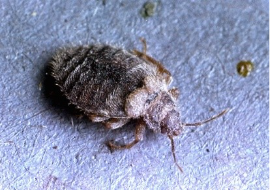
Figure 6: Swallow bug. Photo courtesy of Ken Gray collection.
Bed bug treatments in homes often involve intensive prep work by the homeowner. This includes heat treating and bagging up items in the infested area – items that cannot be treated with chemicals.
Sheets and other bedding can be easily disinfested by laundering that involves a dryer cycle. The high temperatures involved in drying are critical to successfully kill bed bugs, with exposure to temperatures exceeding 120 F for a few minutes usually sufficient to kill all life stages. Washing, cool drying and dry cleaning may not kill all stages.
When stripping beds during a bed bug treatment, pull the sheets carefully so as not to dislodge eggs or drop bed bugs onto the floor where they may be missed by other treatments. Accidental spread of bed bugs can also be prevented by bagging the bedding as it is moved to the laundry. Wash bedding and other materials immediately and do not store them in the laundry areas.
Plastic coverings that completely encase mattresses, pillows and other items can be used to exclude and prevent colonization of bed bugs on these items.
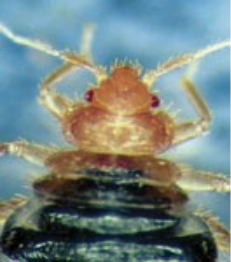
Figure 7: Bed bug, head end.
Disposal of Infested Items
Disposal may be considered for mattresses, box springs, couches or other furniture that is infested with bed bugs. If this is done, proper disposal should be ensured. Leaving such items on the street for disposal may cause them to be scavenged, which will spread infestations to new dwellings. Be careful when removing the items from the structure so that bed bugs will not become dislodged and infest other areas inside.
Insecticides
Eradication of bed bugs in a home involves the use of effective insecticides applied to all points where bed bugs are present. These treatments must make direct contact with the bed bugs during application. It is possible for bed bugs to walk across a treated surface without making direct contact with the insecticide, avoiding mortality. Many insecticides also do not effectively kill egg stages of bed bugs.
There is little residual activity of currently available insecticides. Repeated insecticide applications will always be required to kill bed bugs that later hatch from eggs, along with those that were missed during earlier treatment.
Currently, available insecticides used for bed bug control are primarily of the pyrethroid class of pesticides. These include bifenthrin, lambda-cyhalothrin, deltamethrin, and beta-cyfluthrin. There are several professional products as well as numerous over-the-counter household insecticides sold to homeowners that contain these as active ingredients. Some of these products contain synthetic synergists (i.e. piperonyl butoxide, aka PBO). Also known as adjuvants, these compounds do not possess any insecticidal activity on their own. Their function is to deactivate the mechanisms in the bed bug responsible for insecticide resistance, making the insecticides in the mixture more effective. (Additional products are available for professional use, such as chlorfenapyr (Phantom)) However, most of the insecticides normally sold through retail outlets are liquid formulations that have uses restricted to crack and crevice treatments. Few, if any, insecticides sold over the counter are formulated and labeled for use in critical sites such as to mattresses or around electrical wiring. All insecticides must be used in strict accordance to label use instructions.
Application equipment can be useful in successful use of these insecticides. Deep injection of insecticides into cracks and crevices is better achieved with sprayers equipped with a fine point nozzle. Dust formulations can be blown into wall voids or other hard to spray spaces. Improved dispersal is also possible with fine atomizer sprayers. These types of application equipment are normally unavailable to homeowners through retail outlets. However, some diatomaceous earth products, a dust that is used to kill insects by desiccation (loss of body fluids), are fairly widely available through nurseries for use against bed bugs and other “crawling insects”. Silica aerogels are also useful as desiccant dusts to control insects and are widely used by professionals but are not normally available over-the-counter.
Aerosol “bombs” (containing pyrethrins or permethrin) and sprays of non-persisting insecticides (such as pyrethrins or tetramethrin) will not be effective for bed bug control. At most these can be expected to kill a few of the insects that are directly contacted with enough of the insecticide. However, they will fail to adequately penetrate their harborages, resulting in failure of eradication.
Heat and Cold Treatment
High temperature treatments have received considerable attention as the primary non-chemical means of killing bed bugs. Specialized equipment has been developed that can force high temperature, dry steam into areas where bed bugs are present. They are particularly useful for treating bed frames, box springs, and mattresses where insecticide uses are limited.
Such equipment is only available through professional pest control operators and requires experience for effective use. Temperatures at the surface of treated areas must reach 140 to 150F to kill bed bugs hiding in adjacent crevices and it is important to constantly monitor surfaces with a thermometer while using steamers to ensure sufficient heat has been applied. Steam treatment is time consuming and may take 15 seconds or more to treat a 1-foot-long area. When heat treating an entire home, occupants are required to temporarily vacate and remove any heat sensitive or flammable objects.
Cold treatments have little application for control of bed bugs and their relatives. All these insects are well adapted to periods of very cold temperature and can survive normal freezing exposure. With bulkier items (e.g. comforters, pillows), it takes longer for their interior to achieve freezing temperatures. Furthermore, older freezers often fail to achieve sufficiently cold temperatures consistently (0 C for at least 4 days), if at all.
Vacuuming
The use of a sealed vacuum during bed bug treatments is useful. Models with strong suction and a directed nozzle can be used to help extract some bed bugs hiding in protected crevices. Vacuums can also be useful for picking up individuals when seen, and a general vacuuming of floors and other surfaces may pick up bed bugs that have migrated or been dislodged during bed bug treatments. The addition into the vacuum bag of a drying agent, such as diatomaceous earth, can be useful to kill collected insects. Immediately after use, vacuum bags should be removed, sealed in plastic, and discarded to reduce chances of accidentally spreading bed bugs.
Bed Isolation
Isolation of beds can be done to determine if bed bugs are present and, after control efforts have been completed, to ensure that the bug infestation has been eradicated. With bed isolation the box spring and mattress are encased, and the frame is treated to ensure no bed bugs are present. Then, the four posts that touch the ground are placed onto sticky traps. This method is difficult to employ for bed frames whose contact with the floor is not restricted to four posts (like many metal bed frames). The bed must be moved away from walls/furniture to ensure that the bed bugs’ route to the homeowner is restricted exclusively to the bed frame’s four posts. The homeowner then sleeps in the bed making sure to not let sheets or other bedding touch the ground. Bed bugs that are in the room will come to feed and get caught in the sticky traps. A period of two or more weeks where no bed bugs are captured on the sticky traps at the base of bed legs is a good indication that the insects have been eliminated from the room.
Control of Bat Bugs
Management of bat bugs requires focus on the roosting bats that are the original source of the insects. Removal or exclusion of the bats will prevent future infestations as the bat bugs will ultimately die out in the absence of their bat hosts. However, in the immediate period after bat removal, problems may temporarily increase as existing bat bugs migrate in search of new hosts.
Any methods to seal off the area of bat roosting and the human living space are useful to prevent these migrations. Cracks and crevices used by migrating bat bugs can also be treated with insecticides, such as those used for bed bugs. If the area of the bat bug roost can be reached, use of an aerosol “bomb” or “pest-strip” may help kill bat bugs in those areas. The latter contain a persisting insecticide (dichlorvos) that can kill insects over a period of time.
Control of Swallow Bugs
Management of swallow bugs requires prevention of nesting by swallows on occupied buildings; this will prevent future problems with the insects. However, like occurs with bat bugs, problems with biting swallow bugs may temporarily increase the following spring as the starved insects migrate in search of new hosts.
Swallows are protected species under Federal Law and it is illegal to disturb active nests. Nests can be destroyed prior to egg laying and areas where swallows previously nested can be screened off prior to the return of the migrating swallows. If nests are removed in summer after they are abandoned by the swallows, then an insecticide treatment to the nest site may be used to kill some of the dormant swallow bugs that remain in hiding. However, some insecticides (e.g., chlorpyrifos) are highly toxic to birds. Do not apply them to areas that are being actively visited by swallows.
Disclaimer: This publication may contain pesticide recommendations that are subject to change at any time. These recommendations are provided only as a guide. It is always the pesticide applicator’s responsibility, by law, to read and follow all current label directions for the specific pesticide being used. Due to ever-changing labels and product registrations, some of the recommendations given in this writing may no longer be legal by the time you read them. If any information in these recommendations disagrees with the label, the recommendation must be disregarded. No endorsement is intended for products mentioned, nor is criticism meant for products not mentioned. The author(s), Colorado State University, and Colorado State University Extension assume no liability resulting from the use of these recommendations. Beginning July 1, 2024, pesticide products containing neonicotinoid active ingredients and do not meet the listed product type exemptions, are considered “limited – use” pesticides and may only be sold by a licensed dealer.