


Quick facts…
- Penstemons are native to North America, with species naturally occurring from the Arctic to Honduras.
- Penstemons attract hummingbirds, butterflies, and bees.
- Many penstemons are good garden choices.
What are Penstemons?
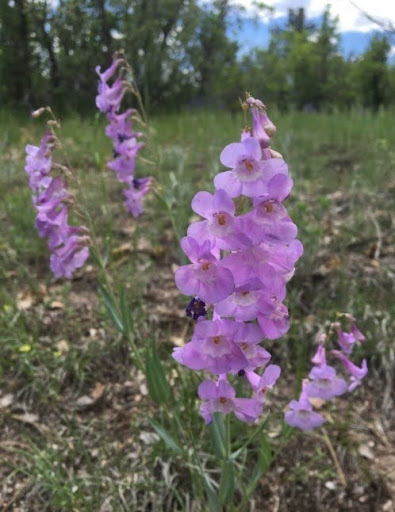
The genus Penstemon contains 281 recognized species, with garden hybrids adding to the group’s diversity. Also known as beardtongues because of their floral morphology, many are popular garden plants. Over 60 species are native to Colorado, from the alpine to the plateaux and plains. Most penstemons are herbaceous plants, but some develop woody bases and are classified as “sub-shrubs.”
Why Grow Penstemons?
The diversity of penstemons means that one can be found to grow in nearly any garden condition, from rock gardens to native plant gardens to traditional perennial borders and even containers. Penstemons typically flower in spring and early summer, though a few varieties and particularly hybrids can re-bloom again in late summer, and a handful bloom more or less continually. Penstemons are generally perennials, but the life span of different species varies widely and is affected by growing conditions.
Most penstemons are attractive to pollinators, particularly to solitary bees. Plant a variety of penstemon species and expect to see a variety of wild bee species, often taking advantage of blooms of similar size to their bodies.
If penstemons are used in a traditional perennial border, interplant other perennials with similar cultural requirements to extend the season’s color.
Many hybrids and a few species (e.g., Penstemon heterophyllus, and Penstemon x Mexicali) are good choices for borders and containers. Long flowering and compact size are important characteristics for container-grown penstemons. Half-hardy varieties like the ‘Twizzle’ series, ‘Delfts Blue Riding Hood,’ ‘Red Riding Hood’ and ‘Prairie Twilight’ are popular, free-flowering selections for containers.
Site Selection
Penstemons are generally a low maintenance plant. Knowing the natural habitat of the plant and how it grows in the wild will help gardeners succeed. Choose species suited to the soil type, temperature range, and precipitation of your landscape environment. Some penstemons require regular watering and others can thrive with natural rainfall alone; knowing both your site and the growing conditions best suited to your penstemon will help you be successful. Microclimates in your landscape can be places for a special penstemon.
Western-native penstemons not only tolerate bright sun, they prefer it; thriving in garden sites that many other plants would find challenging. Most penstemons require at least six hours of full sun to produce erect stems with flowers of clear, bright colors able to withstand wind and rain. Penstemons native to wetter places or to high elevations will often perform better with at least some afternoon shade.
Planting
Many penstemon varieties can be found at retail garden centers as potted perennials that can be transferred to the garden. Certain species will require the gardener to grow them from seed. Most penstemons require good soil aeration and drainage; they do not perform well in compacted soil. Water plants thoroughly after planting out but be careful not to overwater new plants subsequently. Rock gardens and xeriscapes provide ideal growing conditions for many penstemons; many western penstemons will thrive on natural precipitation alone.
Watering
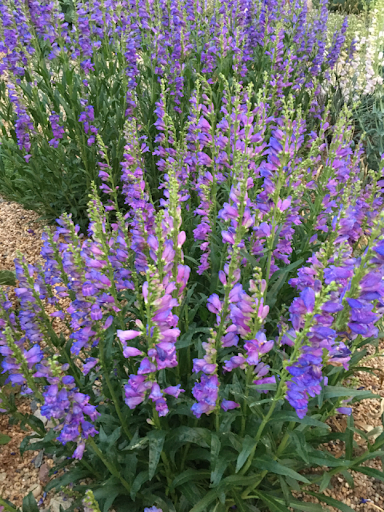
Overall, most penstemons are considered drought tolerant, though many hybrids and eastern/midwestern or alpine species will need supplemental irrigation if grown at lower elevations in Colorado. Even species that are considered completely drought tolerant, requiring only natural precipitation to thrive (e.g., Penstemon strictus, the Rocky Mountain Penstemon), require good spring moisture. Consider providing supplemental water to these species in spring if conditions are dry. Particularly for species of penstemons, providing the correct water can be a challenge at times—overwatering these plants after flowering can lead to crown rot. Hybrid penstemons and cultivar selections tend to be more forgiving.
Fertilization
In most garden soils, penstemons do not need fertilization. Over-fertilizing can lead to weed problems in gardens and polluted waterways from fertilizer runoff, so only fertilize if plant performance or a soil test indicates that it is required. Penstemons grown in containers or as cut flowers will benefit from light fertilizer applications to improve the length and vigor of flowering.
Maintenance
Most penstemons are low-maintenance and require only dead-heading after flowering to improve plant appearance. Removing spent flower stalks before they develop seeds can increase the lifespan of penstemons. Leave some seed capsules to mature if you want to encourage penstemon re-seeding in the garden or if you wish to collect seed.
Pests & Disease
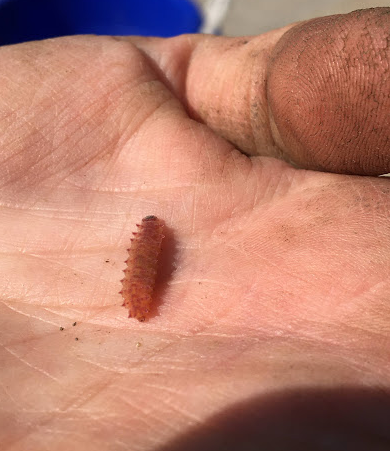
While penstemons are generally trouble-free, they can be affected by a few insects and diseases. Grasshoppers and the larvae of Kuschelina flea beetles, if left unchecked, can consume entire plants, though not all species of penstemon seem to be palatable. Hand-pick flea beetle larvae or treat them with insecticides according to label instructions. Because penstemons are attractive to pollinators, pesticide use will be limited by flowering.
Various seed bugs will also attack penstemon seed capsules. This is only problematic if you wish to collect seed. Place any collected seed and seed capsules in the freezer overnight to eliminate bugs in the stored product.
Penstemons can be impacted by leaf spot fungi (which normally do not require treatment). Rust fungi, which produce orange pustules along leaves and flowering stems, shorten the lives of plants and impact appearance. Rust fungi are difficult to treat, cut out infected stems or remove infected plants completely to prevent the disease from spreading to healthy plants.
In wet soils particularly, penstemons can succumb to root- and crown rot. Plants suddenly collapse and die; usually they are easily pulled from the ground. Avoid planting penstemons in the same area again.
Penstemons for Colorado Xeriscapes
| Common Name | Botanic Name | Flower Color | Notes |
|---|---|---|---|
| Eaton’s Firecracker | Penstemon eatonii | Red | |
| Brandegee’s Penstemon | Penstemon glaber var. brandegeei | Blue | |
| Bluemat Penstemon | Penstemon linarioides | Blue | Plant Select® variety available |
| Palmer’s Penstemon | Penstemon palmeri | Pink | Evening-fragrant |
| Desert Beardtongue | Penstemon pseudospectabilis | Pink | |
| Bridges’ Penstemon | Penstemon rostriflorus | Red | |
| Rocky Mountain Penstemon | Penstemon strictus | Blue | Requires ample spring moisture |
| Superb Penstemon | Penstemon superbus | Magenta | |
| Coral Baby Penstemon | Penstemon x ‘Coral Baby’ | Coral Pink |
Penstemons for Colorado Perennial Borders
| Common Name | Botanic Name | Flower Color | Notes |
|---|---|---|---|
| Pristine® ‘Princess Pink’ Beardtongue | Penstemon barbatus var. praecox | Pink | 2024 CSU Perennial trial winner |
| Cardinal Penstemon | Penstemon cardinalis | Red | |
| Showy Beardtongue | Penstemon cobaea | White, Lavender | |
| Foxglove Penstemon | Penstemon digitalis | White | many varieties available |
| Prairie Jewel® Penstemon | Penstemon grandiflorus ‘P010S’ | Pink, White | Plant Select® |
| Grand Mesa Penstemon | Penstemon mensarum | Blue | |
| Pineleaf Penstemon | Penstemon pinifolius | Red, Yellow, Orange | |
| Mexicali hybrid penstemon | Penstemon x mexicali | Pink, Purple, Red | many Plant Select® varieties available |
Resources
The American Penstemon Society is a non-profit organization dedicated to education about and promotion of penstemon conservation and garden use.
Flora of Colorado by Jennifer Ackerfield lists Colorado species and characteristics.
Penstemons by Robert Nold is a monograph of the genus written for gardeners.
Reference: CSU Fact Sheet 7.428