


Quick facts…
- Injury by white pine weevil is almost entirely limited to higher elevation areas of the state and foothill areas.
- The standard approach to managing white pine weevil is to spray insecticides in spring.
- A closely related species, Pissodes terminalis, causes similar injury to lodgepole pine in Colorado. This insect is sometimes called the lodgepole pine terminal weevil.
Introduction
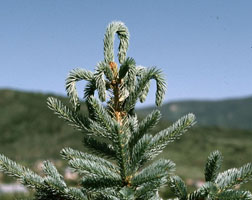
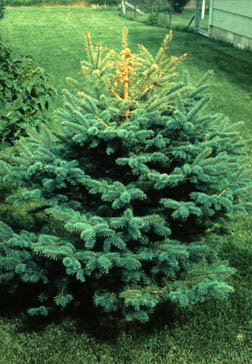
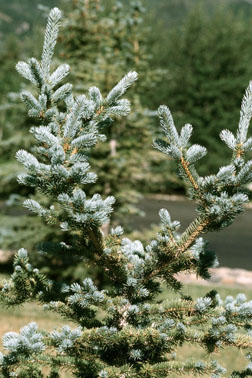
The white pine weevil (Pissodes strobi) produces a conspicuous injury to the terminal growth of spruce trees. In late spring, new growth wilts and dies back. The affected terminals wilt into a ‘shepherd’s crook’ form and the needles often become lighter colored before they ultimately die and drop. Because of this injury, affected trees have stunted growth and develop a bushy appearance with multiple leaders. Presently, injury by white pine weevil is almost entirely limited to higher elevation areas of the state and foothills, although significant problems do extend into Colorado Springs.
Life History and Habits
White pine weevil spends the winter in the adult stage, under dropped needles and other sheltering debris, usually very close to previously infested trees. In spring, the adults crawl to trees, although some may fly when temperatures exceed 70 degrees F. Mating occurs on the bark of the tree. There is a period of feeding on the bark of the terminal branches. Feeding wounds are often marked by a point of resin.
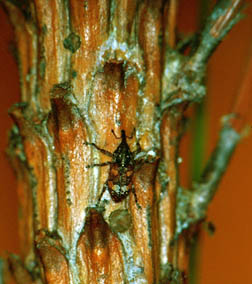
To lay eggs, female weevils chew small pits in the bark, beginning just below the unemerged bud of the new terminal. Typically, one or two eggs are laid in each pit, which is then capped. A single female may lay 100 or more eggs.
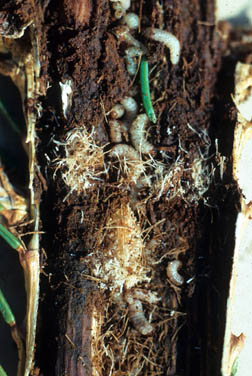
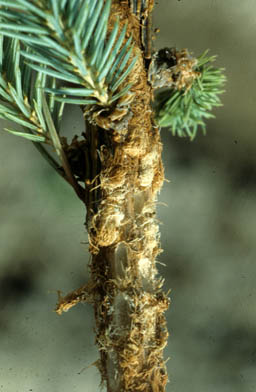
The legless larval grubs then begin to feed on the wood underneath the bark. Ultimately these wounds may girdle the plant, causing the emergent new growth to wilt and die. The larvae tunnel downwards, sometimes extending tunnels below the next whorl of branches, causing them also to die back. When full grown, the larvae cut into the wood to produce a chamber within which they pupate. The pupal chamber is very distinctive, constructed of stringy wood chips, known as a ‘chip cocoon.’
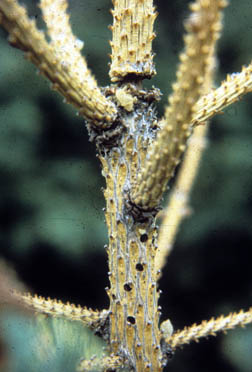
After transforming to the adult stage, the new weevil adults chew their way to the surface, producing exit holes slightly larger than a pencil lead. The adults remain on the tree for the remainder of the summer, feeding intermittently on the small twigs in the crown of the tree, but do not reproduce at this time. In fall, they move to the base of the tree for overwintering shelter. One generation is produced annually.
Management of White Pine Weevil
Spray Applications. The standard approach to managing white pine weevil is to spray insecticides in spring so that they cover the terminal. This treatment is directed at the overwintered adults to kill them before they lay eggs. Current insecticides useful for this treatment would include products that contain bifenthrin (Talstar, Onyx), permethrin (Astro), or beta-cyfluthrin/cyfluthrin (Tempo). Rates of use should be to the high-end of what is labeled, such as bark beetles or borers.
Timing is very important but difficult to determine. Sprays should be applied shortly before adults begin to feed on the terminal and lay eggs. The adults will likely begin to renew activity and move to trees during sunny days in April, when temperatures exceed 70 degrees F. In the Midwest, adult activity is often coincident with forsythia bloom; this may not be an available indicator in Colorado where forsythia is more rarely planted. A second application, two weeks after the first, is recommended to maintain coverage of the terminal.
Other spray treatments may also help manage this insect during outbreaks. Treatment of the top of the tree during midsummer, after adults have emerged from the wilted terminals, can kill weevils as they feed in this site, reducing overall numbers that may cause problems in the subsequent year. Also, as many weevils crawl to the trees in spring, treatment of the lower trunk at the same time spring terminal applications are made may also help kill some of the migrating overwintered insects.
Soil Treatments. Soil drench/injection treatments of the systemic insecticide imidacloprid (e.g., Merit) can prevent white pine weevil injury. Imidacloprid products packaged for those without a pesticide license may be available from licensed pesticide dealers, which includes many garden centers and co-ops. These applications should be made in fall to allow sufficient time for uptake of the insecticide to the terminal in spring. Use of soil- applied imidacloprid also requires that the soil be sufficiently watered for a couple of weeks, to allow initial uptake by roots.
Pruning. Pruning out terminals currently infested by larvae can be used to reduce white pine weevil populations.
However, the time for effective use of pruning is brief, limited to the late spring/early summer period between when terminals show evidence of infestation (wilting) and the insects emerge from the terminal, as evidenced by exit holes. The pruned area should be limited only to the part of the terminal that is infested, which often may not extend to the next set of branches. The pruned material should be removed from the site and disposed of since weevils may continue to develop in prunings.
The primary injury by white pine weevil is aesthetic, deforming the growth of the tree as co-dominant uninjured side branches later grow to form multiple new leaders. This can be prevented by forcing a single leader to be dominant, suppressing the others, which will allow the tree to ultimately restore nearly vigorous side branch and pinching the terminal buds of the other side shoots.
Reference: CSU Fact Sheet: 5.606