


Colorado 4-H Member Uses Artificial Intelligence to Make Learning More Accessible
For Anirudh Rao of Lone Tree, Colorado, artificial intelligence is about creating opportunities for more people to learn, solve problems, and make a meaningful difference in their communities.
A longtime member of Colorado 4-H, Rao recently earned national recognition as one of just four youth finalists in the Presidential AI Challenge, a competition that recognizes innovative projects that use artificial intelligence to address real-world challenges. Rao was recognized for his project, Neuroweave: A cognitive Interface for Accessible AI, from among more than 20,000 youth participants and 2,500 project submissions nationwide.
While the recognition itself is remarkable, Rao sees it as another step in a journey that began years earlier through Colorado 4-H.
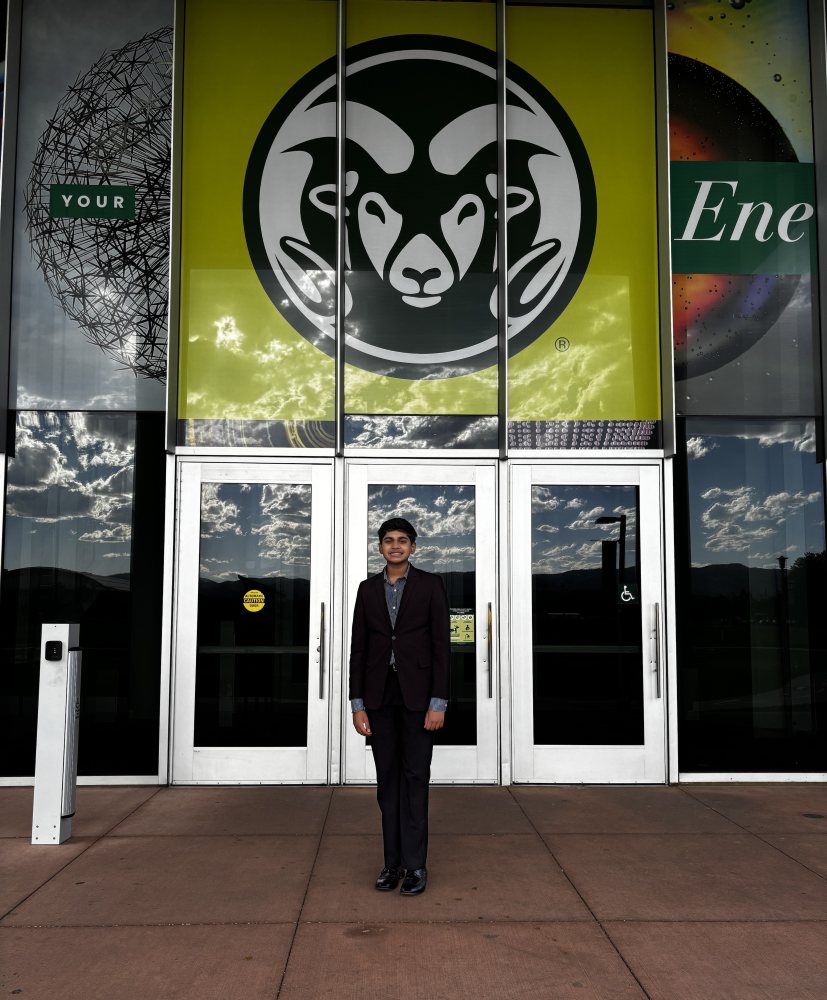
A Foundation Built Through 4-H
Rao’s introduction to 4-H came through his older sister, who was deeply involved in the program while their family lived in Tennessee. After moving to Colorado, she continued her leadership journey, inspiring Rao to join as a Cloverbud nearly a decade ago.
“It was such an inspiring experience, especially in terms of leadership,” Rao said. “For me, it was a completely revolutionary path to where I wanted to go.”
Over the years, Colorado 4-H became much more than a place to explore projects. It gave Rao the opportunity to connect with other youth who shared a passion for learning, leadership, and innovation.
“My favorite part is being able to meet so many like-minded people doing different projects,” he said. “We’re all united in one way: we’re all 4-H members.”
Looking Beyond Technology
Rao has long been interested in computer science, but the inspiration for one of his most impactful projects came from an unexpected place: teaching martial arts.
While coaching a friend, he realized that traditional instruction wasn’t working. Instead of repeating the same techniques, he broke each movement into smaller, clearer steps that better matched the way his friend learned. That experience changed the way he thought about education.
“That’s when I realized people don’t really learn the same way,” he said. “So why should AI teach the same way?”
That simple question became the foundation for a project focused on making artificial intelligence more accessible for students with learning disabilities.
Making AI Work for Everyone
Rao’s project introduces an accessibility layer that sits between a user and popular AI platforms such as ChatGPT, Claude, and Gemini. Rather than expecting every learner to interact with AI in the same way, the system adapts responses to better support individuals with ADHD, autism, and other learning disabilities.
As artificial intelligence becomes increasingly integrated into classrooms and everyday life, Rao believes accessibility must remain a priority.
“There are around 10 million people in the United States with learning disabilities,” he said. “AI is becoming an integral part of education, and these students risk being left behind by tools that weren’t designed for them.”
The project is already moving beyond theory. It is currently being piloted at his school, STEM School Highlands Ranch, where he will be a Freshman this fall. Rao is working with local elected leaders to explore opportunities for broader implementation across the school district.
Sharing AI With Communities Around the World
Beyond developing technology, Rao is also passionate about helping others understand it.
Rao introduces young people to the fundamentals of artificial intelligence, including pattern recognition, data analysis, problem-solving, and responsible AI use through hands-on activities and workshops. His broader Presidential AI Challenge project also explores how artificial intelligence can strengthen science and sustainability education while helping communities better prepare for disaster response efforts.
Rao’s commitment to STEM innovation extends beyond AI: He is also a National STEM Champion for his project, Mirai: An Alternative for Electrochemical Batteries, which further highlights how Rao is using science and technology to solve complex challenges facing communities today and in the future.
From Colorado to Washington, D.C.
During Rao’s trip to Washington, D.C. as a Presidential AI Challenge finalist, he shared his accessibility project with national leaders, met the First Lady at the White House, and spoke with members of Congress about the future of accessible artificial intelligence and educational technology.
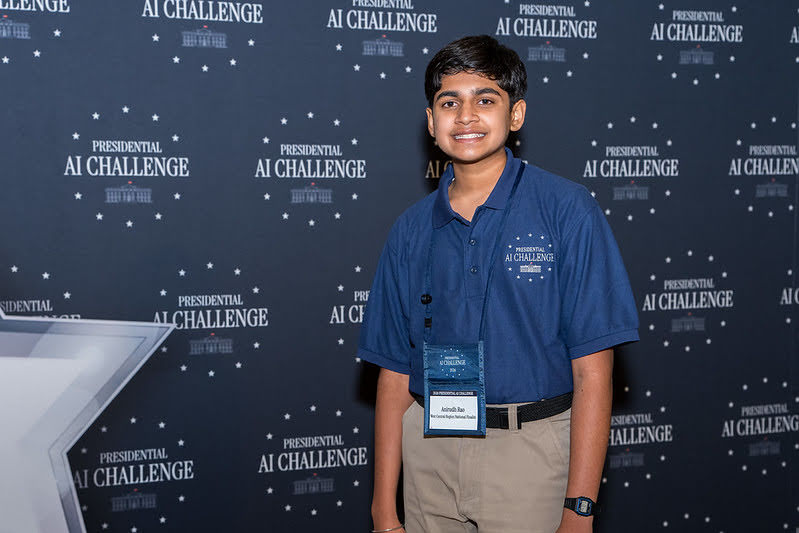
For a project that began with a simple observation while helping a friend learn martial arts, presenting those ideas on a national stage was both exciting and validating, Rao said.
Back home in Colorado, Rao shared his work with fellow 4-H members during the Colorado 4-H State Conference in Fort Collins, encouraging his peers to consider how STEM, leadership, and service can work together to create meaningful change.
Looking Toward the Future
As Rao looks ahead, he remains focused on creating more inclusive opportunities through technology. “I believe in the future that people with learning disabilities aren’t differentiated from people who aren’t and get similar opportunities,” he said. “Hopefully this project can help with that.” While Rao is still exploring his long-term career path, he is drawn to fields that can create meaningful impact on communities around the world, particularly where artificial intelligence and healthcare intersect.
His journey from a young 4-H Cloverbud to a nationally recognized AI innovator reflects the very mission of Colorado 4-H: helping young people discover their passions, develop leadership skills, and create lasting impact in their communities and beyond.
Colorado 4-H Youth Development celebrates the stories of impact 4-H has on lives across our communities and state. Thank you to our youth leaders, volunteers, and all the families and supporters who champion them. To learn more and find your place in Colorado 4-H, visit https://co4h.colostate.edu/.