


Quick facts…
- Beneficial arthropods can prevent or limit pest problems in the yard and garden, avoiding the use of pesticides.
- These “friends” can be categorized broadly as either insect predators or parasites.
- Predators include lady beetles, lacewings, spiders, and many more.
- Common insect parasites are the tachinid flies, braconid, and ichneumonid wasps.
- When insecticides are needed, choose ones that are selective and less likely to harm insect predators, parasites, pollinators, and decomposers.
Introduction
Most insects and other arthropods found in the yard and garden do not feed on or harm plants. Many of these are just passing through or have innocuous habits. Others feed on and destroy pest species. In many cases, the activities of these beneficial species can completely prevent or greatly limit pest problems. It is important to recognize these beneficial arthropods so they may be appreciated and conserved.
Beneficial arthropods are categorized broadly as either predators or parasites. Adult or immature stages of insect predators, or both, actively search out and eat prey insects. Predators include lady beetles, lacewings, spiders, and more. Insect parasites develop in or on a single host from eggs or larvae deposited by the adult parasite. Common insect parasites are tachinid flies and the braconid and ichneumonid wasps.
Insect Predators
Lady Beetles
Often called ladybugs, lady beetles (Figure 1) are the most familiar insect predator. Most adult lady beetles are round to oval, brightly colored and often spotted. The immature or larvae stages, however, look very different and often are overlooked or misidentified. Lady beetle larvae are elongated, usually dark colored, and flecked with orange or yellow (Figure 2).
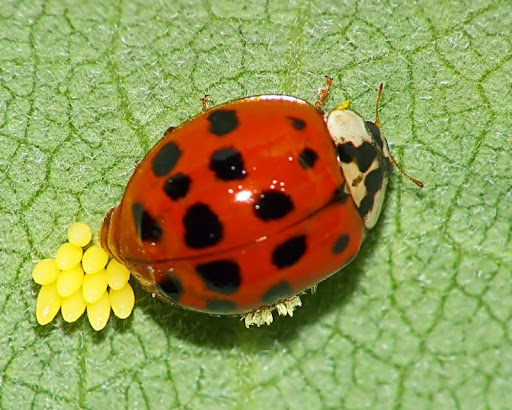
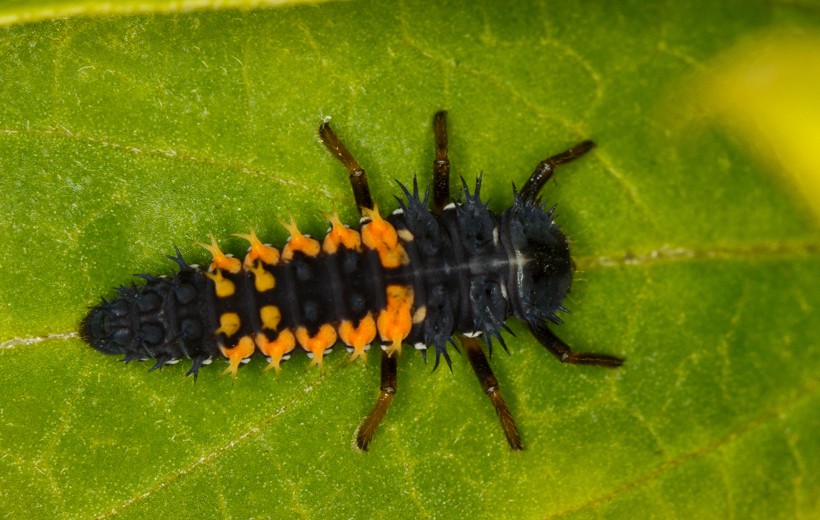
Adult and larvae feed on large numbers of small, soft-bodied insects such as aphids. One group of small, black lady beetles (Stethorus) is important in controlling spider mites and others specialize in scale insects or mealybugs. Lady beetles can rapidly control many developing insect problems, particularly if temperatures are warm enough.
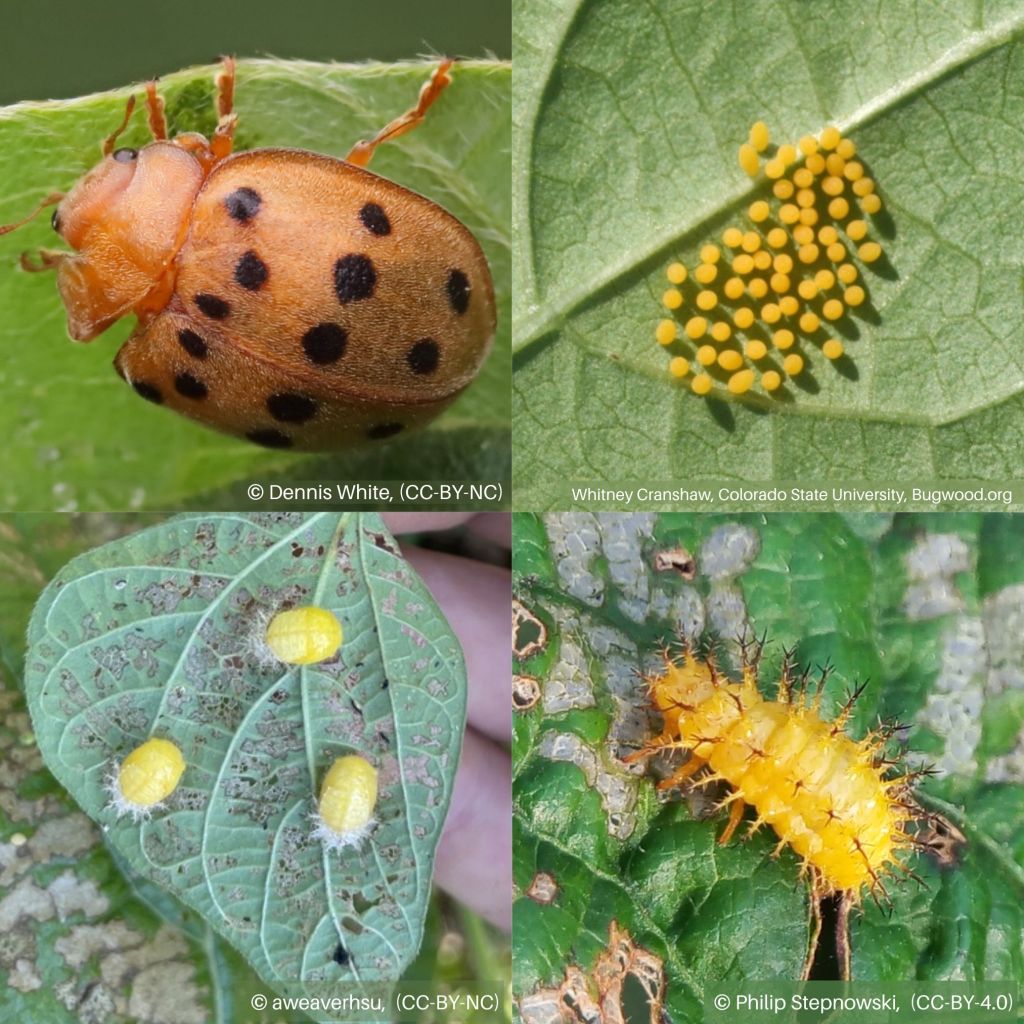
One species of lady beetle, however, the Mexican bean beetle, is a plant pest. This common Colorado insect is found feeding on bean leaves. It is distinguished from other lady beetles by spotting and color in the adult stage. Larvae of the Mexican bean beetle are yellow and spiny.
Green Lacewings
Several green lacewing species (Figure 4) are commonly found in gardens. The adult stage is familiar to most gardeners: a pale green insect with large, clear, highly-veined wings that are held over the body like a tent when at rest. Adult green lacewings primarily feed on nectar and other fluids, but some species also consume a few small insects.
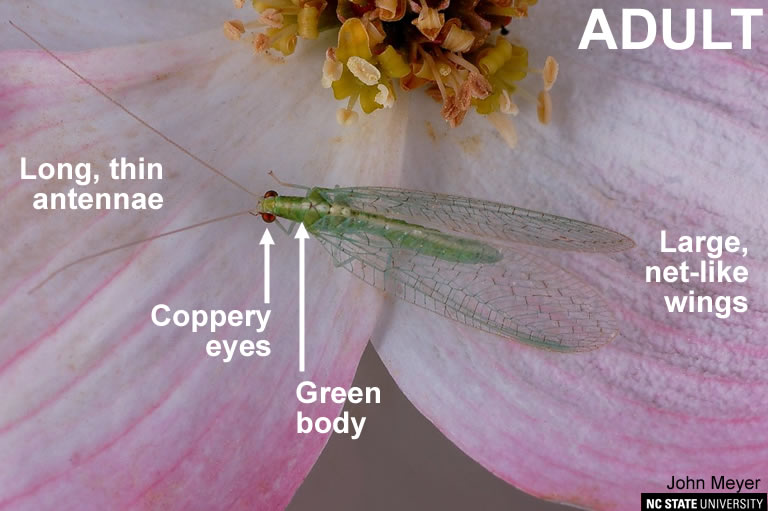
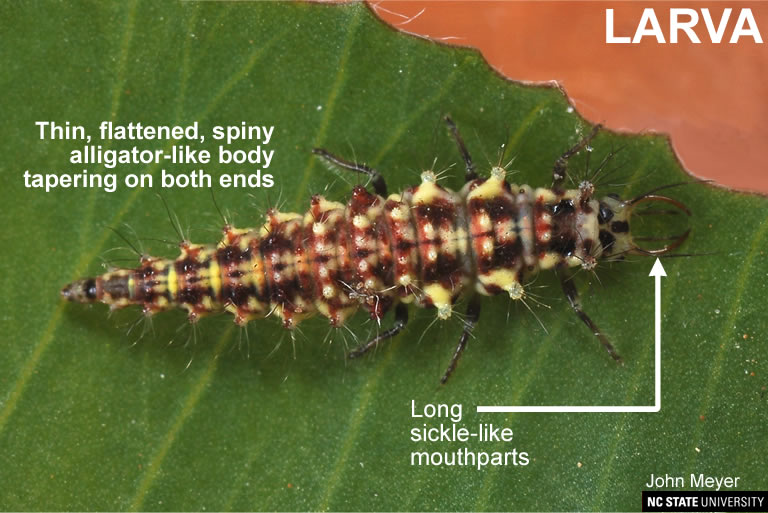
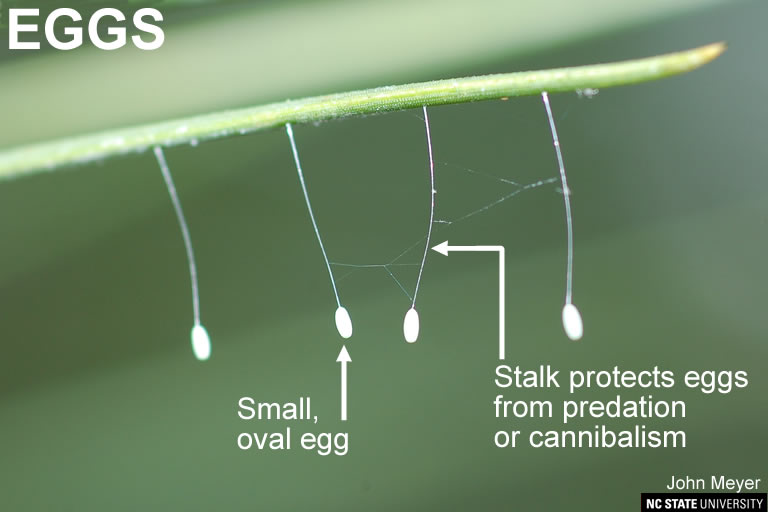
Green lacewings lay a distinctive stalked egg meant to prevent predation or parasitism from other arthropods. Lacewing larvae emerge in four to 10 days. These larvae, sometimes called aphid lions, are voracious predators capable of feeding on small caterpillars and beetles, as well as aphids and other insects. In general shape and size, lacewing larvae superficially resemble lady beetle larvae. However, immature lacewings usually are light brown and have a large pair of hooked jaws sticking out from the front of the head (Figure 5).
Syrphid Flies
These flies are called by several names, such as flower flies or hover flies. Most are brightly colored, yellow or orange and black, and may resemble bees or yellowjacket wasps. However, syrphid flies are harmless to people. Usually they can be seen feeding on flowers.
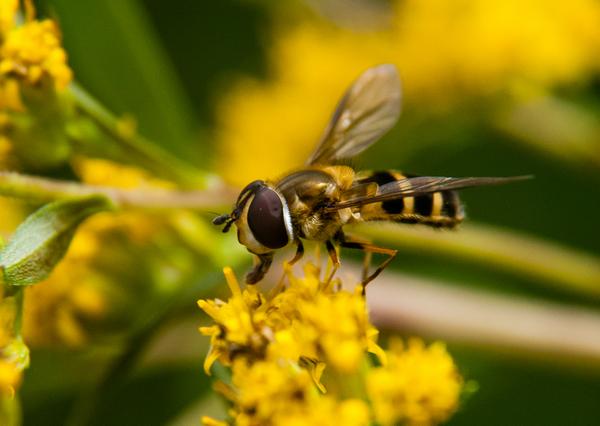
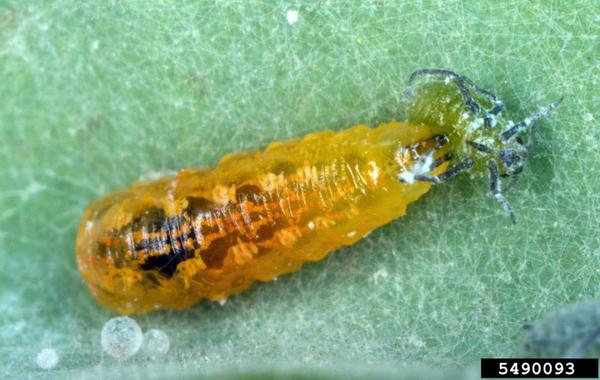
It is the larval stage of the syrphid fly that preys on insects. Variously colored, the tapered maggots crawl over foliage and can eat dozens of small, soft-bodied insects each day. Syrphid flies are particularly important in controlling aphid infestations early in the season, when cooler temperatures may inhibit other predators. Similar in appearance to syrphid fly larvae is a small, bright orange predatory midge (Aphidoletes). These insects often can be seen feeding within aphid colonies late in the season.
Predatory Bugs
True bugs (Order: Hemiptera) are predators of insects and mites. All feed by piercing the prey with their narrow mouthparts and sucking out body fluids. More common, but less frequently observed, are the various light brown damsel bugs, also called nabid bugs. Damsel bugs are found on the foliage of all crops, where they seek out aphids, insect eggs and small insect larvae.
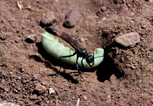
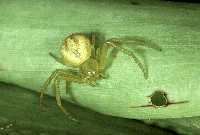
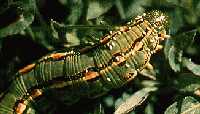
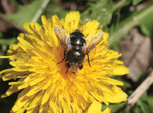
Most common of all the predatory true bugs are the small (less than 1/8 inch) minute pirate bugs. Minute pirate bugs are most frequently seen in flowers or in crevices of a green plant, where they feed on thrips, spider mites and insect eggs. Other predatory bugs common in yards and gardens include ambush bugs and assassin bugs.
Ground Beetles
Various species of ground beetles are found under debris, in soil cracks or moving along the ground. Immature stages are distinctly different from adults and more often are found within the top few inches of soil. Ground beetles are general feeders with powerful jaws. Almost any garden pest that spends part or all of its life on the soil surface may be prey for these insects.
Mantids
Mantids are uncommon in most of Colorado but are familiar insects to most gardeners. Mantids are general predators that feed on almost any insects of the right size. They have one generation per year with winter spent as eggs within a pod (ootheca). An invasive species of mantid, the Chinese mantid, is sometimes available for sale.
Hunting Wasps
A large number of wasps from several families prey on insect pests. Many take their prey, whole or in pieces, back to their mud, soil, or paper nests to feed to the wasp larvae. These hunting wasps can be important in controlling garden insect pests. For example, the common Polistes paper wasps, when hunting, may thoroughly search plants and feed on caterpillars, often providing substantial control of these insects.
Predatory Mites
Several mite species are predators of plant-feeding spider mites. Typically, these predatory mites are a little larger than spider mites but are more rounded in shape and faster moving than their prey. Predatory mites often can provide good control of spider mites. Low humidity can restrict their activity. They are also more susceptible to insecticides than are plant-feeding species.
Spiders
All spiders feed on insects or other small arthropods. Most people are familiar with many common web-making species. However, there are many other spiders — wolf spiders, crab spiders, jumping spiders — that do not build webs but instead move about and hunt their prey on soil or plants. These less conspicuous spiders can be important in controlling insect pests such as beetles, caterpillars, leafhoppers, and aphids.
Insect Parasites
Tachinid Flies
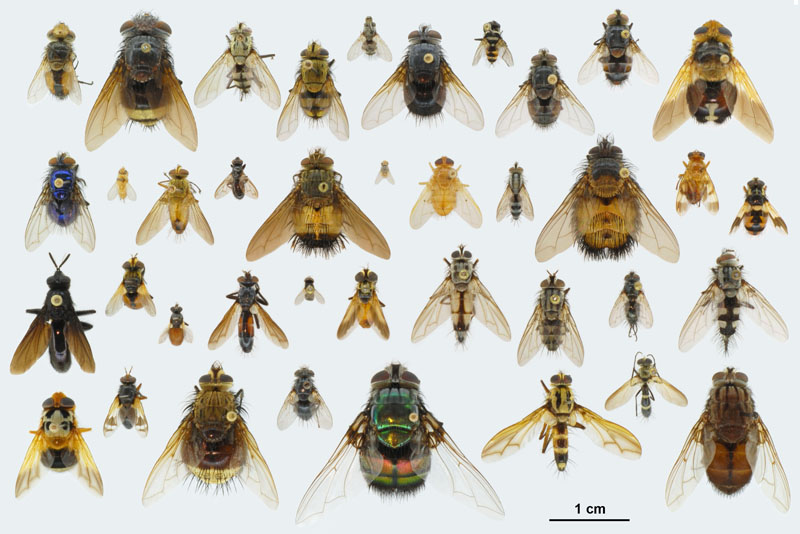
These flies are undistinguished-looking gray or brown flies covered with dark bristles. Sometimes these flies can be distinguished by the large, bristly hairs projecting from the back of their abdomen. Most look like other common flies, but they differ markedly in their habits. Adult tachinid flies lay eggs on various caterpillars, beetles, and true bugs, usually near the head. The eggs hatch almost immediately, and the young maggots tunnel into their host. After feeding internally for a week or more, the tachinid fly larvae eventually kill the host insect.
The many kinds of tachinid flies are important natural controls of many insect pests, particularly caterpillars. However, tachinid flies rarely are observed by the average gardener, and their beneficial activities are often overlooked.
Braconid and Ichneumonid Wasps
These are a large and diverse group of insect parasites. Some are small and attack small insects such as aphids. Others live in the eggs of various pest insects. Larger parasite wasps attack caterpillars or wood-boring beetles.
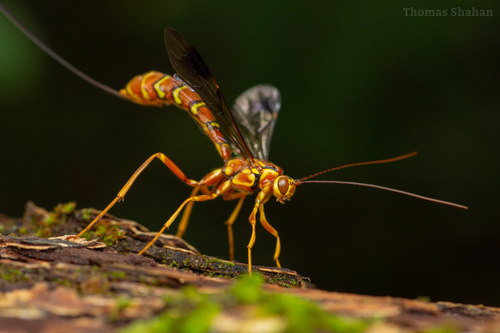
External evidence of these parasites’ activity is often more obvious than with the tachinid flies. For example, aphids that are parasitized by these wasps are typically bloated and discolored and called “aphid mummies.” Other braconid wasp species spin conspicuous pupal cocoons after emerging from a host.
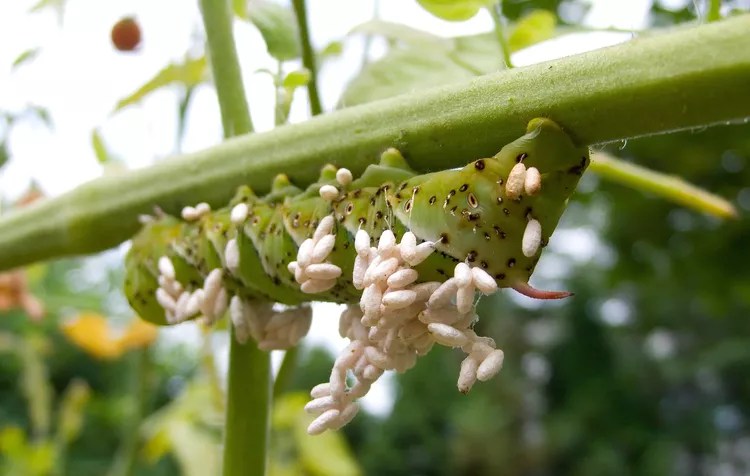
These wasps inject viruses (polydnaviruses or PDVs) into their hosts which suppress the immune system, allowing the larvae to feed with less hindrance. Some species have evolved viruses which significantly manipulate the behavior and physiology of their hosts.
Purchasing Insect Predators and Parasites
Several insect predators and parasites are available through garden catalogs and other outlets. These include lady beetles, praying mantids, fly parasites, Trichogramma wasps, green lacewing eggs, and others.
Certain insect diseases, such as Bacillus thuringiensis and insect parasite nematodes, are recommended. Also, several insect natural enemies (whitefly parasite, mealybug destroyer, predatory mites) are recommended for greenhouse insect management.
In the yard and garden, it is important to recognize naturally occurring insect predators and parasites. Before making insecticide applications, always check plants to see if the existing beneficial organisms are abundant enough to provide control. Whenever possible, use insecticides that are more selective in their activity and less harmful to the insect predators and parasite.
The Use of Flowering Plants by Beneficial Insects
Several insect predators and parasites are available through garden catalogs and other outlets. These include lady beetles, praying mantids, fly parasites, Trichogramma wasps, green lacewing eggs, and others.
Certain insect diseases, such as Bacillus thuringiensis and insect parasite nematodes, are recommended. Also, several insect natural enemies (whitefly parasite, mealybug destroyer, predatory mites) are recommended for greenhouse insect management.
In the yard and garden, it is important to recognize naturally occurring insect predators and parasites. Before making insecticide applications, always check plants to see if the existing beneficial organisms are abundant enough to provide control. Whenever possible, use insecticides that are more selective in their activity and less harmful to the insect predators and parasite.
Many insects are important in the biological control of plant pests and have special food needs during their adult stage. An important example of this is syrphid flies (aka flower or bee flies) that must feed on pollen or nectar to lay eggs. Many other insects use pollen and nectar (and honeydew) to sustain them, often allowing them to survive longer, produce more progeny and provide more effective biological control. Lady beetles, green lacewings, and parasitic wasps are among the natural insect enemies that utilize nectar and pollen in this manner.
The availability of flowering plants that provide these supplementary foods can increase the beneficial effects of these natural enemies. However, it is also clear that there is variability in how useful flowering plants are for this purpose. Many plants possess flowers that are not accessible to insects whose mouthparts are shorter than other nectar feeders such as bees and butterflies.
Some plants that have high visitation and use by beneficial natural enemies include:
-Achillea (Yarrow)
-Masterwort
-Fennel
-Edging Lobelia
-European Goldenrod
-Dill
-Basket-of-Gold
-Lavenders
-Sweet Alyssum
-Veronica
-Camomille
-Coriander
-Butter-and-Eggs
-Sedum
-Moon Carrot
Reference: CSU Fact Sheet 5.550