


The time of summer/fall harvest glut is upon us. I live and garden at high elevation, so my days and nights are cooler than some other west slope communities and the front range. So, some of the crops I discuss in this blog, you may have already harvested in your area, or they may have gone to seed in the heat.
Greens
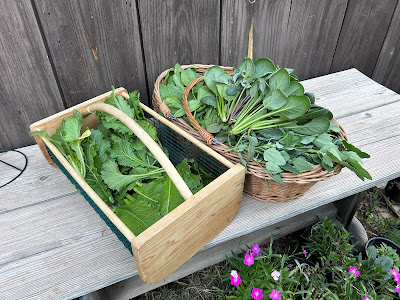
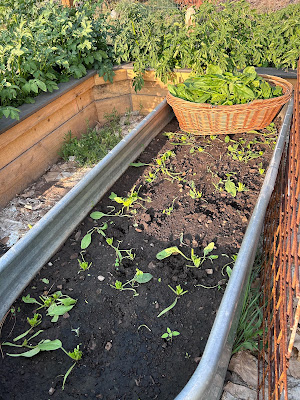
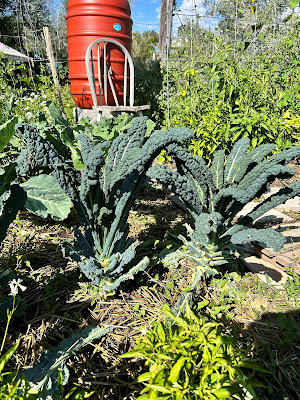
In my garden as well as most gardens in the state, greens are one of the first crops ready to harvest. You can harvest different ways: a few leaves at a time, starting with the bottom leaves that mature first or you can cut all the leaves off at the crown or you can pull up the entire plant.
Carrots and root crops
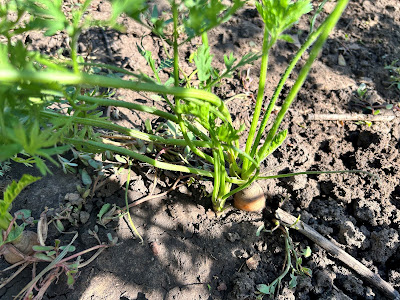
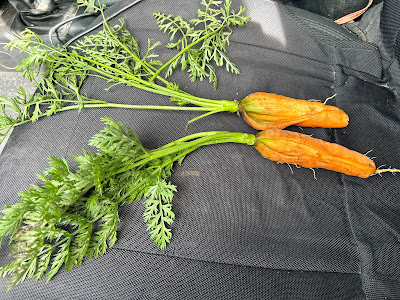
Carrots and other root crops like parsnips, beets, radishes and rutabagas are all harvested similarly. I like to water the day before I plan to harvest so the soil isn’t rock hard. If the soil is too wet, it will be more difficult to remove soil that sticks to the roots. Grab the carrot top firmly in your hand right above the root top, wiggle and pull up slowly. Remove the carrots tops soon after harvest, to keep them from losing water and becoming soft.
Broccoli
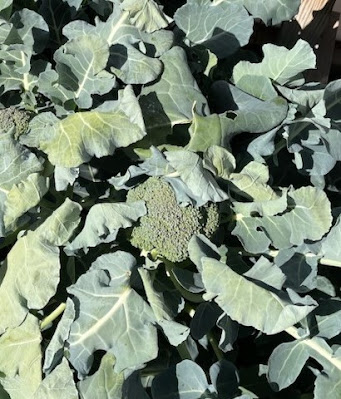
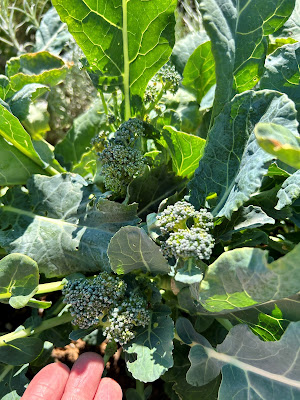
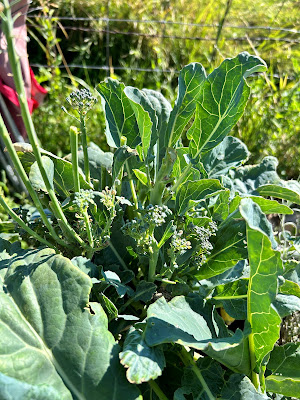
I prefer to grow broccoli varieties that produce side shoots after you harvest the main head. This increases both your yield and extends the season of your broccoli harvest.
Zucchini
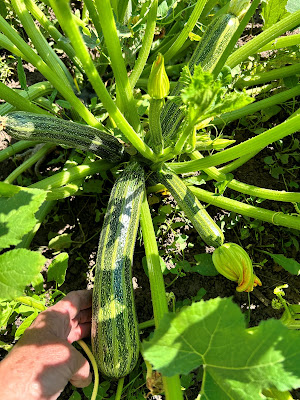
In many produce shows, the largest veggie contest is won by a zucchini. If you’ve grown zucchini, you know how fast they grow. Cucumbers, like summer squash, can outgrow their optimum eating stage very quickly. For best eating quality, harvest when the skin is tender and the seeds are still small. For reference, see the zucchini plant image: Starting at the bottom, going clockwise: The bottom zucchini is almost past prime stage to harvest. The second zucchini could be harvested but it is in baby stage. And, the third zucchini is in prime stage to harvest, and the last zucchini is still immature.
Cucumber
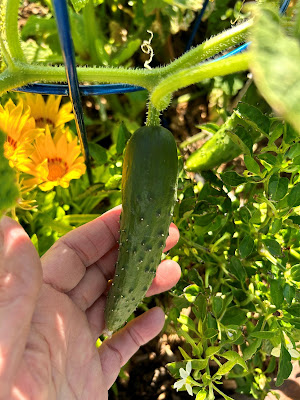
This pickling variety of cucumber is almost at the stage for a large pickle. If you want small pickles, harvest when the top is barely wider than the tip.
Pumpkin
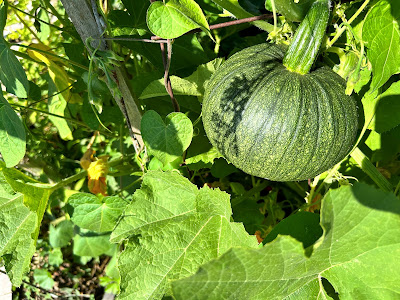
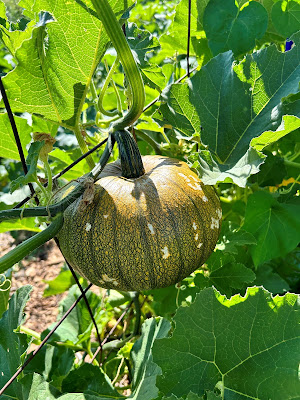
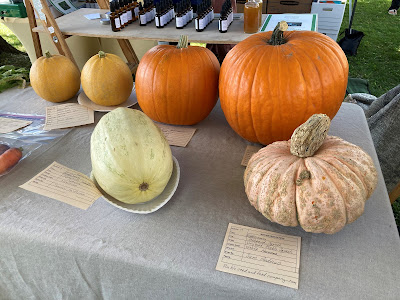
Some pumpkins and winter squash can be harvested immature and eaten like summer squash. And others will undergo a color change in storage. It is best to harvest them when they are the color they are supposed to be, the rind is hard and can barely be pierced with a fingernail.
Potato
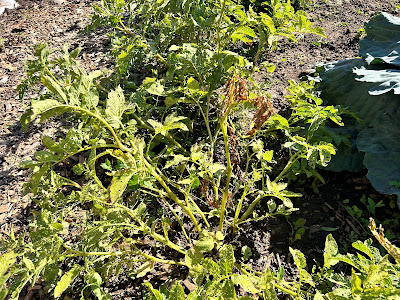
Harvest potatoes right after bloom for small, tender ‘new’ potatoes. Harvest after the tops die down for potatoes with a tougher skin that will store better.
For more on harvest and storage of vegetables see the Fact Sheet, Storage of Homegrown Vegetables.