


Quick facts…
- Fire blight is a bacterial disease that can kill branches and trees and shrubs in the rose family, including crabapple, hawthorn, and ornamental pear.
- Symptoms include dead branches, water-soaked blossoms, light brown to blackened leaves, discolored bark, “shepherd’s crook” twigs, and withered fruits.
- Fire blight bacteria can be spread by insects, splashing rain, or irrigation water.
- Management includes selecting and planting resistant varieties, cultural practices, pruning, and using preventative chemical treatments.
Introduction
Fire blight is a bacterial disease that affects certain species in the rose family (Rosaceae). It is especially destructive to apple (Malus spp.), pear (Pyrus spp.), and crabapple (Malus spp.). Moderately susceptible trees include hawthorn (Crataegus spp.) and mountain ash (Sorbus spp.). The disease also can occur, but tends to be less severe, on serviceberry (Amelanchier spp.), flowering quinces (Chaenomeles spp.), cotoneaster (Cotoneaster spp.), quince (Cydonia spp.), firethorn (Pyracantha spp.), blackberry (Rubus spp.), and raspberry (Rubus spp.). Disease incidence varies from year to year and severity is influenced by woody plant variety susceptibility, meteorological conditions, development of tissues, and overall tree condition.
Even though all of these factors affect fire blight occurrence, the most important factor is woody plant variety susceptibility to the disease.
Warm rainy springs are particularly conducive to rapid development and spread of the pathogen, resulting in blossom blight. Time of flowering can be a factor in whether the tree is susceptible to fire blight. Blight of twig terminals can occur during wind-driven rain events. Hail and wind damage can create wounds that allow the pathogen to enter the tree at other times during the growing season. Hot, dry summer weather generally slows or stops the disease.
Disease Cycle
Fire blight is caused by the bacterium Erwinia amylovora. Bacteria overwinter in blighted branches and at the edge of cankers (areas of bark killed by bacteria). In spring, when temperatures frequently reach 65 F and moisture is abundant, bacteria multiply rapidly. Masses of bacteria are forced through cracks and bark pores to the bark surface, where they form a sweet, gummy exudate called bacterial ooze. Insects, including pollinators, may be attracted to this ooze, where they pick up the bacteria on their bodies, and inadvertently carry it to opening blossoms. Rain and/or wind splashing the bacteria can also spread fire blight.
Once in the blossom, bacteria multiply rapidly in the nectar and enter the flower tissue (Fig. 1). From the flower, the bacteria may move into the branch. When the bacteria invade and kill the cambial tissue of the branch, all flowers, leaves and fruit above the girdled area blacken and die.
Infection can also take place through natural openings in leaves (stomata) or branches (lenticels), or through wounds caused by pruning, hail, or insects. Droplets of bacterial ooze can form on twigs within three days after infection.
During the growing season, trees infected with fire blight will activate natural defenses to try to slow the spread of the disease. Some species and cultivars are better at inhibiting the disease than others.
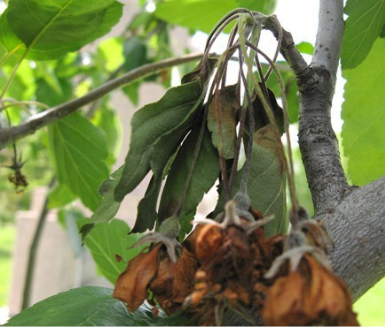
Figure 1. Blighted flowers on crabapple.
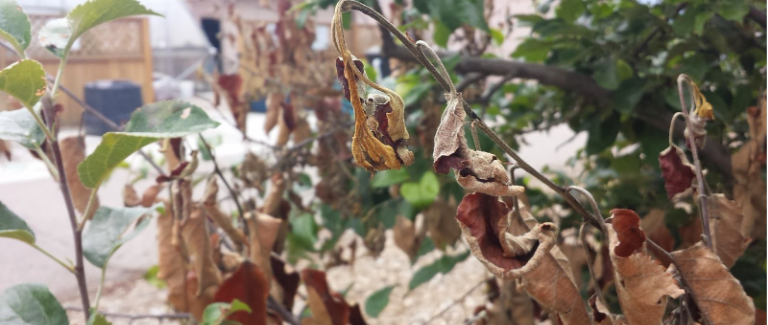
Figure 2. Blighted leaves on apple.
Diagnosis
Symptoms of new fire blight infections of flowers are observable around the time of petal fall. Infected blossoms appear water-soaked and wilt rapidly before turning dark brown or black; this phase of the disease is referred to as blossom blight. As the disease progresses, leaves wilt, darken and remain attached to the tree (Figure 2); this gives the tree a fire-scorched appearance, thus the name “fire blight” (Figure 3).
Infected twigs darken and branch tips may bend over forming a “shepherd’s crook.” Infected fruit may also exude bacterial ooze. Rather than dropping from the tree, infected fruit gradually wither and remain attached to the branch.
Fire blight cankers on branches or stems appear as dark discolored areas that are slightly sunken (Figure 4). Trees have natural defenses which will attempt to wall off the disease, where a ridge may form between canker and healthy tissue. Under the bark associated with a canker, the inner bark turns from green to brown, but the appearance varies depending on plant variety.
Disease Management
There is no cure for this disease, so prevention is the best solution for the management of fire blight.
Limited infections can be managed by pruning out infected tissue. In a landscape with many trees and shrubs in the rose family, removing all infested trees is not practical as the inoculum is so abundant naturally. Even if all infected trees were removed from a property, susceptible trees could still become infected by fire blight.
The most important step in managing this disease is planting resistant species. Varieties differ in their degree of susceptibility to the bacterium, but no cultivar is totally immune to infection when the pathogen is abundant and conditions are favorable. For specific information about crabapples, refer to CSU Extension Fact Sheet, Flowering Crabapple Trees, #7.424.
In years with high pressures of the bacterium, even resistant cultivars may show symptoms, but are better able to compartmentalize damage.
With minor infections, trees may wall off the spread of the disease and pruning could occur during the following dormant season to remove the cankered twigs.
Implement cultural practices that favor growth of the plant rather than the pathogen, such as avoiding drought stress, to encourage favorable tree health. Prune to remove infected plant parts and consider the use of chemical sprays for susceptible trees.
Spraying should be done by tree care professionals because of chemical availability, potential phytotoxicity, and the critical timing of sprays. See section on “Chemical Treatment Options”.
General Pruning Recommendations
When pruning, each cut should be done properly to encourage quick wound closure; smaller pruning cuts will close more quickly. Cuts should be made back to a branch union or outward-facing bud and not done in the middle of branches or where the canker ends. Improper pruning can result in water sprouts (suckering) that are more likely to be infected due to abundant succulent growth. Remove any root suckers from the base of trees, as they are prone to fire blight infection.
Dormant Pruning
Pruning woody plants susceptible to fire blight is best done in the dormant season up to one month before budbreak. Remove all blighted twigs and cankered branches back to a main branch union or junction at least eight inches below the canker—do not leave stubs. Pruning may be difficult on smaller trees where there isn’t enough branch material to support aggressive pruning (Fig. 5). For more detailed information on pruning cuts, refer to CSU Extension Garden Notes #613.
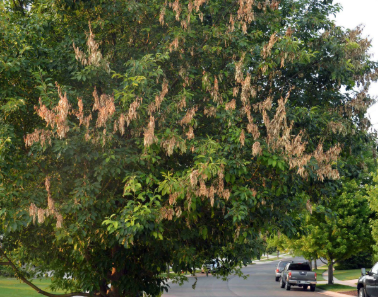
Figure 3. Crabapple tree affected by fire blight.
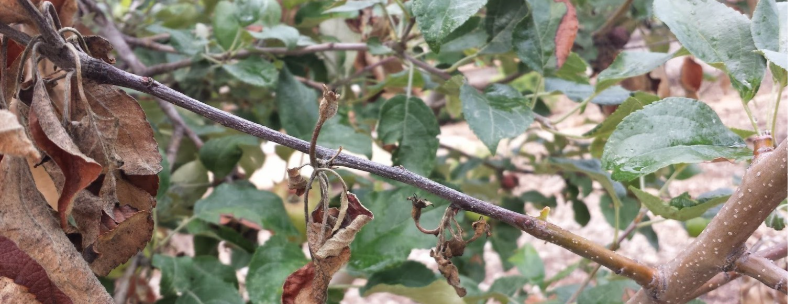
Figure 4. Sunken black canker on apple branch.
If the canker encompasses the entire circumference of the branch, the branch must be removed. If the infection reaches the main trunk, the tree and stump should ultimately be removed.
While there are recommendations to sanitize pruning tools between cuts when pruning out fire blight infections, research has not shown that infections are spread by tools or that sterilizing tools between cuts has a measurable effect on disease spread.
In-Season (Summer) Pruning
In summer, pruning cuts must be made 18-24 inches from the visible canker. As with all pruning cuts, do not leave stubs and remove the infected branches back to a branch union or junction. If the distance between the canker and the nearest branch is less than 18-24 inches, the cut must be made at a lower branch union.
Because summer pruning can result in significant canopy loss (Fig. 5), in general, dormant season pruning is recommended. Consider consulting with an ISA Certified Arborist to discuss pruning options.
To decrease the chance of re- infection, promptly remove infested branches from the site. During pruning, take care to avoid unnecessary wounds to the tree. Avoid pruning when it is humid or when rain is forecasted.
Chemical Treatment Options
If cultural approaches are insufficient, chemical treatments can be considered. Treatment options differ for ornamental trees and trees grown for fruit production.
Any pesticides must be applied strictly according to the label instructions. Factors to consider with chemicals are availability, potential phytotoxicity, and the critical timing of sprays. Chemical treatments are not effective in controlling symptomatic fire blight but can be used to slow the spread of the disease. When spring weather is not favorable to fire blight development (i.e. warm and dry), chemical treatments may not suppress fire blight more than weather conditions alone.
Several products are available to homeowners that are labeled for suppression of fire blight and their success rate varies.
In general, these products must be applied multiple times, up to weekly, through the flowering cycle. They may decrease new infections but won’t eliminate infections already existing in the tree. Sprays are usually applied to open blossoms, so the timing of applications will vary depending on the tree’s bloom cycle. Refer to the label of the product for specific application use, timing instructions, and restrictions.
Streptomycin and oxytetracycline are antibiotics that can be used to protect ornamental trees. These must be applied by a licensed pesticide applicator. Antibiotics are used before symptom development to help prevent disease spread. Consult a tree care professional to apply these preventative treatments.
Plant growth regulators can also help slow the spread of fire blight and need to be applied by a licensed pesticide applicator.
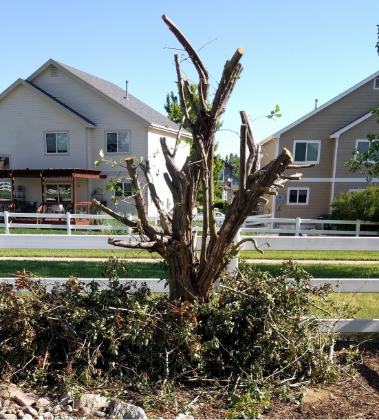
Figure 5. A crabapple tree pruned during summer to remove fire blight infected limbs; this is why summer pruning is not recommended.
For More Information