


Quick facts…
- Combined with structural hardening, a fire-resistant landscape can help a structure survive a wildfire.
- A fire-resistant landscape considers both the amount and type of vegetation and the connections between vegetation and a structure.
- Many native grasses, perennials, shrubs, and trees are adapted to fire, and many require less water than commonly used non-native plants. When properly maintained, native vegetation can be used in landscaping.
- Communities and neighbors in the wildland-urban interface (WUI) should work together to collectively reduce their risk from wildfire.
- Maintenance should focus on keeping plants healthy and removing any accumulated debris and dead material within 30 feet of structures.
- Certain drought-adapted plants can provide the balance between fire resistance and water conservation.
- Landscaping needs frequent maintenance to effectively reduce wildfire risk.
Introduction
Many people in the wildland-urban interface (WUI) value their Colorado home for its proximity to open space and undeveloped land. It is possible and important for residents and communities to promote beautiful and fire-resistant landscaping, especially when homes in neighborhoods are close to open space. In the WUI, it is not a matter of “if” a wildfire will affect structures but “when.” Planning ahead and taking action to reduce the risk of wildfires spreading to structures from landscaping can increase the likelihood that they will survive when a wildfire occurs.
In most cases, structures ignite during a wildfire from the firebrands (embers produced from woody vegetation and structures including fences) that can travel long distances. There are two main determinants of susceptibility to fire for structures: structural hardening and landscape choice. Structural hardening refers to the ability of a structure to resist ignition, depending primarily on the materials used in siding, roofing, and anything attached to the structure like fences and decks. Landscaping choices can influence how a fire may spread to structures; in the best-case scenario, landscaping prevents fire from getting close enough to structures to ignite them.
Landscaping for Fire Resistance
Creating a fire-resistant landscape involves appropriate hardscapes (walls, pavers, pathways), plants, and maintenance in a series of three management zones moving out from the structure. These areas are collectively known as the home ignition zone (HIZ). Correctly maintaining the landscaping within the HIZ, the area within 100 feet of structures, can increase a structure’s chance of surviving a wildfire. Homes, detached garages, storage buildings, barns, and other structures (including attached fences built of flammable materials) should be protected using the HIZ framework. Structures should be protected from the building outward; in other words, focus on structural hardening first, then on Zone 1 and so on.
The zones within the HIZ are defined from the structure’s edge, including eaves and any attachments such as stairs or decks, in feet as shown in the illustration below.
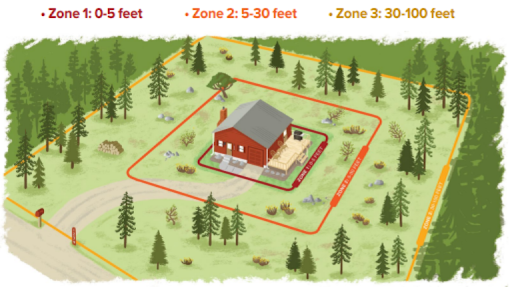
Wildfire behavior is heavily influenced by two factors:
- Fuel continuity – how flammable materials are positioned relative to one another
- Fuel loading – how much flammable material is present
Landscape plants and landscaping layout can affect the continuity and loading of fuels around structures and can make the difference between a structure surviving a wildfire or not. In many neighborhoods within the WUI on smaller lots, zones will overlap, especially Zone 3. It is important to work with your neighbors to protect against wildfire in this situation. A group of structures is only as protected as its least prepared member. Property owners near open spaces or undeveloped land should be especially attentive to structural hardening and landscaping because they are more exposed. In higher density neighborhoods, if one structure ignites, it is likely that surrounding structures will ignite.
Tips for Working With Neighbors
- Respect your neighbors’ preferences and abilities to modify their landscapes and harden their structures.
- Set a great example on your property.
- Invite neighbors to participate in opportunities: wildfire risk assessments, landscape or tree contractor site visits, labor to mow, clean gutters, or lay stone.
- Don’t be discouraged when neighbors don’t take immediate action. Managing native vegetation, fire-resistant landscaping, and structural hardening take time, money and, support.
- Use resources like Firewise USA® and Neighborhood Ambassadors to support community efforts.
Fences
Ideally, fences, including privacy fences, should be constructed of non-combustible materials. Fences can act as fuses, creating a continuous line of fuel that fire can follow toward houses and structures. Burning fences also produce firebrands. At a minimum, the 5-foot section of fence closest to the house should be non-combustible. For more information, see National Fire Protection Association document on wood fences in the Resources section.
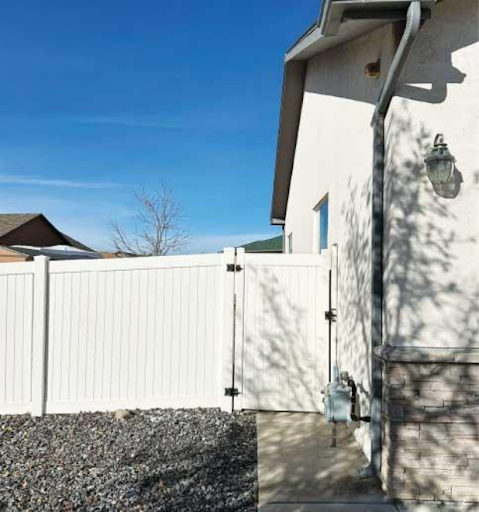
Zone 1: 0-5 feet
Zone 1 Goal: Keep fire or firebrands from igniting materials that can directly spread fire to structures.
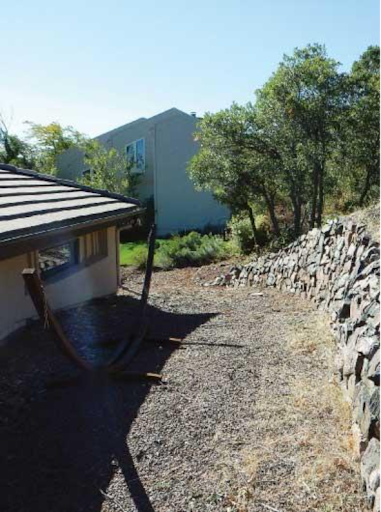
One of the most critical elements is a 5-foot non-combustible zone. The non-combustible zone is ideally made up of a concrete sidewalk, flagstone, or pavers, brick, gravel, or even bare ground. Note that gravel can pose more of a challenge to keep clear of flammable debris because it is harder to rake out fine fuels than to clear them from smooth surfaces. Do not use combustible mulch (wood chips, bark, pine needles, shredded rubber) in this zone. Consistent maintenance of this area is essential; do not store flammable materials such as firewood or lumber in this area. Do not use combustible patio furnishings such as wicker furniture, furniture cushions, and door mats.
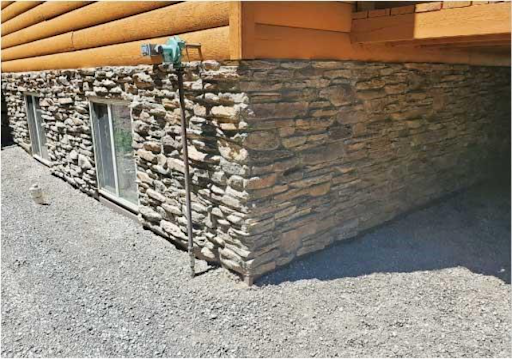
Critical Maintenance for Zone 1 (Check Weekly)
- Keep the non-combustible zone free of dry leaves, needles, and other combustible material at all times. Keep gutters and roofs clear of debris.
- This needs to be done after every significant weather event, such as a heavy rainstorm or windstorm, and in the spring and the fall at a minimum.
- Do not allow tree and shrub branches to encroach into Zone 1 below the roofline. Maintain 5 feet of clearance between the structure and the nearest branch.
- If there are large trees growing in Zone 2 that have overhanging branches, these branches need to be pruned to 10 feet above the roof. Keep in mind that these branches will shed leaves, needles, and branches that will require more frequent removal from gutters and roofs.
- Keep branches at least 10 feet away from stove pipes and chimneys.
Zone 2: 5-30 feet
Zone 2 Goal: Reduce fire intensity as it nears structures by limiting available fuel to approaching fire or firebrands.
In Zone 2, do not plant in large masses; instead, plant in small, irregular clusters or “islands.” Use decorative rock, gravel, and steppingstone pathways to break up the continuity of the vegetation, creating breaks in the fuel that can modify fire behavior and slow the spread of fire across your property. Consider using fire-resistant materials in the design and construction of raised bed vegetable gardens, pergolas, and other structures.
Green (non-dormant), ignition-resistant plants can also be an effective fuel break (see fact sheet Low-Flammability Landscape Plants in the Resources section for turf and perennial recommendations). Look for specific low-flammability characteristics in plants that you plant in Zone 2:
- Low-growing plants
- High water content
- High mineral content
- No volatile oils
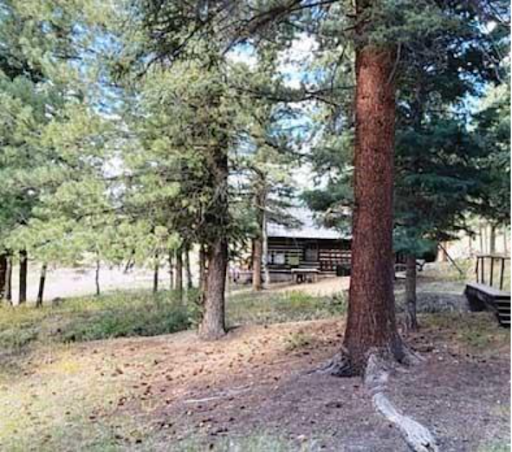
Plants that stay green with limited supplemental irrigation balance the need for water savings in landscapes and fire resistance.
To reduce fuel loading in this area, keep plant material height short to reduce flame length; grasses should be cut to a height of 4 inches or less. Remove dead plants, sticks, logs, evergreen needles, leaves, and other flammable debris. Think “clean and green.”
An all-rock landscape is not necessarily the most fire-resistant. Green plants store water and slow the spread of fire and provide many ecological and aesthetic benefits. In Zone 2, use mulches to conserve moisture and reduce weed growth. Mulches such as gravel are preferred, because wood chips, bark, pine needles, and shredded rubber readily carry fire. Do not use landscape fabric under the mulch, both for plant health and fire resistance.
A landscape is a dynamic system that continuously changes. Even plants considered fire-resistant can lose these characteristics over time. Dead plant material may accumulate and should be cut back and removed. Trees and shrubs should be pruned according to best practices, especially when dead, diseased, or damaged branches are present. Both woody and herbaceous plants may reseed or spread, so it may be necessary to thin or cut back if that occurs. Your landscape and the plants in it must be maintained to retain their ignition-resistant properties.
Trees and Shrubs in Zone 2
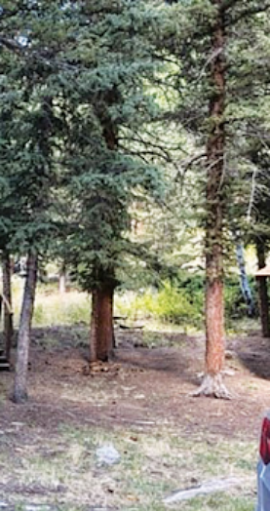
Evergreen trees are easily ignitable and can create a substantial amount of heat and firebrands. Do not plant new evergreens in Zone 2; existing evergreens should be thinned to a minimum canopy separation of 10-15 feet. Healthy deciduous trees and shrubs are less likely to ignite, so they are a better choice for this zone. Remove shrubs beneath trees, as these can act as ladder fuels. Keep perennials and grasses short beneath trees to prevent fire moving from the ground into treetops. Spacing between shrubs should be at least 2 1/2 times their mature height. For example, for shrubs that grow 6 feet tall, space 15 feet apart or more (measured from the outer branches).
Established trees and shrubs should be pruned so that a separation exists between the ground and lowest branches. Trees should be pruned so that limbs are at least 6 feet off the ground but never prune more than 1/3 the total height of the tree, especially in smaller trees such as piñon and juniper, as this can be detrimental to tree health. In smaller trees, make sure no branches touch the ground and that there are no dead branches.
Critical Maintenance for Zone 2 (Check Weekly)
- Mow lawns to a height of 4 inches or less.
- Remove ladder fuels beneath trees.
- Keep all landscape plants healthy. Trim diseased and dead branches or plants. Do not allow dry plant debris to accumulate.
- Cut back annuals and perennials after they go to seed or when the stems become dry.
- Clean up leaves and other litter through the season; do not allow it to accumulate.
- Avoid accumulation of branches, logs, or other woody debris, including chip piles.
- Do not store lumber, old tires, and other trash in this zone.
- Prune for plant health and canopy thinning where appropriate. Keep trees limbed to 6 -10 feet above the ground but no more than 1/3 of its total height, particularly in smaller trees such as piñon and juniper.
- Clear debris or fine vegetative fuels (wood mulch, evergreen needles, leaf litter, small twigs) from the base of all fences.
- Keep all plants at their optimal moisture levels. If you have an irrigation system, set a program to keep the landscape green. If water rights permit, deeply water trees and shrubs every 20 to 30 days during the growing season. If you cannot irrigate landscaping, plant low-flammability plants that can survive and stay green without supplemental water.
Zone 3: 30-100 feet
Zone 3 Goal: Reduce the fuel loading and fuel continuity to keep fire on the ground.
Reducing the amount and connectedness of fuel limits the intensity of the fire. Hardscape features such as gravel trails or pavers can be added to create a fuel break in both Zone 2 and Zone 3. The width of the fuel break correlates to the type and height of vegetation. In other words, hydrated plants that are low to the ground require a more narrow fuel break, while taller plants and particularly those that are likely to produce firebrands require a much wider fuel break. Keep in mind that the ability of a fuel break to slow the spread and intensity of wildfire is lower on steep slopes. This is especially true when winds are high, fuel moistures are low, and dense vegetation is present near the fuel break. For more guidance on vegetation management on steep slopes, contact your Colorado State Forest Service field office or your county Extension office. You can also consult with a forester, fire department staff, or community organization appropriately trained in wildfire mitigation practices.
Grasses
Grasses in Zone 3 can be left unmowed for ecological or aesthetic reasons, if desired, even when dry. However, keep in mind that all standing dry grasses (native and nonnative) are fine fuels that ignite easily and can support rapid fire spread. Once grass has dried out for the season, it can quickly carry fire to structures and other fuels. Along the Colorado Front Range, the general risk season for grassland fires is from September to April, when grass fuels are cured (dry and brown) and high winds are common. This is when the risk is highest for grassland fires.
The most important time to manage grasses on the Front Range is in the fall at the beginning of that risk window, as opposed to frequent mowing throughout the growing season. At lower elevations on the Western Slope, the general season for grass and range fires is April-September. The most important time to cut grasses here is in the spring prior to green-up. Frequent mowing can cause ecological damage and subsequently reduce the grass cover over time, leading to erosion during high-wind events and promoting weed invasion.
Shrubs
Shrubs in Zone 3 must be managed. The landscape should have a mosaic of shrubs (or groups of shrubs) and open areas. Group size should be 2-5 shrubs, with various sizes of openings interspersed. The openings provide the opportunity to change fire behavior by reducing flame length and heat production. The shrub groups should be maintained to reduce ignition potential. Do not allow weeds or grasses to grow within shrubs as they can provide fuel that is very flammable and can transfer heat to ignite the shrubs, thus increasing firebrands that can be produced. Prune dead branches and remove leaves and litter under shrubs.
Trees
Deciduous trees are more fire-resistant than most evergreens. Deciduous trees, even when planted in dense clumps, generally do not easily ignite and readily burn. The greatest fire risk from deciduous trees is the accumulation of dead leaves, dead branches, and tall grasses and shrubs beneath the trees. Make sure to plant trees with enough space to accommodate their mature size.
Spacing of evergreens in Zone 3 can either be in groups or thinned to an even spacing so that there is 10-15 feet of space between tree crowns. On steep ground, allow for even more space between crowns. Plant trees initially on a 20- to 25-foot spacing to allow for tree growth. At some point, trees may need to be thinned to retain proper spacing.
As the trees grow, prune branches to a height of 6-10 feet above the ground, but no more than 1/3 its total height, especially in smaller trees such as piñon and juniper. In smaller trees, make sure no branches touch the ground and that there are no dead branches.
Any surface fuels need to be reduced or eliminated under trees. This can be accomplished by mowing or grazing the surface grasses and raking the litter, needles, etc., out beyond the edge of the tree canopy.
Critical Maintenance for Zone 3
- Remove evergreen tree branches within 6-10 feet of the ground, but no more than 1/3 the total tree height, especially in smaller trees such as piñon and juniper.
- Remove dead or dying trees or shrubs.
- Remove dead branches.
- Remove or maintain surface fuels such as grasses and shrubs beneath trees to reduce ignition potential.
- Maintain tree spacing.
To get assistance with more specific fire-resistant landscaping guidance for your property, contact the nearest Colorado State Forest Service field office or your county Extension office. You can also consult with a forester, fire department staff or community organization appropriately trained in wildfire mitigation practices.