


We get a pretty regular supply of interesting insects coming through the Extension office as folks find bugs in yards and gardens through the season. This time of year, with many native shrubs and flowers coming into full bloom, is no exception.
Flowers are entomological restaurants, pick-up joints, and crime scenes; well worth spending a few minutes observing while out in the garden (or on a hike!).
One of the common groups of insects that is brought in for identification are termed “flower-visiting beetles.” The adults are often seen on open blossoms like sunflowers, asters, and rabbitbrush, sometimes in large groups. These beetles are perhaps sipping nectar, but don’t let this fool you—many are fierce predators of the insect world.
This week a sample of a flower-visiting clerid, or checkered beetle, came in. Checkered beetles, both as larvae and adults, are almost all predators of other beetles—particularly bark beetles like ips or mountain pine beetle.
This particular insect, though, was in the genus Trichodes, the bee-eating beetles. Most Trichodes prey on solitary bees and wasps, laying sticky eggs on flowers for bees and wasps to inadvertently carry to nest sites with them, where the eggs hatch and consume the bee larvae and the food the mother bee stored up for it. A few even accost hosts at flowers and riding back to nest sites in order to lay their eggs near their bee-victims’.
This week’s beetle was, thankfully, less emotionally taxing for a gardener—its larvae feed on the eggs of grasshoppers.
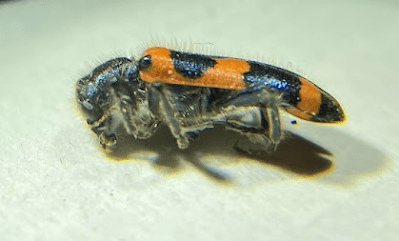

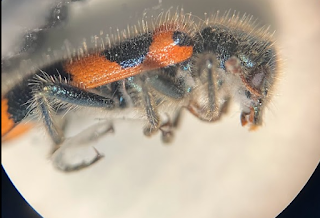
Adult beetles not only eat pollen but also hunt a wide variety of insects smaller than themselves. They are covered in defensive bristles and have powerful, downward-pointing jaws to get the job done. Their wings are a beautiful blue-purple with red markings, possibly a warning-color mimicry of stinging insects used to deter predators like birds.
A lot is going on in the average garden, and much of it is inconsequential to our gardening success. It sure is fun to watch, though, and not for the first time I am grateful to be the size that I am and not a grasshopper!