


Quick facts…
- Place perishables in the coolest part of your car during the trip home. If the time from store to home refrigerator will be more than one hour, plan ahead and pack an insulated container with ice or an ice pack.
- Place raw meat and poultry in individual plastic bags to prevent meat from contaminating foods that will be eaten without further cooking.
- Use a thermometer to check that the refrigerator is between 35 and 40 degrees F and the freezer at 0 F degrees or below. These temperatures are important in that they prevent the growth of bacteria and keep your food from spoiling.
Introduction
Proper food storage helps to preserve the quality and nutritional value of the foods you purchase and also helps make the most of your food dollar by preventing spoilage. Additionally, proper food storage can help prevent foodborne illnesses caused by harmful bacteria.
Use fresh, perishable foods soon after they are harvested or purchased. Signs of spoilage that make food unpalatable but not a bacterial hazard are the rancid odor and flavor of fats caused by oxidation, slime on the surface of meat, and the fermentation of fruit juices due to yeast growth. Off-odors in foods and a sour taste in bland foods can indicate dangerous bacterial spoilage. However, food can be high in bacteria count even without such signals.
Food Selection
Buy food from reputable producers or retailers, with a known record for safe handling. Select dated products only if the “sell by” or “use by” date has not expired. While these dates are helpful, they are reliable only if the food has been kept at the proper temperature during storage and handling. Although many products bear “sell by” or “use by” dates, except for infant formula, product dating is not a federal requirement.
Select products labeled “keep refrigerated” only if they are stored in a refrigerated case and are cold to the touch. Frozen products should be solidly frozen. Packages of precooked foods should not be torn or damaged.
Avoid cross-contamination between potentially hazardous foods and fresh foods like fruits and vegetables. Place raw meat and poultry in individual plastic bags to prevent meat from contaminating foods that will be eaten without further cooking. Put packages of raw meat and poultry in your shopping cart where juices cannot drip on other foods.
Shop for perishables last. Keep refrigerated and frozen items together so they will remain cold. Place perishables in the coolest part of your car during the trip home. If the time from store to home refrigerator is more than one hour, pack them in an insulated container with ice or an ice pack.
Food Storage
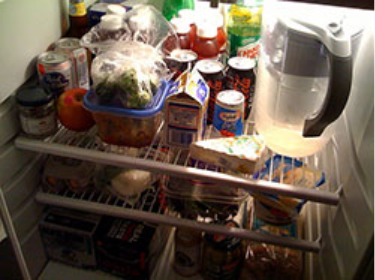
To retain quality and nutritive value, stock only the kinds and amounts of food you can store properly. Proper storage means maintaining a clean refrigerator and freezer. Avoid overcrowding the refrigerator. Arrange items so cold air can circulate freely. To reduce dehydration and quality loss, use freezer wrap, freezer-quality plastic bags, or aluminum foil over commercial wrap on meat and poultry that will be stored in the freezer for more than two months.
Table 1 gives short but safe time limits that will help keep refrigerated food from spoiling or becoming dangerous to eat. The time limits for frozen foods are to maintain flavor and texture. It is still safe to eat frozen foods that have been stored longer.
Table 1. Safe food storage guidelines.
| Product | Refrigerator (35-40 degrees f) | Freezer (0 degrees F) | Comments |
|---|---|---|---|
| BREADS, PASTRIES, AND CAKES | |||
| Breads, baked (no preservatives) | 2-3 weeks | 2-3 months | Store in refrigerator to inhibit mold growth. |
| baked muffins | * | 2-3 months | |
| baked quick breads | * | 2-3 months | |
| partially baked cinnamon rolls | 1-2 weeks | 2-3 months | |
| unbaked rolls and bread | 3-4 days | 1 month | Longer storage inactivates yeast, weakens gluten. |
| Cakes: frosted baked | * | 1 month | |
| unfrosted, baked | * | 2-4 months | |
| Cookies, baked | 2-3 weeks | 6-12 months | |
| dough | 3-4 days | 3 months | |
| Flour, white or whole wheat | 6-8 months | 12 months | Keep in airtight container. |
| Pies: fruit, baked | 2-3 days | 2-4 months | |
| fruit, unbaked | 1-2 days | 2-4 months | |
| pumpkin or chiffon | 2-3 days | 1-2 months | |
| Waffles | 1-2 days | 1 month |
| DAIRY PRODUCTS | |||
| Butter | 2-3 months | 12 months | Freeze in original carton, overwrap in plastic freezer bag. |
| Buttermilk | 1-2 weeks | NR | Check date on carton. Will keep several days after date. |
| Cheese: cottage, ricotta | 5-7 days | 1 month | Freezing changes texture of soft cheeses. |
| cream cheese | 2 weeks | 1 month | Becomes crumbly when frozen; can be used in cooking when creaminess is not important. |
| Natural, aged cheeses (cheddar, Swiss, brick, gouda, mozzarella, etc.) | Natural and processed cheeses can be frozen. Defrost in refrigerator; cheese will be less likely to crumble. Use soon after thawing. | ||
| large pieces, packaged or wax coated | 2-3 months | 6-8 months | |
| slices or opened packages | 2-3 weeks | ||
| Parmesan, Romano (grated) | 12 months | ||
| Pasteurized process cheese | 3-4 weeks | 6-8 months | |
| Coffee whitener (liquid) | 3 weeks | See package | |
| Cream, light or half & half | 1 week | 3-4 weeks | |
| (UHT processed-opened) | 1 week | ||
| (UHT processed-unopened) | 4 weeks | ||
| whipping or heavy | 1 week | NR | Whipping cream will not whip after thawing. Whipped cream may be frozen and stored for 1-2 weeks. |
| Dip, sour cream: commercial | 2 weeks | NR | |
| homemade | 3-4 days | NR | |
| Margarine | 3 months | 12 months | Overwrap in plastic freezer bag for frozen storage. |
| Milk: evaporated, opened | 3-5 days | 1-3 months | Freezing affects milk’s flavor, appearance; use for cookng. |
| fluid whole or low-fat | 1 week | 1-3 months | |
| reconstituted nonfat dry | 1 week | 1-3 months | |
| sweetened, condensed, opened | 3-5 days | 1-3 months | |
| Sour cream | 2-3 weeks | NR | Sour cream will separate if frozen. |
| Whipped topping | |||
| frozen carton, thawed | 2 weeks | NR | |
| in aerosol can | 3 weeks | NR | |
| prepared from mix | 3 days | NR | |
| Yogurt | 1 month | NR | Yogurt will separate if frozen. |
| EGGS AND EGG PRODUCTS | |||
| Eggs: fresh yolks or whites | 4 days | 12 months | To freeze, break eggs out of shell; stir until yolk is well blended with white or other yolks. Add small amount of salt, sugar or corn syrup to improve keeping quality |
| in shell, fresh | 3-5 weeks | NR | |
| in shell, hard-cooked | 1 week | NR | Decorated Easter eggs: If you intend to eat them, keep refrigerated. If eggs are at room temperature for more than 2 hours, do not eat them. |
| Eggs: liquid pasteurized eggs or egg substitutes, opened | 4-5 days | 1 year | |
| Egg-containing products: | |||
| Canned puddings, opened | 1-2 days | NR | |
| Custards, custard sauces, puddings, custard-filled pastries and cakes | 1-2 days | NR | |
| FRUITS | |||
| Apples | 1-3 weeks | 8-12 months* | |
| Apricots, cranberries | 1 week | 8-12 months* | |
| Avocados | 3-5 days | 4-6 months* | |
| Bananas | 1-2 days, unpeeled | 4-6 months | Peel, dip in lemon juice, tray freeze; store in freezer bag. |
| Berries, cherries | 1-2 days | 8-12 months* | |
| Canned fruits, opened | 3-5 days | 1-2 months | Texture will be softer after freezing. Refrigerate in glass or plastic to avoid metallic taste. |
| Citrus fruits | 3 weeks | 4-6 months* | Wrap cut surfaces to prevent loss of Vitamin C. |
| Dried fruit: cooked | 3-5 days | 4-6 months | |
| uncooked | 6 months | 12 months | |
| Grapes, peaches, pears, plums and rhubarb | 3-5 days | 8-12 months* | |
| Juices: canned, bottled, frozen concentrate | 1 week | 12 months | Transfer canned juice to glass or plastic container after opening. |
| Melons | 1 week | 4-6 months* | Wrap cut surfaces to prevent Vitamin C loss, control odors. |
| MEATS | |||
| Fresh | Meats may be left in the supermarket packaging for refrigerator storage or for very brief freezer storage. | ||
| Bratwurst: fresh | 1-2 days | 2-3 months | |
| precooked | 5-7 days | 2-3 months | For frozen storage beyond two weeks, rewrap in moisture- and vaporproof wrap or freezer bags. |
| Chops: lamb | 2-4 days | 6-9 months | |
| pork, veal | 2-4 days | 4-6 months | |
| Ground beef, stew meat, ground pork, turkey, veal, lamb | 1-2 days | 3-4 months | |
| Roasts: beef | 2-4 days | 6-12 months | |
| lamb | 2-4 days | 6-9 months | |
| veal or pork | 2-4 days | 4-8 months | |
| Sausage: pork, beef, turkey | 1-2 days | 1-2 months | |
| Steaks, beef | 2-4 days | 6-12 months | |
| Variety meats (tongue, liver, brains, heart, kidneys) | 1-2 days | 3-4 months | |
| Cooked | |||
| Canned meat, opened | 2-3 days | NR | |
| Cooked meat and meat dishes | 3-4 days | 2-3 months | Quickly refrigerate all cooked meats and leftovers. Use as soon as possible. Cut large roasts into halfs to cool in refrigerator. Fats tend to separate in homemade gravies, stews and sauces but usually recombine when heated. |
| Gravy and meat broth | 1-2 days | 2-3 months | Cool leftover gravy and broth quickly, in shallow containers, in the refrigerator. |
| Processed and Cured | |||
| Bacon | 5-7 days | 1 month | Keep packaged meats in original package. For best quality, use within one week of “sell by” date. |
| Corned beef: drained and wrapped | 5-7 days | 1 month | |
| in pouch with pickling juice | 5-7 days | NR | |
| Frankfurters (hotdogs) | 3-5 days* | 1-2 months | Frozen, cured meats lose quality rapidly; use as soon as possible |
| Ham: canned, unopened | 8-12 months | NR | |
| half | 3-5 days | 1-2 months | Small pieces of canned ham (opened) may be frozen for 4-6 weeks. |
| whole | 7 days | 1-2 months | |
| Luncheon meats | 4 days* | 1-2 months | |
| Sausage: smoked | 7 days | 1-2 months | |
| dry and semidry sausage | 2-3 weeks | 1-2 months |
| MISCELLANEOUS PERISHABLE ITEMS | |||
| Baby food, prepared or opened | 2-3 days | See comment | Store covered. Do not feed baby from jar. Reheat only enough for 1 feeding. Freeze homemade baby food in ice cube trays, covered. Use in 2-4 weeks. |
| Candies | 6 months | 6 months | Chocolates may discolor. |
| Casseroles | 1-2 days | 1 month | |
| Ground spices | 6 months* | 6-12 months | Can be stored in cupboard. |
| Salads (store prepared or homemade) – egg, ham, chicken, tuna & macaroni | 3-5 days | NR | |
| Salad dressings, opened | 6 months | NR | |
| Sandwiches | 2-3 days | 1 month | |
| Soups, stews | 2-3 days | 4-6 months | |
| Soy milk | 1 week after opening | 1-3 months | Unopened, aseptically packaged soy milk can be stored at room temperature for several months. |
| Tofu | 1 week | 5 months | Change storage water every day or two after opening. |
| POULTRY | |||
| Fresh | |||
| Chicken and turkey, whole | 1-2 days | 12 months | |
| Chicken, pieces | 1-2 days | 9 months | |
| Duck and goose, whole | 1-2 days | 6 months | |
| Giblets | 1-2 days | 3-4 months | |
| Turkey, pieces | 1-2 days | 6 months | |
| Cooked | |||
| Canned poultry, opened | 1-2 days | NR | |
| Cooked poultry dishes | 3-4 days | 4-6 months | |
| Fried chicken | 3-4 days | 4 months | |
| Pieces, covered with broth | 1-2 days | 6 months | |
| Pieces, not in broth | 3-4 days | 1 month | |
| Chicken nuggets, patties | 1-2 days | 1 month | |
| VEGETABLES | |||
| Asparagus | 2-3 days | 8-12 months* | |
| Beans, green or wax; celery | 1 week | 8-12 months* | |
| Beets, cabbage, carrots, turnips | 1-2 weeks | 8-12 months* | |
| Broccoli, Brussels sprouts | 1 week | 8-12 months* | |
| Cauliflower | 1 week | 8-12 months* | |
| Corn, on the cob | 1-2 days | 8-12 months* | |
| Cucumbers | 1 week | NR | |
| Lettuce, other salad greens | 1 week | NR | Store in bag or lettuce keeper. |
| Mushrooms | 1-2 days | 8-12 months* | Do not wash before refrigerator storage. |
| Okra | 3-5 days | 8-12 months* | |
| Onions: green | 3-5 days | NR | |
| mature | 1-2 weeks | 3-6 months* | |
| Peas, lima beans, unshelled | 3-5 days | 8-12 months* | Store unshelled in refrigerator until used. |
| Peppers | 1 week | 8-12 months* | |
| Radishes | 2 weeks | NR | |
| Tomatoes: canned, open | 1-4 days | ||
| fresh, ripe | 5-6 days | 8-12 months* |
| WILD GAME AND SEAFOOD | |||
| Wild Game | |||
| Rabbit, squirrel | 1-2 days | 6-12 months | |
| Venison | 2-4 days | 6-12 months | |
| Wild duck, pheasant, goose, whole | 1-2 days | 6 months | |
| Seafood | |||
| Canned fish, seafood, opened | 3-4 days | NR | |
| Clams, oysters (shucked), scallops | 1-2 days | 3-4 months | Store in coldest part of refrigerator. Do not use if liquid is frothy. |
| Cooked fish | 3-4 days | 4-6 months | |
| Crab | 1-2 days | 2 months | |
| Fillets, fatty: mullet, ocean perch, sea perch, sea trout, striped bass | 1-2 days | 2-3 months | |
| Fillets, lean: cod, flounder, haddock | 1-2 days | 4-6 months | |
| Fresh water fish, cleaned | 1-2 days | 6-9 months | |
| Lobster, shelled or not | 1-2 days | 6-12 months | |
| Salmon steaks | 1-2 days | 2 months | |
| Shrimp | 1-2 days | 6-12 months | |
| Smoked fish | 14 days or date on vacuum package | 2 months in vacuum package |
References
Food Marketing Institute. The Food Keeper: A Consumer Guide to Food Quality and Safe Handling. Available at: http://brevard.ifas.ufl.edu/FCS/PDF/FoodStorageTimesTemperatures.pdf
Penner, K. Refrigerator/Freezer Approximate Storage Times. Kansas State University Cooperative Extension Service. Manhattan, KS. Available at: http://www.ksre.ksu.
edu/library/fntr2/l805.pdf
U.S. Food and Drug Administration. Refrigerator and freezer Storage Chart. Available at: http://www.fda.gov/downloads/Food/ResourcesForYou/HealthEducators/
UCM109315.pdf