


Beef cattle
Managing beef cattle can be a great way to utilize a small acreage if done correctly. There are different management systems that can be planned around the available resources on farm and the time and financial commitment to sustain a herd. For small acreage owners who work full-time off the farm, raising beef or leasing land for cattle grazing can be a great way to utilize their pastures.
How many animals can I graze?
Maintaining healthy pastures is crucial to sustain cattle over time. Determining carrying capacity, implementing rotational grazing, using indicator grasses to monitor when to start and stop grazing and keeping grazing records will help improve pasture health, allowing for more years of grazing for your animals. The amount of animals you can graze in an acre will depend on many factors, including forage production, type of grass, forage consumption and much more. In general, you want to be able to balance an animal’s forage needs with the forage available in your land, plus what you can supplement in the form of hay or feed. The table below shows the estimated forage needs of different animal classes. Remember ruminants consume an average of 2.6% their body weight daily forage.
| Animal Class | Pounds of Dry Forage* | ||||||
| Consumed Per | |||||||
| Day | Month | Year | |||||
| Cow with calf: | 26 | 790 | 9,490 | ||||
| 1 yr. Old Cattle: | 15.6 | 474 | 5,694 | ||||
| Mature Horse: | 32.5 | 988 | 11,862 | ||||
| Mature Sheep: | 5.2 | 158 | 1,898 | ||||
| Mature Goat: | 3.9 | 118 | 1,423 | ||||
If you are new to managing beef cattle or want to learn more before you jump into raising cattle, here are a few considerations to keep in mind:
Housing and infrastructure: Beef cattle do not need much shelter, although weaned calves and cows calving will need at least an open shed during the winter months. Depending on the type of operation you run you may also need chutes for worming, dehorning, palpitating or vaccinating. Feed troughs may also be needed if you are supplemental feeding with concentrates.
Fencing is a must with beef cattle on small acreages. A few different options exist depending on the management you decide to do. In general a perimeter fence will be required and internal electric fences may help you manage grazing better.
Heat stress: It is impossible to get rid of heat stress on beef cattle systems, however the impact that it has on cattle can be reduced and mitigated. Providing shade, access to clean water with limited competition at all times and utilizing sprinklers on the animals and to wet the ground are just a few ways in which you can reduce heat stress on animals. Temperatures above 85 degrees and higher moisture content pose a high risk for beef cattle.
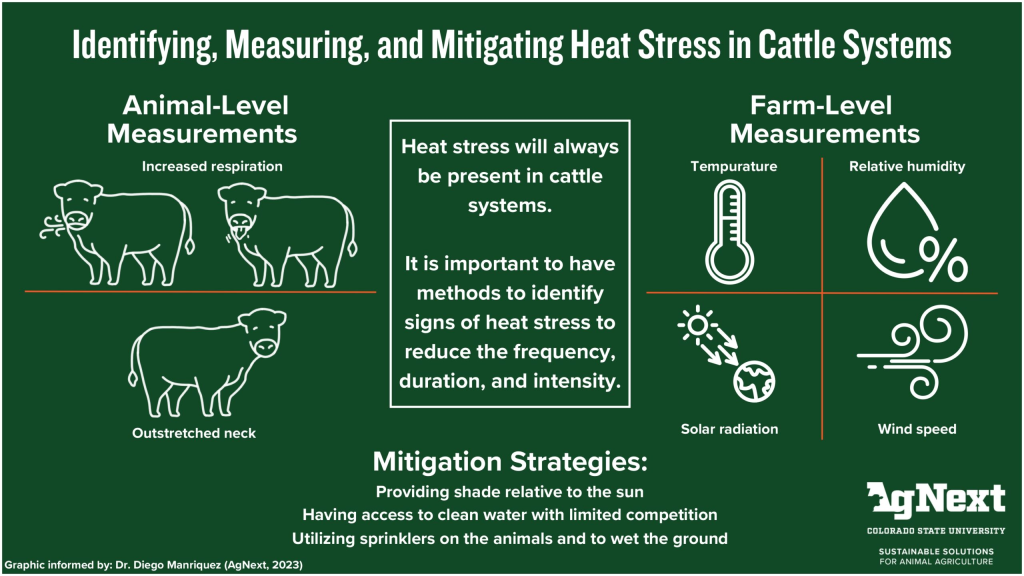
- Heat-stressed cattle may show signs like heavy breathing and panting, stretching their necks, remaining standing up longer than usual as they try to get more air flow around their body, and they may stop grazing. Beef cattle also tend to group together during heat stress, which aggravates the issue as they absorb other animals body heat. Planting a few trees around the property can help ease the effects of heat stress for cattle.
- Hauling cattle also increases the risk of heat stress, when possible, move cattle early in the morning or late at night to avoid heat related issues.
Selection: Whether you choose purebred or crossbred calves, make sure to get the healthiest animals possible. Choices should be made based on an excellent combination of muscle, style, balance, alertness and desirable breed characteristics. Deciding the type of operation is also important when selecting animals. Replacement heifers, feeder cattle, small cow hers and feedlot production all have their particularities in terms of best breeds and requirements.
Reproduction and replacement: When raising a small herd on small acreages, artificial insemination may the most economically feasible way to breed your cows instead of keeping a bull. A stocker operation may be a good option if you are new to beef cattle. This allows you to learn from the beef market, behavior and needs before you start worrying about a breeding program.
Nutrition: Adequate levels of protein, energy, water, minerals and vitamins are essential to achieve good production and keep your animals healthy. Grazing animals may obtain most nutrients from forages. Year-round grazing implies that animals will be left on pasture all year as their only source of food. Dryland small acreages may not always be able to supply forage year-round in Colorado, especially on drought years. Supplementing with hay or a balanced concentrate and roughage is also an option to consider, especially on drylands.
Lastly, you want to make sure that your beef cattle is not just a money pit or a very expensive hobby. You can plan ahead an make smart decisions to avoid big economic losses that have a big impact on your family budget.
Learn more about livestock production by listening to Pasture for Profit Podcast. CSU Extension livestock specialists have prepared these short 15-20 minute discussion about different aspects of livestock production that you can listen to to stay updated on the most current information.
Equine biosecurity
Biosecurity is often thought of as a problem only for large operations, but there are small practices all horses owners can adopt to keep their animals healthy.

CSU has a set of Animal biosecurity resources to assist animal owners and farm managers to prevent infectious disease among animals housed together or animals that are constantly moving from one place to another. Shipping or moving horses can weaken their immune system quickly, thus making them more susceptible to infectious diseases. If you are moving horses to a different property or have horses coming to your property, make sure there is a safe and clean quarantine area located 35-200 meters away from other horses where your horse can remain for the first few days.
Download the Biosecurity Checklist for Barn Managers to keep track of all the measures to keep a safe horse barn.
If you are taking taking horses to shows and fairs keep these useful tips in mind:
- Use your own trailer for transportation. Don’t ship your horses with animals from other farms or ranches.
- Ship only in a clean and disinfected trailer.
- Avoid direct contact between horses, especially nose to nose.
- Bring your own equipment (e.g., water, feed buckets, brushes, sponges, etc.) and avoid borrowing it.
- Wash your hands often, especially when interacting with horses other than your own.
- Disinfect boots, equipment and grooming supplies before leaving the show grounds.
- When you get home, shower, put on clean clothes and shoes before interacting with other horses.
- Make sure all horses are up to date on vaccines, even if only one of your horses is leaving the farm for shows.
- Quarantine horses that have been off the farm for at least 2 weeks when possible.
Other horse owner resources: