


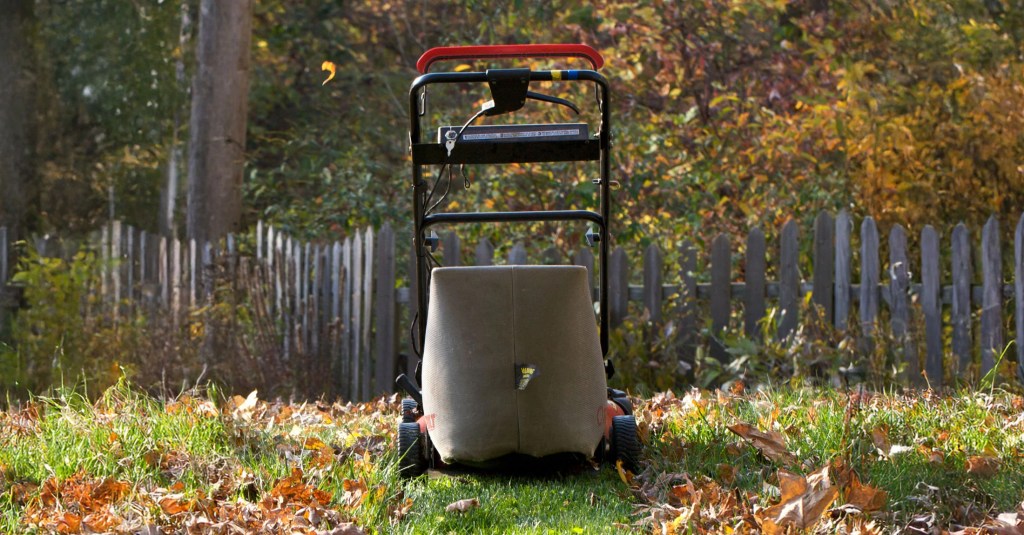
Learn how to turn fall foliage from a seasonal headache into a landscaping asset.
Photo via Chiot’s Run, Flickr. CC BY-NC 2.0. Image aspect ratio was expanded with AI.

Alison O’Connor is a professor of horticulture for Colorado State University Extension. Her position focuses on community outreach and education, as well as coordinating the Larimer County Master Gardener volunteers.
Ah, autumn. It’s the perfect time of year for appreciating nature’s vibrant colors, snuggling in a cozy sweater, and… figuring out how to deal with ever-growing mountains of leaves!
But what if instead of bagging and hauling them away, you could put those leaves to good use and make your landscape healthier and happier?
If you’re wrestling with heaps of leaves this time of year, you’re not alone.
Read on for a few simple steps that will help you put them to good use with minimal effort.
Mulching leaves with a mower
First up: Grab your lawnmower! Set it to its highest setting and make a couple passes over your leaves and lawn to chop your leaves into small pieces that will be able to filter into the turf. This works better with dry vs. wet leaves.
How much leaf mulch to apply
As long as you can see grass after you’ve mulched, that mulch you’ve just made isn’t too thick and you’re in good shape.
Doing this returns nutrients to the soil, providing food for earthworms and increasing moisture for the turf roots.
Weed suppression using mulched leaves
There are two ways that adding mulched leaves to your lawn can help with weed suppression.
One of the best defenses against weeds is dense, healthy turf. The decomposing leaves will also cover up bare spots in your lawn, which otherwise would serve as a perfect opportunity for weed seeds to germinate.
If you can keep this up for three years, lawn-care experts from Michigan State University have found it can lead to a near elimination of dandelions and crabgrass!
Experts at Purdue have also found that mulching leaves into your lawn won’t increase thatch or disease and doesn’t affect soil pH.
Composting leaves

If you’ve got more leaves than your lawn can handle, composting them is a practical way to manage them. Leaves are rich in carbon, which pairs well with nitrogen-rich materials like grass clippings and kitchen scraps. Composting your leaves gives you nutrient-rich material to use in the garden come spring.
Why unmulched leaves work best for composting
For composting, whole leaves are preferable to those shredded or mulched by a lawn mower. When leaves are finely chopped, they tend to compress, which can prevent sufficient oxygen from reaching the pile—something essential for proper decomposition.
Balancing leaves with nitrogen-rich materials
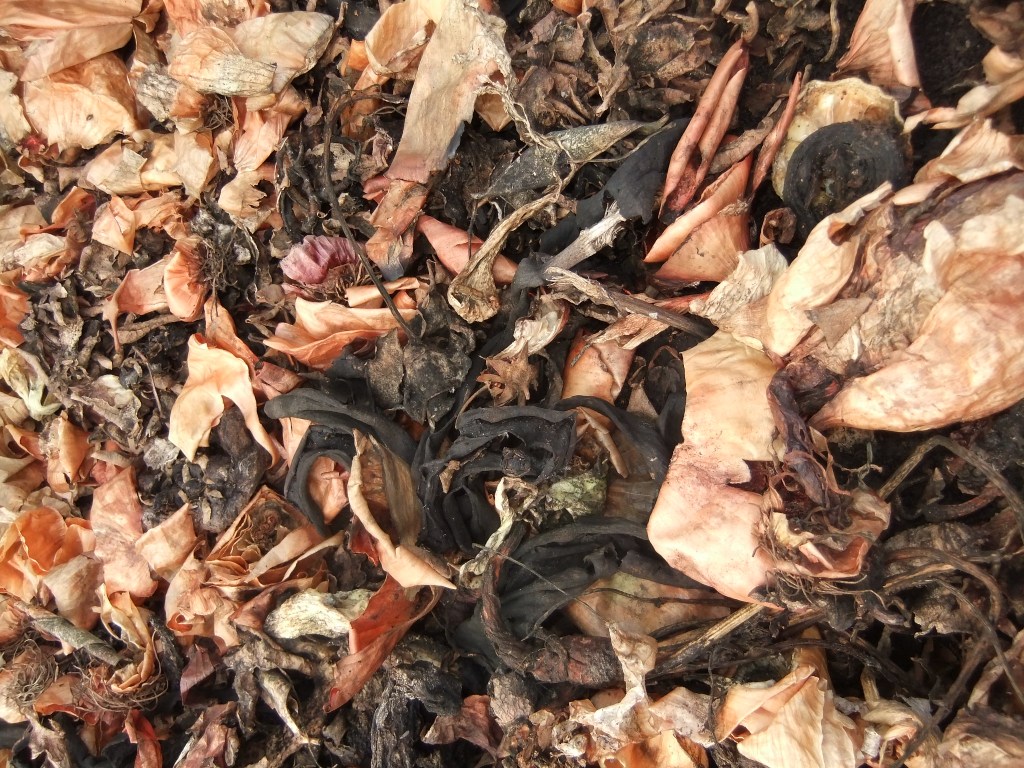
When composting leaves, which are high in carbon, you should balance them with grass clippings and kitchen scraps, which are high in nitrogen.
Photo via Julie Gibbons, Flickr. CC BY 2.0.
Tree leaves are “brown” material, which means they’re rich in carbon. They should be paired with nitrogen-rich “green” materials like grass clippings and kitchen scraps.
If you don’t have access to green material, or enough to balance out your leaves, you can add fertilizer to your compost at a ratio of around 1/4 to 1/2 a cup of fertilizer per 10-15 pounds of leaves. If you use a fertilizer, be sure to select one that doesn’t contain any weed killers.
Oak and cottonwood leaves
If you have oak and cottonwood leaves, which are high in tannins, be sure to chop them well and use them in small quantities because they are slow to decompose.
Choosing the right size compost bin
The minimum size for compost bins is three feet by three feet by three feet. Bins larger than six feet across may restrict oxygen infiltration and slow decomposition.
Maintain moisture in your compost pile
As you add leaves to the compost, moisten them until they feel like a damp sponge. Check the compost regularly and water as needed to maintain a consistent moisture level. Leaves take time to absorb water, and moisture is essential for proper decomposition. Be careful not to over-water to avoid creating a soggy pile.
Using leaves as mulch
Leaves are also a free and abundant source of organic matter for your garden beds and landscaping. Using leaves as a mulch is a great way to avoid adding to the landfill as waste.
Applying leaf mulch in vegetable garden beds

Add a six- to eight-inch layer of leaves (chopped by a lawnmower, if possible) directly into your vegetable garden. Moisten the layer, apply a bit of fertilizer to accelerate decomposition, and allow the microbes to work over the winter months.
By spring, you can till the leaves into the soil or plant directly into the enriched area. However, to avoid over-amending, it’s wise to test your soil first.
Using leaf mulch around landscape plants
Leaves can be used as insulating mulch around tender or new plants. Simply wrap a wire cage around the plant to hold the leaves in place and add three to six inches of shredded leaves.
When growth begins in the spring, you can remove the cage and leaves.
Ecological benefits of leaving leaves
Using leaves in your yard isn’t just about getting rid of them. It’s an eco-friendly choice with real benefits for your landscape.
When leaves break down, they feed soil microbes, encourage earthworm activity, and help recycle nutrients. Plus, keeping leaves out of landfills reduces waste and saves you from bagging and hauling. Win-win!
With these simple steps, you can turn fall foliage from a seasonal headache into a resource your landscape will love.
So this year, don’t rake those leaves away, embrace them! Your lawn, garden, and plants will thank you, and you might even enjoy the process (or at least not dread it as much).
How to get bonus points for helping pollinators

Help pollinators by leaving leaf litter in a place where it will be undisturbed, offering native bumblebees a place to hibernate over the winter.
Bumblebees typically emerge from hibernation between mid-April and mid-May, depending on conditions, so try to leave leaf litter in place until at least then.
Avoid leaving leaf litter on your lawn in order to avoid smothering your grass, as well as to prevent mold and disease growth.