


Benefits
The benefits of mulch depend on the material used and depth to which it is applied. In general, mulching minimizes evaporation of water from the soil surface, reducing irrigation need by around 50%. It helps stabilize soil moisture levels, thereby improving vegetable quality and encouraging the beneficial activity of soil organisms.
Mulching helps reduce soil compaction forces from rain and traffic. Some may later be plowed into the garden as a soil amendment, adding organic matter to the soil. Mulching may cool or warm soil temperatures. It may control weeds.
Grass Clippings
Grass clippings make excellent mulch for the vegetable garden. Apply fresh clippings in thin layers (up to 1/4 inch thick) and allow each layer to dry before adding more. The clippings quickly dry down and additional layers can be added weekly. A few layers will stop weed seed germination. Do not place fresh clippings in thick piles, as they will mat, reducing water and air infiltration, stink, and may become hydrophobic. Do not use clippings from lawns that have been treated with herbicides or other pesticides in the past month. There are some herbicides that will carryover for years. Always read the label before applying an herbicide. [Figure 1]
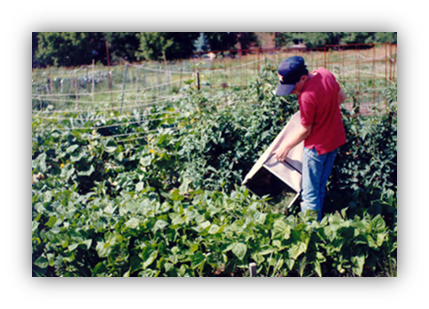
Around lettuce and other leafy vegetables, mulch by carefully hand-placing the grass at the base of the plants. Grass sticks to wet lettuce, creating a problem in food preparation.
A couple of sheets of newspaper may be used under the clippings to help control weeds. This shuts out the light preventing seed germination. The newspapers blow away with a light wind so they must be covered immediately with grass to hold them in place. Do not apply newspapers more than a couple of sheets thick or a soil carbon to nitrogen imbalance may occur. Do not use glossy print materials; their inks may not be soy-based like newspapers. The grass and newspaper mulch may be cultivated into the soil in the fall, adding small amounts of organic matter. [Figure 2]

Straw
Weed free (seed free) straw makes excellent mulch for vegetables. When purchasing straw, look for certified weed (seed) free products. However, if the straw field was treated with an herbicide that carries over into the straw, it can transfer to your vegetables. Do your research before using straw as mulch.
The straw protects potato tubers growing near the surface from sunlight, so the potato plants do not have to be mounded. (When a potato tuber is exposed to sunlight, it turns green, becoming mildly poisonous.) [Figure 3] Straw mulch may be used as an alternative to hilling.
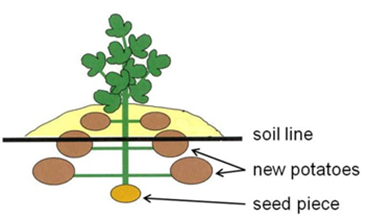
Certified weed (seed) free straw is also a good organic source for clayey soils. After using it as a summer mulch for a few years, thoroughly cultivate it into the soil as a soil amendment in the fall.
Compost or Leaf Mold
Both make excellent organic mulch for a vegetable garden. Homemade plant-based compost is best but sometimes good local products or bagged products can be found. Apply one to two inches.
Wood or Bark Chips
Do not use wood or bark chips in the growing beds since they will interfere with future seedbed preparation. It takes several years for chips to decompose in Colorado’s alkaline soils.
In a raised-bed garden, wood or bark chips make excellent mulch between the boxes. Apply three to four inches deep to control weeds. At this depth, chips also prevent soil compaction from foot traffic, allowing crop roots to spread out under the walkways. [Figure 4]
When placed on the soil surface as mulch, wood/bark chips do not tie-up soil nitrogen. Do not use fine sawdust for mulch because it could create a carbon to nitrogen imbalance and a barrier to water infiltration.

Black Plastic
Black or colored plastic mulch is extensively used in commercial tomato, pepper, melon, and strawberry production in Colorado. It merits consideration for these crops in the home garden. Because it warms the soil, it is undesirable for most cool season crops.
Put the plastic on the growing bed early in the season to start the soil warming, allowing for earlier crop growth. Crops must be planted early so plant growth shades the plastic before summer heat arrives. Otherwise, the plastic can be too hot for crops and must be removed. Black plastic may also be used to warm the soil for other crops, being applied early and removed prior to planting. Clear plastic can also be used.
In using black plastic along the Colorado Front Range, crops average two to three weeks earlier production and produce higher yields. In cooler locations, crops could be three to over four weeks earlier in production.
The black plastic mulch also controls weeds and reduces the need for irrigation. Because there is no surface evaporation of water, it is easy to over-irrigate crops.
Applying Plastic Mulch
- Prepare the soil and irrigation system. Drip irrigation with a soaker-type hose works well. Slightly mound the soil so the plastic makes direct contact with the ground.
- Cover the growing bed with the plastic. Bury all edges two to four inches. On a raised-bed box made with lumber, staple the plastic on the sides of the box. [Figure 5]
- Cut holes to plant or transplant into. Do not cut “X’s”— the hot plastic touching tender plants can burn. [Figure 6]
With plastic mulch, crops must be planted early so plant growth shades the plastic before summer heat arrives.
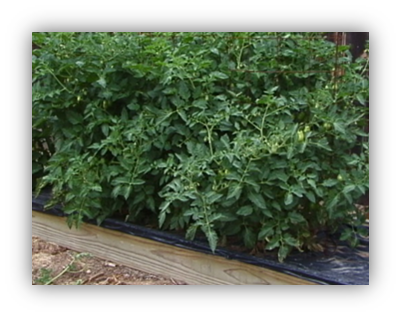

The plastic fluttering in the wind pumps air into the soil. However, covering the plastic with organic mulch like grass clippings or chips could reduce soil oxygen levels.
In the fall, do NOT plow in the plastic, rather remove it, and put it in the trash. Polyethylene plastic will never decompose in the soil. Because it breaks down with sunlight, it generally can be used only for a single season. Biodegradable plastic mulches are being developed but there isn’t yet enough research regarding their effectiveness.
There has been some research done on using colored plastic mulches. For example, red plastic is reported to increase tomato yields in cloudy climates. It also makes the fruits softer in texture. With Colorado’s high light intensity, this red-colored mulch provides an insignificant improvement.
This publication, reference GardenNotes #715, is developed as part of the Colorado State University Extension Master Gardener Program.