


Mulch Importance and Benefits
Mulch is important to the long-term health of trees and shrubs.
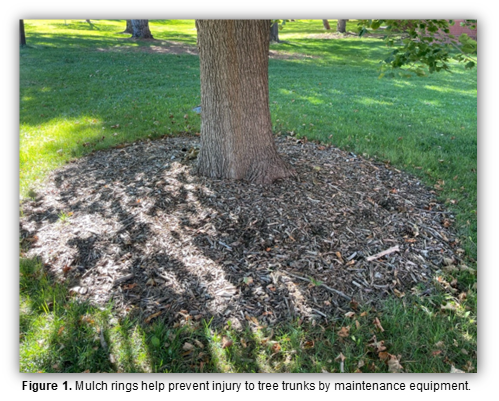
- It helps protect trunks from string trimmer and lawn mower damage.
- It helps retain soil moisture and reduces evaporation from the soil surface by 25-50%.
- Mulch helps moderate soil temperature extremes.
- Fine root hairs of trees develop 400% more under mulch than under grass; root hairs absorb most of the water and nutrients for the tree.
- Mulch suppresses weed growth and gives landscapes a finished look.
Mulch Disadvantages
While mulch has many benefits, there are some disadvantages.
- Organic mulches may harbor voles and other rodents.
- Lighter-weight mulch materials can blow away in very windy areas.
- If living in a fire-prone area, using organic mulch near the home is not recommended because it can be a source of fuel.
- Mulch may not completely suppress weeds and grass from growing, so the use of herbicides or other mechanical control may be necessary.
- Mounding mulch (i.e. “volcano mulching”) can be detrimental to overall tree and shrub health and may encourage insects and disease.
Mulch Options
There are many options for choosing mulch, but not all mulch is beneficial for tree and shrub health:
- Mimicking the natural duff layer of a forest is something to consider when selecting mulch for the landscape – organic materials, such as arborist chips, shredded bark, and pine needles, are all potential mulch choices.
- Plastic mulch is often used in vegetable production but has limited use in ornamental landscapes.
- Large rocks do a poor job of suppressing weed growth because soil settles between rocks, providing ideal conditions for weed germination.
- Rubber mulch has an unpleasant odor, can lead to drainage problems, and may leach toxic materials into the soil.
Mulch Application
Applying mulch properly is key.
- Keep the mulch at least 6 inches away from the trunk of the tree.
- Avoid mulching directly over the root ball of newly planted trees and shrubs; mulch may divert water and result in drought stress. Instead, mulch the backfill area and beyond, to a 4-to-5-inch depth. [Figure 1]
- Excessive mulch (this practice is sometimes called “volcano mulching”) can reduce the amount of available oxygen and water to roots and may result in tree decline or death. Plus, it looks unsightly.
This publication, reference GardenNotes #658, is developed as part of the Colorado State University Extension Master Gardener Program.