


Quick facts…
- Musk thistle is a biennial weed that reproduces only from seed.
- The key to successful musk thistle control is to prevent seed production.
- Apply herbicides such as Tordon, Milestone, Transline, Perspective, Vanquish/Clarity, or 2,4-D to musk thistle rosettes in spring or fall.
- Apply Escort, Telar, or Cimarron X-tra up to the early flower growth stage.
- Biological control weevils can complement other management strategies.
- Combine control methods into an integrated management system for best results.
Introduction
Musk thistle is an aggressive weed that occurs in pastures, rangeland, roadsides, and non-crop areas. It is primarily a biennial weed, though it occasionally completes its life cycle in one year under certain conditions (Figure 1). Because musk thistle reproduces solely from seed, the key to successful management is to prevent seed production. Germination and seedling establishment are correlated with moisture and light. Musk thistle can range from 1- 7 feet in height (Figure 2). Thus, more seeds germinate and establish plants in open pastures and other degraded areas. Vigorously growing grasses can compete with musk thistle, and fewer thistles occur in pastures where grazing is deferred. However, musk thistle can also become a problem in pasture or rangeland that is in good condition.
Phenology
Seedlings typically emerge early in spring, develop into rosettes (a circular arrangement of leaves growing close to the ground), and spend the first season in this growth stage. Seedling emergence can also occur in the fall. All seedlings grow into rosettes and overwinter in that stage. Rosettes are usually large and compact with a large, corky taproot that is hollow near the crown (Figure 3). Leaves have a consistent shape, sometimes expressing a frosted appearance around the leaf margins, and often have a cream-colored midrib (Figure 4).
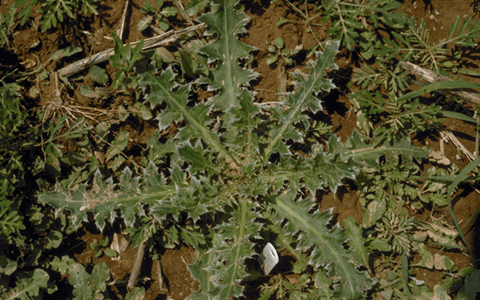
Figure 3. Musk thistle rosette
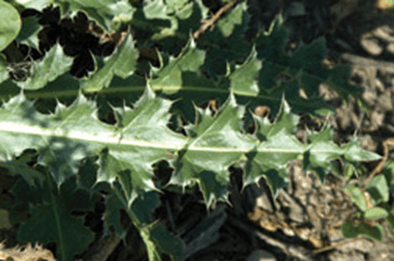
Figure 4. Musk thistle leaves; note the cream-colored mid-rib and frosted appearance around leaf margins.
Early in the spring of the second year, overwintered rosettes resume growth. Shoots begin to elongate (bolt) in late March through May, depending on weather and elevation (Figure 5). Bolting refers to the rapid vertical growth of the flower stalk. Musk thistle flowers (Figure 6) start to produce seed 45 to 55 days after they bolt. Musk thistle has huge bracts beneath its flowers that are armed with sharp spines, and the shoots beneath the flowers are almost devoid of leaves.
The plant dies after it sets seed. It spends approximately 90 percent of its life cycle in a vegetative growth stage. Musk thistle’s tolerance to most herbicides has been shown to increase after it bolts.
Reproduction and Spread
Musk thistle is a prolific seed producer. One plant can set 20,000 seeds. However, only one-third of the seeds are viable. Musk thistle produces many heads. The terminal, or tallest, shoots flower first, then lateral shoots develop in leaf axils. A robust plant may produce 100 or more flowering heads.
Musk thistle flowers over a seven- to nine-week period. It begins to disseminate seed from the head about two weeks after it first blooms. It is common to observe musk thistle with heads in several stages of floral development and senescence. Thus, musk thistle sets seed over an extended period.
Most seeds are dispersed within the immediate vicinity of the parent plant. This leads to a clumped pattern of seedling development, resulting in intraspecific competition and mortality. Wind and water are effective means of dissemination, and animals, farm machinery, and other vehicles also spread seeds. Less than 5 percent of the seed remains attached to the pappus (the feathery bristles that aid seed dispersal) when it breaks off the flowering head and floats away on wind currents (Figure 5).
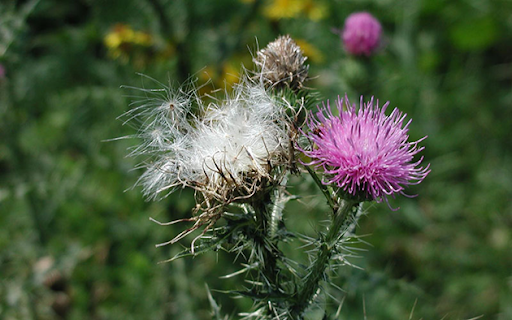
Figure 5. Musk thistle seed dispersal
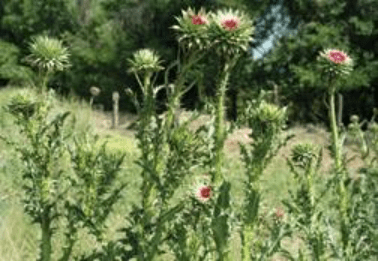
Figure 6. Musk thistle in bud growth stage; note large bracts below developing flower.
Management
Cultural Control
Maintaining pastures and rangeland in good condition is a primary factor for musk thistle management. To favor pasture and rangeland grass growth, do not overgraze. Fertilize only when necessary, following soil testing recommendations. To successfully manage musk thistle, prevent seed formation.
Mechanical Control
Musk thistle will not tolerate tillage and can be removed easily by severing its root below ground with a shovel or hoe. Mowing can effectively reduce seed output if plants are cut when the terminal head is in the late-flowering stage (Figure 7). Gather and burn mowed debris to destroy any seed that has developed. Make sure to check with local fire authorities to determine if utilizing a burn is an option.
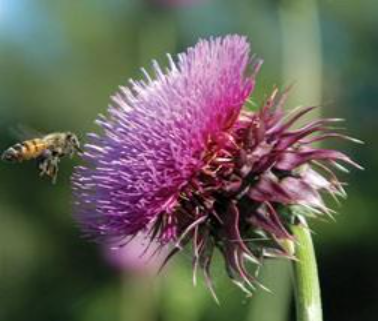
Figure 7. Musk thistle flower; note large bracts and lack of leaves on the shoot below the flower.
Chemical Control
Several herbicides are registered in pasture, rangeland, and non-crop areas to control musk thistle. Tordon 22K (picloram), Milestone (aminopyralid), Transline (clopyralid), Perspective (aminocyclopyrachlor + chlorsulfuron), Banvel/Vanquish/Clarity (dicamba), 2,4-D, or Banvel/Vanquish/Clarity plus 2,4-D are commonly used. Apply these herbicides to musk thistle rosettes in spring or fall. Refer to Table 1 for rates and application timings and always read the herbicide label before using the product. Applications during the reproductive growth stages (bud through flowering) with these herbicides will not prevent the development of viable seeds.
Escort (metsulfuron), Telar (chlorsulfuron), or Cimarron X-tra (metsulfuron + chlorsulfuron) also can be used in pastures, rangeland, and non-crop areas. Research from Colorado State University and the University of Nebraska shows that chlorsulfuron or metsulfuron prevents or dramatically reduces viable seed formation when applied in spring, up to early flower growth stages. The latest time to use these herbicides is when the developed terminal flowers have opened to the size of a dime. Add a good agricultural surfactant at 0.25 percent volume/volume (v/v) to Escort, Telar, or Cimarron X-tra treatments or control is inadequate (equivalent to 1 quart of surfactant per 100 gallons of spray solution).
Necessary: Always follow herbicide label directions, wear appropriate personal protective equipment, and check local regulations regarding herbicide use near water and sensitive areas.
Table 1. Herbicide rates and application timings to control musk thistle.
| Herbicide | Rate (Product/A) | Application Timing | Comments |
|---|---|---|---|
| Tordon | 0.5 to 1 pint | Spring at rosette growth stage, or in fall | Use higher rates for older or dense stands |
| Milestone | 3 to 5 fl oz | Spring at rosette growth stage, or in fall | Use higher rate for older or dense stands; may be used to edge ponds or streams |
| Transline | 0.67 to 1.33 pints | Spring at rosette to early bolting growth stages, or in fall | Use higher rate for older or dense stands |
| Banvel, Vanquish, or Clarity (dicamba) | 1 to 2 pints | Spring rosette growth stage, or in fall | Use higher rate for older or dense stands |
| Perspective | 3 to 4.5 oz | Spring rosette growth stage, or in fall | Use higher rate for older or dense stands |
| Telar | 0.5 to 1 oz | Spring rosette to early bud growth stages, or to fall rosettes | Add non-ionic surfactant at 0.25% v/v |
| Escort | 0.5 oz | Spring rosette to early bud growth stages, or to fall rosettes | Add non-ionic surfactant at 0.25% v/v |
| Cimarron X-tra | 0.5 oz | Spring rosette to early bud growth stages, or to fall rosettes | Add non-ionic surfactant at 0.25% v/v |
Biological Control
The Thistle Crown Weevil (Trichosirocalus horridus) is an effective biocontrol of musk thistle. This weevil attacks the crown area of musk thistle rosettes and kills or weakens the plant before it bolts (Figure 8). The female weevils lay 500-800 eggs in clusters on the underside of leaves. Eggs hatch in 10-12 days. Larvae develop in the basal portion of the stem and root crowns. Complete development in 6-8 weeks. Whole grown larvae pupate in the soil in pupation chambers. Adults emerge in 12-20 days in the spring. They hide until the fall when they begin to feed. The Thistle Crown Weevil is being distributed in Colorado by the Department of Agriculture’s Insectary. If used alone, however, it is not an effective management tool.
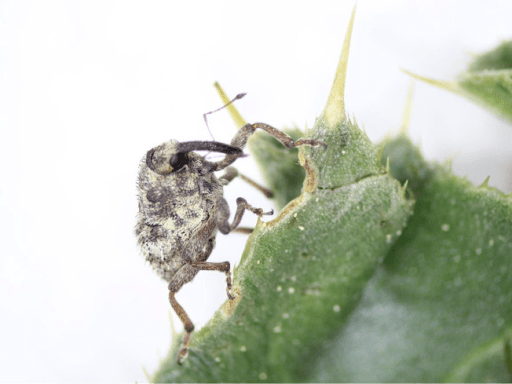
Figure 8. Adult Thistle Crown Weevil, Trichosirocalus horridus
The other musk thistle seed head weevil, Rhinocyllus conicus, can be found naturally throughout Colorado. The musk thistle seed head weevil is no longer being redistributed because it attacks many thistle species, including native ones. The female deposits her eggs on the back of developing flowers and covers them with chewed leaf tissue. After eggs hatch, larvae bore into the flower and destroy the developing seeds. The seed head weevil reduces seed production by an average of 50 percent.
Integrating Control Methods
Certain herbicides or mowing can be combined with the seed head weevil if used during the late-flowering stages. This allows the weevils to complete their life cycle and ensures their presence in subsequent growing seasons. To combine chemical and biological control methods, apply herbicides when they won’t interfere with insect development. That is, allow the control insects to complete their life cycle. Or use herbicides in areas that aren’t sensitive to their use and biological control in areas where herbicides are impractical or environmentally unsafe.
Cultural methods that favor desirable plant growth can be combined with chemical or biological control by implementing proper grazing management and seeding practices.
For More Information
Contact your local Extension office or the Colorado Department of Agriculture for:
- Current musk thistle distribution data
- Biological control weevil availability
- Site-specific management recommendations
- Updated herbicide information
Always read and follow herbicide labels. Herbicide use recommendations are provided only as guidelines. The user is always responsible for herbicide residues and application according to label directions.