


Quick facts…
- A Colorado native perennial is defined as a plant existing in Colorado prior to European settlement.
- Native plant gardens create wildlife habitat for a variety of birds, mammals, and insects.
- Landscaping with native plants makes a significant contribution to biodiversity that otherwise would be lost to development.
- Native plant communities in Colorado vary due to differences in exposure, elevation, rainfall, soils, and temperature extremes. These plant communities make Colorado visually distinct from other parts of the country.
Why Grow Native Herbaceous Perennials?
There are many benefits to using Colorado native herbaceous perennials for home and commercial landscapes. They are naturally adapted to Colorado’s climates, soils, and environmental conditions. When they are correctly sited, they make ideal plants for a sustainable landscape. Native herbaceous perennials require less external inputs such as watering, fertilizing and other cultural factors when the planting site mimics the plant’s native habitat.
Using Colorado natives in landscapes may attract a variety of wildlife including mammals, birds, butterflies and other native pollinators. Rapid urbanization in the state is reducing biodiversity (the number of different species found in a given area) as habitat is removed for building and road construction. Landscaping with natives on a large, or small scale, helps maintain biodiversity that otherwise would be lost to development.
The perennials listed in Table 1 were specifically chosen because they require low or moderate amounts of water. Not all perennials listed are available at all nurseries and garden centers, so it may be necessary to contact a number of commercial outlets to find a specific plant. If a perennial is not sold in the trade, asking for it may improve its future availability. Native perennials should not be collected from the wild because this reduces biodiversity, causes a disturbed area that may be invaded by weeds, and may be illegal. Transplanting a plant from the wild to the garden is rarely successful because of root damage and transplant shock.
Most of the perennials listed in Table 1 are available as container-grown plants. Native perennials often do not have as great a visual impact in the container or immediately after planting as do traditional horticultural species. Over time, however, they will reward the homeowner with their natural beauty.
Where to Grow Native Herbaceous Perennials
Due to Colorado’s varying elevation and topography, native plants are found in a variety of habitats. To maximize survival with minimal external inputs, plants should be selected for your site’s life zone and the plant’s moisture, light, and soil requirements. Even if a plant is listed for a particular life zone, the aspect (north, south, east, or west facing) of the proposed site should match the moisture requirement. For example, a prairie zinnia, which requires full sun and has a very low moisture requirement, should not be sited with plants requiring higher moisture needs. Similarly, a prairie zinnia should not be planted on the north side of a building, where there is increased shade and moisture could severely affect its growth and appearance.
Growing native perennials does not exclude using adapted non-native plants. There are many non-native plants that are adapted to Colorado’s climate and can be used in a native landscape as long as moisture, light, and soil requirements are similar. Even if a site has a non-native landscape that requires additional inputs (such as an irrigated landscape on the plains), dry land native plants can be used in non-irrigated pockets within the non-native landscape. These native “pocket gardens” can be located in areas such as median strips and next to hardscapes that are difficult to irrigate. Note that in years with less than normal rainfall, non-irrigated landscapes may suffer in appearance.
Some communities regulate landscape appearance or the type of plants which may be used. Before initiating a landscape design, check with local authorities, including homeowner’s associations, to discover any regulations that may affect the design.
Culture and Maintenance
There are three ways to establish a native herbaceous planting: 1) use nursery grown transplants, 2) direct seeding, or 3) use a combination of transplants and seeding. Successful establishment of native transplants requires supplemental moisture from a few months to several years after planting, but this can gradually be reduced. Seedings benefit from supplemental watering until plants are established. Weed control prior to planting seed is critical for success. Nursery grown transplants are best planted in spring or early fall. Seeds can be planted from early to late spring or preferably in late fall.
Native plants can often be successfully grown in unamended soils. Most natives do not require nutrient rich, high organic content soil, and can often become overgrown or short lived in such soils. However, many native plants require well- drained soils. To amend clay soils, add 10 percent compost and 15 percent small aggregate (i.e., pea gravel) by volume to clay/clay loam and incorporate into the root zone. Creating a small berm and planting on the top can also be helpful to improve drainage. To amend excessively well- drained sandy or rocky soils, add 3 percent compost by volume.
A diverse planting of native herbaceous perennials can support a wide variety
of wildlife throughout the season. Leave vegetation standing after the first hard frost to provide over-wintering sites for beneficial insects and birds.
Using native herbaceous perennials offers many benefits in addition to reduced maintenance. The need for fertilizers and pesticides can be greatly reduced or eliminated. Once established, native plantings can help conserve water. Our native plant communities make Colorado visually distinct from other parts of the country and will provide a better sense of place.
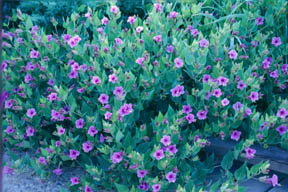
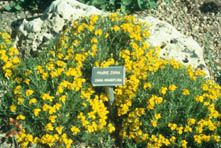
Table 1. Native herbaceous perennials for Colorado landscapes.
| Scientific name 1 Common name | Planting Elevation 2 | Bloom time 3 | Exposure | Moisture 4 | Color | Height | Comments |
|---|---|---|---|---|---|---|---|
| Erigeron speciosus Aspen daisy, Showy daisy | To 9,500′ | M | Sun to part shade | l-m | Lavender blue with yellow center | 12-18″ | Rich green foliage; daisy-like flowers; attracts butterflies; most soils. |
| Eriogonum umbellatum Sulphur flower | To 10,500′ | M | Sun | l | Sulphur yellow ages to rust brown | 6-12″ | Mat of leathery green foliage with silver undersides; turns reddish in fall; flowers attract butterflies; well-drained soils. |
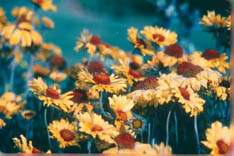
| Gaillardia aristata Blanket flower | To 9,000′ | M | Sun | l | Yellow (to yellow/red) with red/brown centers | 18-24″ | Fuzzy gray-green leaves; large daisy flowers; well-drained soils. |
| Geranium viscosissimum Sticky geranium | To 9,500′ | E-M | Sun to part shade | l-m | Pale pink to rose/purple with darker veins | 12-24″ | Lobed leaves turn red in fall; open clusters of flowers with sticky stems; well-drained soils. |
| Geum triflorum Prairie smoke | To 10,000′ | E | Sun to part shade | l-m | Cream to deep pink | 6-12″ | Rosettes of gray-green fernlike foliage; nodding flowers followed by long pink feathery seed heads; prefers moist clay or organic soils. |
| Helianthus maximiliana Maximilian sunflower | To 6,500′ | L | Sun | l-m | Yellow | 60-120″ | Lance-shaped leaves on stout stems; showy flowers; spreads aggressively by rhizomes, esp. in moister soils; most soils. |
| Heliomeris multiflora Showy goldeneye | To 10,000’ | L | Sun | l | Yellow | 18-30” | Heavily branched with narrow leaves; prolific sunflower-like flowers; available only from seed; reseeds aggressively; well-drained soils. |
| Ipomea leptophylla Bush morning glory | To 7,000′ | M-L | Sun | l | Lavender purple | 24-36″ | Spreading mounded plant with linear leaves; huge tap root; morning glory-like flowers; long lived; sandy or sandy loam soils. |
| Ipomopsis aggregata Scarlet gilia, Fairy trumpets | To 9,000′ | M | Sun | l | Red, pink, and white | 12-30″ | Rosette of finely divided leaves; trumpet-shaped flowers; attracts hummingbirds; biennial; reseeds readily; well-drained soils. |
| Liatris punctata Gayfeather, Blazing star | To 7,500′ | L | Sun | l | Rose purple | 12″ | Rigid linear leaves; stout spikes of fringed flowers; attracts butterflies; well- drained soils. |
| Linum lewisii Blue flax | To 9,500′ | Mid | Sun, part shade | l-m | blue | 12-24″ | Fine blue-green foliage; saucer-shaped flowers; reseeds readily; well-drained soils. |
| Lupinus argenteus Silver lupine | To 10,000′ | M | Sun | l | White to deep purple | 12-36″ | Palm-shaped leaf; spikes of pea-like flowers; attracts butterflies; well-drained soils. |
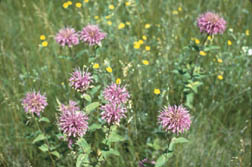
| Mondarda fistulosa Bee balm, Wild bergamot | To 9,000′ | M | Sun | l-m | Pink to lavender | 12-36″ | Upright growth with fragrant foliage; profuse wispy flowerheads; good air circulation will lessen powdery mildew; well-drained soils. |
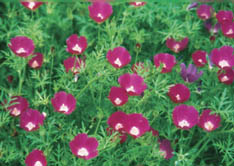
| Mirabilis multiflora Desert four o’clock | To 8,000′ | M-L | Sun, part shade | l | Pink to purple | 12-30″ | Blue-green leaves; wide spreading mounded habit; trumpet-shaped flowers with yellow stamens open late morning; well-drained soils. |
| Oenothera caespitosa White-tufted evening primrose | To 9,000′ | M | Sun | l | White with pink buds | 6-12″ | Dense rosette of dark gray/green leaves; fragrant flowers open in late afternoon, fade the next morning; well- drained soils. |
| Pulsatilla patens Pasque flower | To 9,000′ | E | Sun | l-m | Lavender | 6-12″ | Wooly foliage with cup-shaped flowers followed by feathery seed heads; well- drained soils. |
| Penstemon ambiguus Bush or sand penstemon | To 6,500′ | M-L | Sun | l | Whitish pink | 24-30″ | Freely branching bushy plant with woody base; phlox-like flowers clustered towards top of stem; sandy soils. |
| Penstemon angustifolius Pagoda or narrow- leaved penstemon | To 7,500′ | M | Sun | l | Sky blue | 12″ | Narrow blue-green foliage can be evergreen; numerous tubular flowers encircle stalks; requires well-drained soils. |
| Penstemon barbatus Scarlet bugler penstemon | To 9,000′ | M | Sun | l | Scarlet to red | 24-36″ | Slender tall stalks with foliage clustered at base; tubular flowers favored by hummingbirds; well-drained soils. |
| Penstemon caespitosus Mat penstemon | To 9,000′ | E-M | Sun | l | Blue to violet | 4-6″ | Mat forming with trailing stems; excellent for rock gardens; well-drained soils. |
| Penstemon glaber Smooth penstemon | To 9,000′ | M | Sun | l | Deep blue/ purple | 12-18″ | Stout upright stems; tubular flowers; well-drained soils. |
| Penstemon grandiflorus Shell leaf penstemon | To 8,500′ | M | Sun | l-m | White, pink, and purple | 24-36″ | Waxy blue-green semi-evergreen foliage; large tubular flowers; can be short lived but reseeds readily; well- drained soils. |
| Penstemon mensarum Grand Mesa penstemon | To 9,000’ | M | Sun | l | Blue | 24-30” | Stunning cobalt flowers on narrow spikes; evergreen leaves; Plant Select®. |
| Penstemon secundiflorus Orchid/Sidebells penstemon | To 9,500′ | M | Sun | l-m | Pink/purple | 6-18″ | Waxy blue-green foliage; tubular flowers emerge from one side of the stalk; rocky soils. |
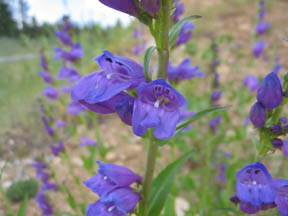
| Penstemon strictus Rocky Mountain Penstemon | To 10,000′ | M | Sun to part shade | l-m | Blue to blue- purple | 12-30″ | Robust grower; narrow glossy green leaves; tubular flowers in open spikes; develops powdery mildew if crowded; well-drained soils. |
| Penstemon virens Bluemist penstemon | To 10,000′ | E-M | Sun to part shade | l-m | Light blue to blue/violet | 6-12″ | Dense basal rosette of bright green leaves; profuse clusters of small flowers; good for rock gardens; rocky soils. |
| Penstemon virgatus Wand bloom penstemon | To 10,000′ | M | Sun | l-m | Pale blue to violet | 12-30″ | Erect slender stalks; linear upright leaves; tubular flowers; well-drained soils. |
| Penstemon whippleanus Whipple’s penstemon | To 12,000′ | M | Sun to part shade | l-m | Wine purple or white | 10-20″ | Clustered stems; whorls of nodding tubular flowers; adaptable to moister soils. |
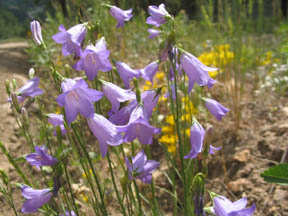
| Polemonium caeruleum Jacob’s ladder | To 9,000’ | M | Part shade | m | Blue-purple | 18-24” | Clusters of bell-shaped flowers on upright plants; small pinnately compound leaves. |
| Ratibida columnifera Prairie coneflower, Mexican hat | To 7,500′ | M-L | Sun | l | Yellow | 12-24″ | Upright slender stalks; finely divided leaves; prominent central cone surrounded by drooping petals; short- lived but reseeds; well-drained soils. |
| Rudbeckia hirta Black-eyed Susan | To 9,000′ | M | Sun to part shade | m | Yellow with brown to black center | 12-24″ | Fuzzy green leaves with daisy-like flowers; biennial to short lived perennial; reseeds; most soils. |
| Solidago canadensis Goldenrod | To 7,000′ | M | Sun to part shade | l-m | Yellow | 12-36″ | Upright stems; spreads by underground rhizomes; spikes of flowers; attracts butterflies and bees; mistakenly blamed as cause of hayfever; clay or loam soils. |
| Sphaeralcea coccinea Scarlet globemallow | To 8,000′ | E-M | Sun | l | Coral red, orange | 8-12″ | Hairy gray-green leaves; vigorous rhizomes; small hollyhock-like flower; well-drained coarse soils. |
| Stanleya pinnata Prince’s plume | To 9,000′ | M | Sun | l | Yellow | 24-48″ | Gray-green leaves; large plume-shaped flower spikes; can be short lived; well drained soils. |
| Thelesperma filifolium Navajo tea, Greenthread | To 8,000′ | M-L | Sun | l-m | Yellow | 16-24″ | Vase-shaped clump; finely dissected leaves; profuse daisy-like flowers over long periods; well-drained soils. |
| Thermopsis divaricarpa Golden banner | To 11,000′ | E-M | Sun to part shade | l-m | Yellow | 18-24″ | Spreads vigorously by rhizomes; needs room; showy spikes of pea-like flowers; well-drained soils. |
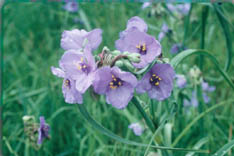
| Tradescantia occidentalis Spiderwort | To 8,000′ | M | Sun to part shade | l-m | Purple/blue | 12-24″ | Upright stalks above grass-like foliage; clusters of three petaled flowers each lasting a day; most soils. |
| Verbena bipinnatifida Spreading vervain | To 8,000′ | E-L | Sun | l | Rose/purple | 6-10″ | Sprawling stems with deeply cut leaves; prolific bloomer; attracts butterflies; well-drained soils. |
| Zinnia grandiflora Prairie zinnia, Golden paperflower | To 6,000′ | M-L | Sun | l | Yellow | 6-8″ | Mounding habit with wispy leaves; prolific bloomer; flowers have a papery texture; requires well-drained soils. |
| 1 As commonly sold in the trade. For equivalents, see botanical publications. 2 Planting elevations are estimates of where plants may be successfully grown as landscape plants. In many cases, species may be successfully planted at a lower elevation with supplemental irrigation or at higher elevations with protection. 3 Bloom time E=Early (March through end of May); M=Mid (June through Mid-August); L=Late (Mid-August through frost). 4 Moisture requirement l=Low; m=Moderate. Plant Select® is a program that seeks and distributes information about the best plants for gardens from the high plains to the intermountain region. It is a cooperative program administered by the Denver Botanic Gardens and Colorado State University Extension, together with landscape and nursery professionals throughout the Rocky Mountain region and beyond. | |||||||
Reference: CSU Fact Sheet 7.242