


Quick facts…
- A Colorado native shrub can be described as existing in Colorado prior to European settlement.
- Native plant communities make Colorado visually distinct from the eastern, southern or western United States.
- Native plant gardens are wildlife habitats, and each plant contributes to the biodiversity of the state.
- Landscaping with natives on a large or small scale can maintain biodiversity that otherwise would be lost to development.
Why Grow Native Shrubs?
There are many benefits to using Colorado native shrubs for home and commercial landscapes. Colorado native shrubs are naturally adapted to their specific Colorado climate, soils, and environmental conditions. When correctly sited, they can be ideal plants for a sustainable landscape that requires reduced external inputs such as watering, fertilizing, and pruning. To realize these benefits, the planting site must approximate the natural environmental conditions of the plant in its native habitat.
Another benefit of using Colorado natives in landscapes is that they may attract a wide variety of wildlife including mammals, birds, and butterflies. Rapid urbanization in the state is reducing biodiversity as habitats are removed for building and road construction. Landscaping with natives on a large or small scale can maintain biodiversity that otherwise could be lost to development.
The shrubs listed in Table 1 are grown by some Colorado nurseries and are becoming more available in the commercial sector. However, not all shrubs listed are available at all nurseries, so it may be necessary to contact several commercial outlets to find a specific plant. If a shrub is not sold in the trade, asking for it may help increase its availability. Native shrubs should not be collected from the wild because this reduces biodiversity and causes a disturbed area that may be invaded by weeds.
Most of the shrubs listed in Table 1 are available as container-grown plants. Native shrubs often do not have as great a visual impact in the container or immediately after planting as do traditional horticultural species. Over time, they will reward the homeowner with their natural beauty and other benefits.
Figure 1
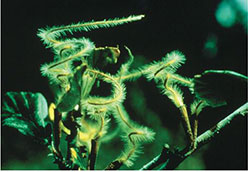
Figure 2
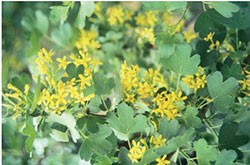
Figure 3
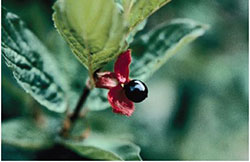
Figure 4
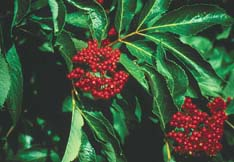
Figure 5
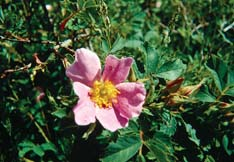
Figure 6
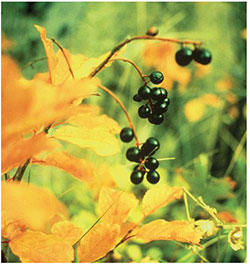
Figure 7
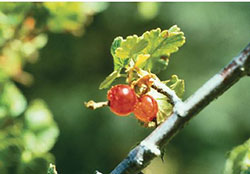
Figure 8:
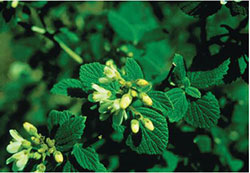
Figure 9
Life Zones of Colorado
Colorado can be divided into five life zones that are broadly defined by the plant communities that occur at the approximate elevations described below. The Plains’ 3,500 to 5,500 foot life zone is in eastern Colorado, where most of Colorado’s population lives. It is dominated by grasslands and streamside cottonwoods. In western Colorado, the Upper Sonoran life zone is located at altitudes below 7,000 feet, and in the San Luis Valley, below 8,000 feet. This zone is characterized by semidesert shrublands and piñon pine-juniper woodlands at its upper limit.
The Foothills life zone occurs from 5,500 to 8,000 feet and is dominated by dry land shrubs such as Gambel oak and mountain-mahogany, and, in southern and western Colorado, piñon-juniper woodlands and sagebrush. The Montane zone consists of ponderosa pine, Douglas-fir, lodgepole pine, and aspen woodlands at elevations of 8,000 to 9,500 feet. Dense forests of subalpine fir and Engelmann spruce dominate the Subalpine zone at 9,500 to 11,500 feet. The Alpine zone above 11,500 feet is a treeless zone made up of grasslands called tundra. Species requiring medium to high moisture occur along watercourses throughout all zones.
Culture and Maintenance
Successful establishment of native shrubs may require supplemental moisture after planting. Once established, the watering frequency can be reduced or even eliminated if the plant was sited in its native environmental conditions. Container-grown shrubs can be planted at any time during the growing season. Container-grown native shrubs are often grown in a soilless mixture of peat and bark, so the planting site should be amended with some organic material. Another option would be to carefully wash off the media from the container grown plant and plant its bare root.
Using native shrubs offers many benefits in addition to reduced maintenance. Natives are part of our natural heritage and the ecosystem of Colorado. Native plant communities make Colorado visually distinct from the eastern, southern, or western United States. Native plant gardens are wildlife habitats, and each plant contributes to the biodiversity of the state.
Mtd<4,000 – 7,500Upper Sonoran 3a LELarge oval shrub; rigid, gnarled branches; stansburianna small, lobed olive-green leaves, fragrant, creamy colored flowers, followed by feather-tailed seeds.
Table 1. Large native shrubs for Colorado landscapes (6 – 10 ft when mature)
| Scientific Name1 | Common Name(s) | Planting Altitude in feet2 | Native Colorado Life Zone3 | Moisture4 | Evergreen/ Deciduous | Comments5 |
|---|---|---|---|---|---|---|
| Acer glabrum | Rocky Mountain maple | 5,000 – 10,500 | Foothills -Montane | L – M | D | Small, rounded tree to large shrub; usually multi-stemmed; smooth, gray branches with red buds; fall foliage yellow; shade tolerant. |
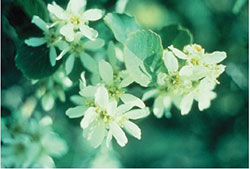
| Amelanchier alnifolia | serviceberry | 5,000 – 10,000 | Foothills – Subalpine | L – M | D | Upright to spreading branches, small rounded leaves; clusters of small white flowers; blue-black fruit attractive to wildlife; orange to red fall color. |
| Cercocarpus ledifolius | curl-leaf mountain-mahogany | 4,500 – 9,000 | Upper Sonoran3a | L – M | E | Thick, dark evergreen leaves curl during drought conditions; feathery, attractive seed heads; irregular growth habit; large shrub to small tree |
| Cercocarpus montanus | mountain-mahogany | 4,000 – 8,500 | Foothills – Montane | L – M | D | Open growth habit; feathery, attractive seed heads; wedge-shaped leaves. |
| Cornus sericea | red twig dogwood, red-osier dogwood | 4,500 – 10,000 | Plains – Montane | M – H | D | Red stems in winter; flat, white flower clusters followed by white to blue fruits attractive to birds; yellow to red fall color; streamside understory plant, shade tolerant. |
| Cowania stansburianna | Cliffrose | 4,000 – 7,500 | Upper Sonoran3a | L | E | Large oval shrub; rigid, gnarled branches; Sonoran3a small, lobed olive green leaves, fragrant, creamy colored flowers, followed by feather-tailed seeds. |
| Forestiera neomexicana | New Mexico privet | 4,500 – 7,500 | Upper Sonoran3a | L | D | Large shrub to small tree; dense, grayish-green foliage, yellow flowers before leaves, blue-black fruit on females, light tan bark; yellow fall color; good for screening. |
| Fraxinus anomala | single-leaf ash | 4,500 – 6,000 | Upper Sonoran3a | L – M | D | Large shrub or small tree, often multi-stemmed; found in dry canyons in southwest CO; yellow fall color; less available. |
| Mahonia fremontii (Berberis Fremontii) | Fremont mahonia | 4,500 – 7,000 | Upper Sonoran3a | L | E | Large shrub, often multi-stemmed; blue holly-like leaves, fragrant yellow flowers in spring followed by red berries. |
| Peraphyllum ramossissimum | Squaw apple | 5,500 – 9,000 | Upper Sonoran3a | L | D | Shrub with fragrant white flowers in spring followed by crabapple-like fruit. |
| Prunus americana | American plum, wild plum | 4,500 – 8,500 | Plains – Foothills | L – M | D | Thicket-forming; white flowers before leaves, fruit good for preserves; attracts wildlife; cold and drought tolerant; yellow to red fall color; found along canyons and slope bottoms. |
| Prunus pensylvanica | pin cherry | 5,000 – 8,000 | Foothills3b | M | D | Large shrub to small tree; thicket-forming; shiny green leaves; red edible fruit; shade tolerant, white flowers, red fall color. |
| Prunus virginiana melanocarpa | Western chokecherry | 4,500 – 8,500 | Plains – Montane, Upper Sonoran | M | D | Irregular, branching shrub with shiny dark green leaves and elongated flower clusters; suckers to form thickets; dark purple fruit excellent for preserves; reddish-orange to yellow fall color. |
| Ptelea trifoliata | hop tree, wafer-ash | 4,000 – 6,500 | Plains – Foothills3b | M – H | D | Shrub or small tree with three-parted foliage, drought and shade tolerant; small, fragrant flowers, yellow fall color, persistent hop-like fruit. |
| Quercus undulata | wavyleaf oak | 4,000 – 6,500 | Foothills3b | L | D – E | Blue-green leathery leaves with wavy edges; leaves persist in winter; coarse bark; native to southeast CO; less available. |
| Rhamnus smithii | Smith buckthorn | 5,000 – 7,500 | Foothills3a | L – M | D | Upright habit with dark green shiny leaves; black fruit in late summer on female plants; yellow fall color; good screen plant; Plant Select®5a. |
| Rhus glabra | smooth sumac | 4,000 – 8,000 | Plains – Foothills, Upper Sonoran | L – M | D | Open, rounded thicket-forming shrub; bright green leaves; pyramidal clusters of yellow flowers produce fuzzy dark red fruits in fall that persist into winter; outstanding yellow-orange-red fall color. |
| Robinia neomexicana | New Mexico locust | 4,500 – 9,000 | Foothills3b | L-M | D | Thicket forming thorny shrub, showy pink flowers in the spring. |
| Salix exigua | sandbar willow | 4,000 – 9,000 | Plains – Foothills, Upper Sonoran | H | D | Thicket-forming; gray-green narrow-leaved foliage, salinity tolerant; yellowish gray catkins before leaves; yellow fall color. |
| Salix monticola | Rocky Mountain willow, yellow mountain willow | 6,000 – 10,500 | Montane | H | D | Broad, rounded shrub; narrow, deep green leaves, yellow fall color; arching yellow twigs attractive in winter; common streamside willow found in mountain areas. |
| Shepherdia argentea | silver buffaloberry | 4,500 – 7,500 | Plains – Foothills, Upper Sonoran | L-M | D | Thorny shrub to small tree; thicket-forming; silver, rounded leaves; golden to red, edible bitter fruits on females attract wildlife. |
| Sorbus scopulina | native mountain-ash | 6,000 – 10,000 | Foothills – Subalpine | M | D | Large shrub to small tree with divided leaves, white flower clusters followed by orange fruit attractive to wildlife; orange to red fall color; found in moist sites on slopes in rocky canyons. |
Table 2. Medium native shrubs for Colorado landscapes (4 – 6 ft when mature)
| Scientific Name1 | Common Name(s) | Planting Altitude in feet2 | Native Colorado Life Zone3 | Moisture4 | Evergreen/ Deciduous | Comments5 |
|---|---|---|---|---|---|---|
| Amelanchier utahensis | Utah serviceberry | 5,000 – 9,000 | Upper Sonoran3a | L-M | D | Thicket-forming shrub with fragrant white flowers in spring; edible blue berries in summer; attracts wildlife; yellow fall foliage. |
| Amorpha fruticosa | false indigo, leadplant | 3,500 – 6,000 | Plains3b | L | D | Open, wide-spreading shrub; feathery green foliage; spikes of deep blue flowers in summer; yellow fall color; deer resistant. |
| Artemisia tridentata | big sagebrush | 4,500 – 9,500 | Upper Sonoran | L | E | Silver colored evergreen with peeling grayish bark; leaves densely hairy and aromatic; wildlife browse plant; does not tolerate high moisture. |
| Betula glandulosa | bog birch | 5,000 – 11,000 | Subalpine | H | D | Globe-shaped shrub with small, rounded dark green leaves on reddish-brown erect stems; yellow to red fall color; better at higher altitudes. |
| Fallugia paradoxa | Apache plume | 3,500 – 8,000 | Plains, Upper Sonoran3b | L | D – E | Open, rounded shrub; small grayish-green leaves; whitish shreddy bark; white, rose-like flowers; fuzzy pinkish seed heads appear all summer; native to San Luis and Arkansas Valleys. Plant Select®5a. |
| Fendlera rupicola | cliff fendlerbush | 4,000 – 8,000 | Upper Sonoran3a | L | D | Small, grayish-green narrow leaves with edges rolled under; white to pink flowers, bark reddish-tan; less available. |
| Holodiscus dumosus | rock-spirea, mountainspray | 5,000 – 10,000 | Foothills – Montane | L – M | D | Upright shrub; arching slender branches with pyramidal sprays of white flower clusters that turn rust; fall foliage color bronze-red; sun to partial shade; found on rock outcrops and cliff bases. |
| Purshia tridentata | antelope bitterbrush, antelope-brush | 5,000 – 9,000 | Foothills – Montane | L | D | Spreading shrub with small, oval leaves and pale-yellow flowers in early antelope-brush summer; requires dry, coarse soils; important browse plant for wildlife. |
| Rhus trilobata | three-leaf sumac, skunkbush | 3,500 – 9,000 | Plains – Foothills, Upper Sonoran | L | D | Arching branches with glossy green three-parted leaves, small yellow flowers before leaves; reddish hairy edible fruits; orange to red fall color. |
| Ribes aureum | golden currant | 4,000 – 10,000 | Plains – Foothills, Upper Sonoran | L – M | D | Arching growth habit; yellow flowers in late spring; yellow to black fruit attracts birds; well-drained sites; orange to red fall color. |
| Ribes cereum | wax currant | 4,000 – 10,000 | Foothills | L | D | Rounded growth form; lobed, leathery leaves; lacks spines; pink tubular flowers in spring; edible orange-red berries in summer; attracts birds. |
| Ribes inerme | whitestem currant | 6,000 – 10,000 | Foothills – Montane | M | D | Rounded growth habit; few if any spines; whitish stems becoming reddish-brown and flaky; small pink flowers followed by edible, tart, wine-red fruit. |
| Ribes lacustre | bristly currant, swamp currant | 8,000 – 10,000 | Montane – Subalpine | H | D | Low-growing shrub with spines; lobed leaves; greenish-purple flowers in drooping clusters followed by bristly purple fruit; native along streams; browse plant for livestock and game. |
| Rubus deliciosus | boulder raspberry | 4,500 – 9,000 | Foothills | L – M | D | Arching growth habit with peeling, cinnamon-colored bark; shade tolerant; spineless; large, white rose-like flowers in spring followed by sparse raspberry-like fruits. |
| Rubus parviflorus | western thimbleberry | 5,000 – 10,000 | Montane | M – H | D | Large, maple-like leaves; white, rose-like flowers followed by edible fruits; best in shady, moist locations. |
| Salix irrorata | blue stem willow | 5,000 – 9,000 | Foothills | H | D | Rounded, upright shrub with spreading silver blue twigs; glossy green linear leaves; yellow fall color. |
| Sambucus racemosa | red-berried elder | 5,000 – 12,000 | Foothills – Subalpine | M – H | D | Upright to arching growth form; shiny compound leaves; stout branches; white flower clusters in early summer followed by bright red berries; yellow fall color; found in marshy meadows or along streams; attracts birds. |
Table 3. Small native shrubs for Colorado landscapes (less than 4 ft when mature)
| Scientific Name1 | Common Name(s) | Planting Altitude in feet2 | Native Colorado Life Zone3 | Moisture4 | Evergreen/ Deciduous | Comments5 |
|---|---|---|---|---|---|---|
| Amorpha canescens | silvery leadplant | 3,500 – 7,500 | Plains – Foothills3b | L | D | Erect, dense shrub with gray-green, fern-like foliage; tall spikes of violet-purple flowers in mid-summer; tolerant of drought and poor soils. |
| Arctostaphylos patula | manzanita, bearberry | 6,000 – 9,000 | Foothills – Montane3a | L | E | Spreading growth habit with dense foliage; mahogany-red stems; oval, bright green erect leaves; pink flowers in spring followed by dark brown small apple-like fruits; does best on well drained soils. |
| Arctostaphylos uva-ursi | kinnikinnik | 5,000 – 10,000 | Foothills – Subalpine | L – M | E | Mat-forming evergreen with small oval leaves; pink urn-shaped flowers followed by red fruits; requires well-drained gravelly soils; attracts wildlife; needs light shade. |
| Artemisia cana | silver sagebrush | 5,000 – 10,000 | Montane | L – M | E | Mounding growth habit; branches become gnarled; aromatic, silver-gray leaves. |
| Atriplex canescens | fourwing saltbush | 4,000 – 8,000 | Plains, Upper Sonoran | L | D – E | Light green to gray small leaves; interesting four-winged fruits on female plants; tolerant of poor or salty soils; slow-growing. |
| Ceanothus fendleri | Fendler ceanothus, mountain-lilac | 5,000 – 9,000 | Foothills – Montane | L | D | Spiny, low shrub with small white flower clusters in late spring; wildlife browse plant; grows on coarse soils; less available. |
| Ceratoides lanata | winterfat | 3,500 – 9,500 | Plains, Upper Sonoran | L | D – E | Dense erect shrub covered with white woolly fruits; grayish-green leaves persist in winter; excellent forage for wildlife. |
| Chrysothamnus nauseosus | rabbitbrush, rubber rabbitbrush | 5,000 – 10,000 | Plains – Foothills, Upper Sonoran | L | D | Size and growth habit varies with subspecies; narrow aromatic leaves; young stems green to silvery-gray; showy clusters of yellow flowers on new growth in late summer attract butterflies; can be aggressive. |
| Jamesia americana | waxflower | 5,500 – 10,000 | Foothills – Montane | M | D | Flat-topped shrub with upright branches; distinctly veined heart-shaped leaves with white undersides; shreddy reddish bark; waxy, white flowers in late spring; red fall color; shade tolerant; needs well-drained soil. |
| Juniperus communis | common juniper | 5,000 -10,000 | Foothills – Subalpine | L – M | E | Low-growing evergreen; needle-like leaves with whitish stripes; bluish-gray berry-like fruits; shade tolerant; needs well-drained soil. |
| Lonicera involucrata | twinberry | 5,000 – 11,000 | Montane – Subalpine | M – H | D | Shade-tolerant upright oval shrub with erect branches; bright green leaves; creamy yellow trumpet-shaped flowers in pairs followed by black fruit enclosed in a red cup. |
| Mahonia repens | creeping Oregon grape-holly | 5,000 – 9,500 | Foothills – Montane | L – M | E | Low-growing thicket-forming ground cover; blue-green leaves turn purplish in winter; yellow flowers followed by edible, blue grape-like fruit; shade tolerant; may winter burn in windy, exposed sites. |
| Paxistima myrsinites | Mountain lover | 6,000 – 11,000 | Foothills, Montane | M | E | Spreading to prostrate shrub with small leathery leaves and inconspicious flowers. Tolerates shade. |
| Philadelphus microphyllus | littleleaf mock orange | 5,000 – 8,000 | Foothills, Upper Sonoran | L – M | D | Rounded, compact slow-growing shrub with small gray-green leaves; fragrant white star-shaped flowers. |
| Physocarpus monogynus | mountain ninebark | 5,500 – 10,000 | Foothills – Montane | M | D | Interesting shreddy bark on older branches; white to rose-colored flowers in small heads; good wildlife cover; leaves resemble those of currant; yellow to maroon fall color; less available. |
| Potentilla fruticosa | shrubby cinquefoil | 5,000 – 11,000 | Montane – Subalpine | M | D | Open, rounded shrub; single yellow flowers throughout summer; many cultivated forms available from nurseries. |
| Prunus besseyi | Western sand cherry | 3,500 – 8,500 | Plains – Foothills3b | L – M | D | Upright, rounded open shrub with grayish-green leaves; numerous white, single, fragrant flowers followed by purplish-black fruits that attract birds; red fall color. ‘Pawnee Buttes’ is a low, spreading groundcover, Plant Select®5a. |
| Purshia tridentata | antelope bitterbrush, antelope-brush | 5,000 – 9,000 | Foothills – Montane | L | D | Spreading shrub with small, oval gray leaves and pale yellow flowers in early summer; requires dry, coarse soils; important browse plant for wildlife. |
| Rosa woodsii | Woods rose, wild rose | 3,500 -10,500 | Foothills – Subalpine | L – M | D | Spiny, dark reddish-brown stems; thicket-forming; dark green compound leaf; single, large pink flowers in early summer; reddish-orange fruits; browse plant for wildlife. |
| Shepherdia canadensis | russet buffaloberry | 5,000 -11,500 | Montane – Subalpine | L | D | Prostrate to upright shrub; brown thornless branches; dark green, oval leaves with russet-colored scales beneath; inconspicuous flowers followed by red to orange bitter fruit on females; attractive to wildlife; shade tolerant. |
| Symphoricarpos albus | snowberry | 5,000 – 8,500 | Foothills | L – M | D | Arching growth habit; thicket-forming; rounded, blue-green leaves; shade tolerant; pink bell-shaped flowers in summer; large white berries in fall persist into winter; attracts birds and small mammals. |
1As commonly sold in the trade. For equivalents, see botanical publications.
2 Planting altitudes are estimates of where plants may be successfully grown as landscape plants. In
many cases, species may be successfully planted at a lower zone with supplemental irrigation or a higher zone with protection.
3 Approximate life zone elevations: Plains – below 5,500 ft. in eastern CO; Upper Sonoran – below 7,000 ft. in western CO and below 8,000 ft. in San Luis Valley; Foothills – 5,500 – 8,000 ft.; Montane – 8,000 – 9,500 ft.; Subalpine – 9,500 – 11,500 ft.; Alpine – above 11,500 ft. Species requiring medium to high moisture occur along watercourses throughout all zones. For simplicity, life zones were taken from Grassland to Glacier by Mutel and Emerick, first edition, 1984. For a more detailed treatment of Colorado ecosystems, see second edition, 1992.
3a Native to Western Slope; 3bNative to Eastern Slope.
4 Moisture Requirement: L – Low, M – Moderate, H – High.
5 Except where noted, plants prefer full sun.
5a Plant Select is a cooperative program of Colorado State University, Denver Botanic Gardens and the
Green Industry with the purpose of introducing the very best plants for gardens from the High Plains and beyond.
Reference: CSU Fact Sheet 7.422