


Introduction
Chile peppers add unique flavors to foods and can be used in almost any dish, including salads, entrees, or even desserts! Whether you prefer mild or hot, you can select and process chiles to add an element of creativity to your meals. In addition to adding flavor, chiles also contribute vitamins A and C and fiber.
Selection
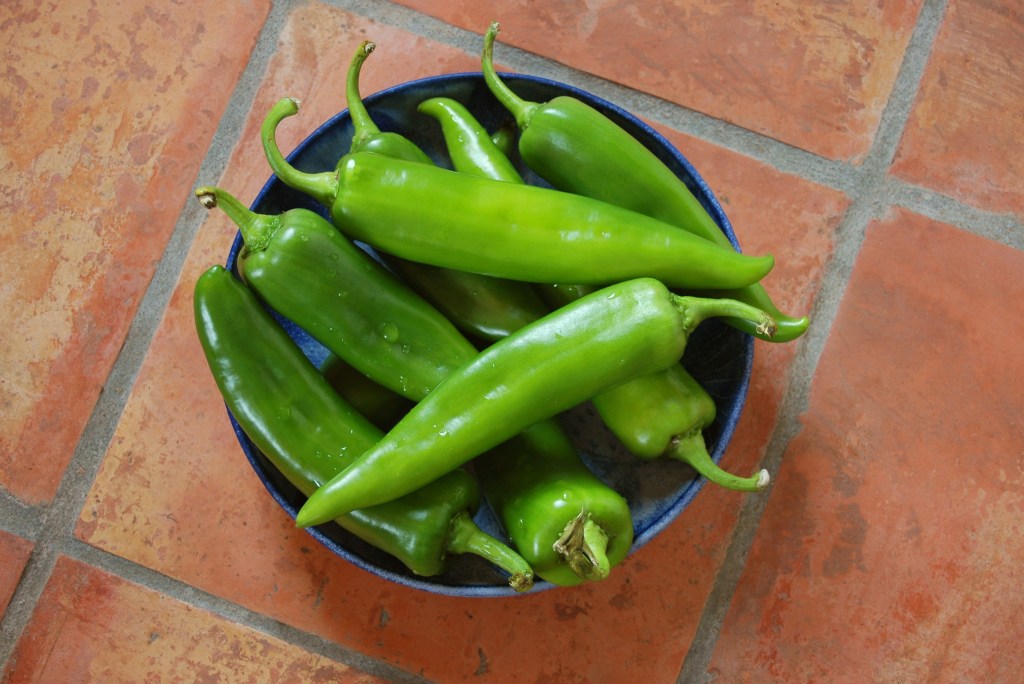
Choose fresh chile peppers that are mature, heavy for their size, and firm. Avoid processing peppers that have soft spots or bruises with mold or decay.
Anatomy of a Chile
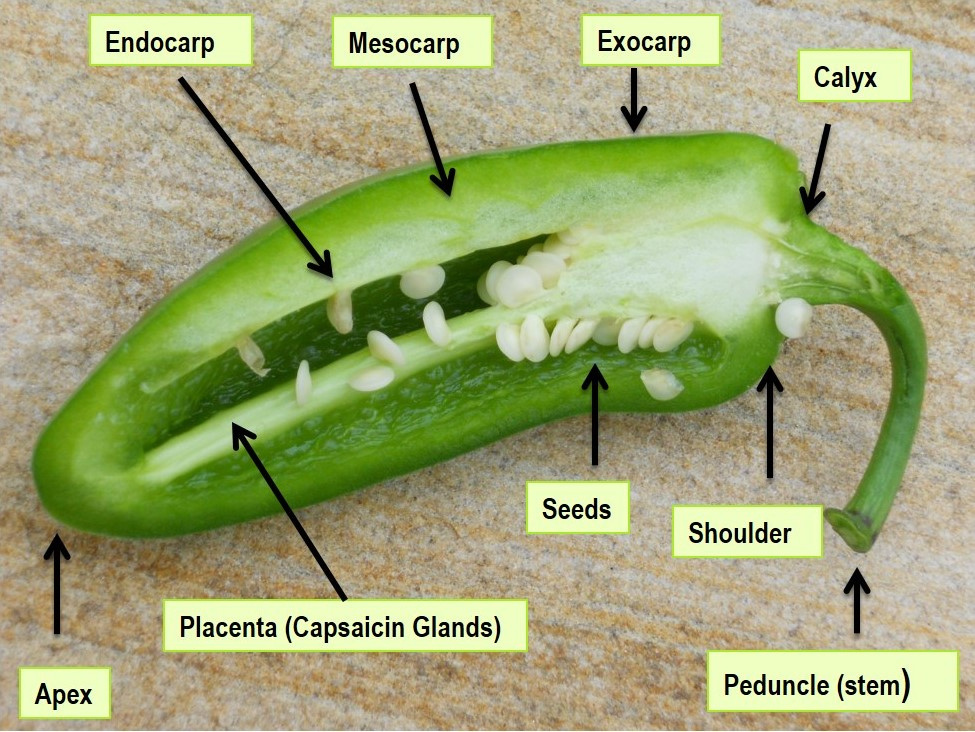
The chile consists of an outer skin that is usually removed in processing, the fleshy part of the fruit, an inner wall, ribs, and seeds. The inner membrane and ribs of the chile where the seeds are attached contain capsaicin glands. Removing the inner ribs will reduce
the ‘heat’ of the chile.
Be Careful Handling Chiles
When working with chile peppers, wear gloves and glasses to protect your skin and eyes from possible contact with the capsaicin oil–the source of heat found in chiles. To remove capsaicin from your skin, rub the affected area with olive or vegetable oil, wipe
off with a paper towel, and then wash thoroughly with plenty of soap and water and dry with a paper towel. This is especially important before engaging in other activities where your hands may touch your skin or eyes.
- If you wear contact lenses, you may want to remove them before processing hot chiles.
Blistering Chiles to Remove the Skins
There are several ways to blister pepper skins for easy removal. Fire-roasting, microwave heating or any other source of high heat applied directly to the surface of the pepper will cause the skin to blister. Roasting slowly over a flame caramelizes sugars which adds distinct flavor to the final product.
Peeling Chiles
Peeling the skins is easiest if the peppers are placed in a covered container or plastic bag (food grade) following exposure to heat, capturing the steam being released from the roasted peppers. Once cooled, the blistered skins should pull off the chiles with a gentle rubbing and rinse with water. The skins can also be removed by scraping with a sharp knife.
- Whole roasted chiles can also be frozen unpeeled and are easier to peel after thawing.
Commercially-Roasted Chiles
In Colorado, commercial roasters must have a Colorado Retail Food Establishment License. The roasted chiles should be packaged in a food grade plastic bag (not a trash bag) or other food-safe container. Promptly transport chiles home in a cooler with ice or cold packs. Divide into small batches for quicker cooling.
- When commercially-roasted peppers are not chilled and/or frozen in a timely manner, harmful bacteria can produce toxin or multiply and grow to unsafe levels causing foodborne illness.
Packaging
For safety and quality, roasted peppers should be completely cooled on ice or in the refrigerator to less than 40°F within 2 hours following exposure to heat, and then used or frozen within 3 days.
- To freeze chiles for long-term storage, pack peeled or unpeeled peppers in plastic freezer bags, heavy aluminum foil or freezer wrap; remove air; seal.
- Chiles can also be frozen whole or diced, in rigid containers of glass, metal or plastic–leaving 1⁄2 inch of head space for expansion.
- Label and date packages/containers.
Freezing & Storage
Freeze chiles to 0⁰ F or below immediately after packaging. Put no more food into the home freezer than will freeze solid within 24 hours (approximately 2 to 3 pounds of food for each cubic foot of freezer space). Leave space between packages to allow for
proper air circulation in the freezer. For best quality use frozen chile peppers within 1 year.
Canning Chiles
The only way to safely can chiles and other low-acid food at home is by pressure canning.
Always use tested recipes and the recommended method and instructions provided for your elevation.
- Have canning equipment inspected annually to ensure it is operating safely and accurately. Contact your local Extension office to see if this service is offered, as well as for general preservation assistance and home food preservation fact sheets.
Find the nearest CSU Extension office. - Use current and research-based home preservation books, such as So Easy To Preserve and Ball Blue Book Guide to Preserving (available at some local Extension offices).
- Food Smart (A website featuring nutrition, food safety, and health resources from Colorado State University Extension)
- Preserve Smart (A website featuring a tool for determining your home elevation, plus instructions and tested recipes for drying, canning, freezing, pickling and fermenting)
Processing chile peppers was developed by CSU Extension (El Paso County and CSU Campus Specialists) in 2007 and updated in 2023.
Sources:
- New Mexico State University Cooperative Extension Service, College of Agricultural, Consumer, and Environmental Services, Guide E-324
- Ball Blue Book Guide to Preserving (2020)