


Purpose
Connecting talk to action, Rural Action Project (RAP) is designed to build long-term civic capacity for local communities by expanding their network connections, boosting local leadership, and fostering diverse and inclusive engagement opportunities that boost community resilience.
Since 2022, RAP has worked to support rural communities across Colorado by bringing residents together to shape the future of their communities.
Established with funding from the CSU System Board of Governors’ Rural Initiative, RAP aimed to help local leaders build vibrant communities that provide space for belonging, civic dialogue, and community problem solving.
Local Partners
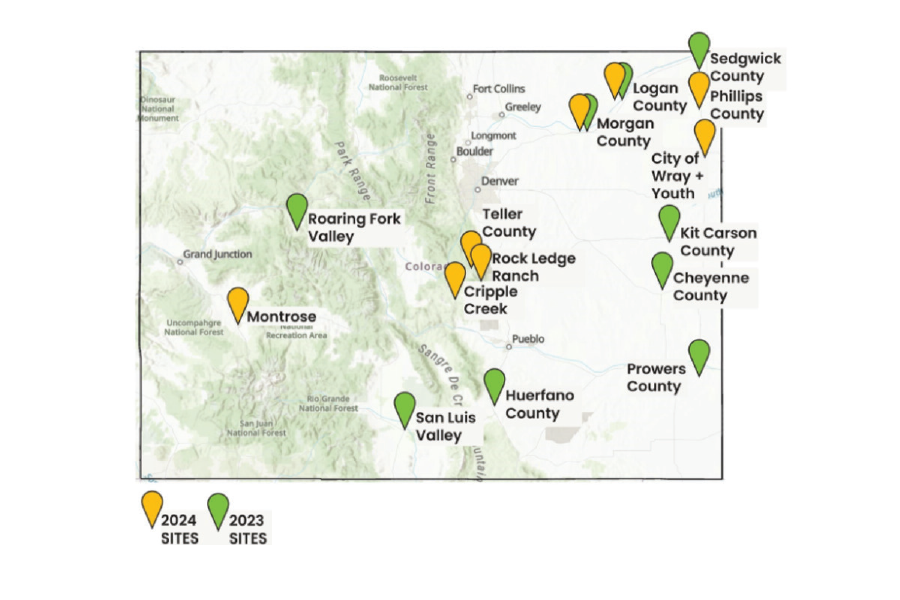
2023 Local Partners
- San Luis: San Luis Valley Area Extension, Soul Players of the San Luis Valley
- Huerfano County: Emerald Dragon Food Forests
- Prowers County: Prowers County CSU Extension
- Cheyenne County: Communities that Care, Cheyenne County CSU Extension
- Sedgwick County: Community Economic Development of Sedgwick County, Sedgwick County Health Center
- Morgan County: Morgan County Family Center, Morgan County FLTI
- Logan County: Family Resource Center, CSU Northeast Regional Engagement Center
- Kit Carson County: East Central Council of Governments, City of Burlington, Burlington Public Library
- Roaring Fork Valley: La Clinica del Pueblo, Safe and Abundant Nutrition Alliance (SANA), Roaring Fork Leadership
2024 Local Partners
- Logan County: CSU NE Regional Engagement Center
- Wray: City of Wray, Northeast Colorado Health Department
- Montrose County: Mexican American Development Association
- Phillips County: Phillips County Economic Development Corporation
- Morgan County: Morgan County Family Center
- Teller County: Teller County Public Health & Environment, Teller County 4-H
- Cripple Creek: Cripple Creek Parks and Recreation
- Teller, Fremont, and El Paso Counties: Living History Association of Rock Ledge Ranch,
- CSU Extension
Program Overview
CSU leaders recruited local organizations to participate in the program, reaching out to local government entities, non-profit and advocacy organizations, youth groups, and Family Leadership Training Institute affiliates. Leaders from these programs then participated in training activities designed to increase their engagement skills and prepare them for program implementation. Next, local host sites held a series of three to four Community Conversations.
The first meetings were designed to increase community belonging and understanding and identify shared community assets, values, needs, and goals. Later meetings allowed community members to brainstorm, select, and begin to develop Community Projects. After the community meetings, host sites applied for a $5,000 mini-grant to implement their community project.
Community Goals and Needs
During their conversations, residents took notes, keeping tracks or their community assets, values, needs and goals. Residents saw rural communities as places that center care and offer quiet living and a sense of connection. They value safety, freedom, belonging, and inclusion.
Residents expressed a desire for greater community engagement, particularly for those who have been historically excluded, and highlighted the need for greater education about and access to community resources.
They expressed a desire for more affordable housing and access to recreation and places for connection and understanding. Communities highlighted the need for reliable healthcare and health education along with affordable and healthy food and resources designed to open career pathways for rural residents.
Community Projects
Communities implemented a wide range of projects, including:
- Community Cinco de Mayo celebration
- Spanish-language health fairs
- Historic interpretive trail
- ESL and sewing skills classes
- Public adobe oven construction
- Community mural projects
- BBQ meet and greet for first responders
Key Outcomes
- 97% of participants learned something new about their community.
- 88% said they considered diverse perspectives.
- 91% reported feeling more connected to their community after the conversations.
- 89% felt more motivated to act after the Community Meetings.