


Soluble Salts
Salts are mineral compounds made up of ions (+ charge cations and – charge anions). Soluble salts are the salt ions dissolved in the soil’s water. Some salts such as gypsum (calcium sulfate) are less soluble. Limestone (calcium carbonate) dissolves only in acidic water. Table salt (sodium chloride) dissolves very easily and bonds with water molecules, making it hard for plants to absorb the water.
Salts are another soil factor limiting crop growth in some areas of Colorado, especially in the Western Colorado Valleys. The salty layer of the Grand Valley is Mancos shale that can have a depth up to 4,150’. Some salt ions, such as boron, chloride, and sodium, can be toxic to plants even when the overall salt content of a soil is not very high.
Impact of High Salt on Plant Growth
High salt levels can reduce water uptake by plants, restrict root growth, cause marginal burning of the foliage, inhibit flowering, limit seed germination, and reduce fruit and vegetable yields. Irregular bare spots in gardens and uneven crop growth suggest salinity problems. Crop yields may be reduced as much as 25% without easily visible damage to plants. Salt injury generally is more severe during periods of hot dry weather, when water use is high.
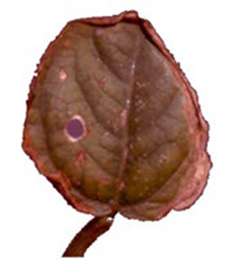
Sensitivity to soluble salts differs among plant species/cultivars and is dependent on their state of growth. Seed germination and seedling growth are more sensitive to salt stress than mature plants. [Table 1]
Table 1. Relative Salt Tolerance of Cultivated Plants
| Non-Tolerant 0-2 dS/m | Slightly Tolerant 2-4 dS/m | Moderately Tolerant 4-8 dS/m | Tolerant 8-16 dS/m |
|---|---|---|---|
| Begonia Carrot Cotoneaster Green bean Onion Pea Radish Raspberry Red pine Rose Strawberry Sugar maple Viburnum White pine | Apple Cabbage Celery Cucumber Grape Forsythia Kentucky bluegrass Lettuce Linden Norway maple Pepper Potato Red fescue Red maple Snapdragon Sweet corn | Beet Blacklocust Boxwood Broccoli Chrysanthemum Creeping bentgrass Geranium Marigold Muskmelon Perennial ryegrass Red oak Spinach Squash Tomato White ash White oak Zinnia | Arborvitae Asparagus Juniper Swiss chard |
Factors Contributing to Salt Problems
Drainage
A common sign of salt problems is the accumulation of salts at the soil surface due to limited percolation in compacted and/or clayey soils. Soluble salts move with the soil water. Deep percolation of water down through the soil profile moves salt out of the rooting zone. Surface evaporation concentrates the salts at the soil surface. Salt deposits can sometimes be seen as a white crust on the soil surface. As you drive around Colorado, it is common to see these soils with the white salt accumulation in low spots of fields and natural areas.
In some areas, salt naturally accumulates due to limited rainfall to leach the salt out. Salt levels drop when the soil undergoes irrigation. In other areas, salts may build-up when poor soil drainage prevents precipitation and irrigation water from leaching the salt down through the soil profile. In this case, corrective measures are limited to improvements in soil drainage.
Soil Amendments
Manure, biosolids, and compost made with manure or biosolids may be high in salt. When using manure or compost made with manure, routinely monitor salt levels. For more information, see section on Adding Soil Amendments, page 4.
Excessive/Unnecessary Fertilizer Applications
Unwarranted application of fertilizers (such as phosphate or potash) increases soil salt levels. On soils marginally high in salts, potash fertilizers should be avoided unless a potassium deficiency is identified by soil tests. Over-fertilization also has other environmental impacts.
Placing fertilizer and salty soil amendments too close to seeds or plant roots creates a salt burn of the tender roots. Germination failure or seedling injury can result.
De-Icing Salts
The use of de-icing salts on streets and sidewalks frequently results in high salt levels in adjacent soils. Along roads, salt injury has become a major concern. Highway salts may reach plants in two ways: movement to soil and uptake by plant roots, or movement onto plant stems and foliage through the air as vehicle “splash-back.” Salts deposited on both soil and foliage have high potential to cause plant injury. Highway salts in road-melt runoff is another concern for plants and the wider environment.
Pet Urine
Damage by pet urine, which contains alkaline salts and nitrogen, is also salt problem. Water moves by osmotic pressure from the roots to the high salt concentration in the soil, dehydrating and killing roots. Train your pet to eliminate in a plant free zone or follow other salt management methods below.
Measuring Soil Salt Levels
Bean plants are rather salt sensitive and can be used to help assess salt problems. In a garden, if beans are doing well, soluble salts are not a problem. If the beans are doing poorly, consider salts as a possibility. Beans, tomatoes, and other easily germinated seeds can be used in a “pot test” on a windowsill to live assay the salt content of a soil. Assess plants’ performance considering Table 1.
The amount of salt in a soil can be quantified only by a soil test. A soil test for soluble salts can be useful when investigating the cause of poor plant growth, determining the suitability of a new planting site, or monitoring the quality of fill soil or soil amendments for use on a landscape area.
Soil tests for soluble salts are based on electrical conductivity. Pure water is a very poor conductor of electric current, whereas water containing dissolved salts conducts current approximately in proportion to the amount of salt present. Thus, measurement of the electrical conductivity, (ECe), of a soil extract gives an indication of the total soluble salt concentration in the soil. The ECe is measured in deciSiemens per meter (dS/m) or millimhos per centimeter (mmhos/cm). 1 dS/m = 1 mmhos/cm. [Table 2]
Table 2. Soluble Salt Test Values and Relative Sensitivity Levels of Plants
| Electrical Conductivity1 (dS/m) | Salinity Level | Effect on Plant Growth |
|---|---|---|
| 0-2 | Non-saline | None |
| 2.1-4 | Slightly saline | Sensitive plants are inhibited |
| 4.1-8 | Moderately saline | Many plants are inhibited |
| 8.1-16 | Strongly saline | Most cultivated plants are inhibited |
| Over 16 | Very strongly saline | Few plants will grow |
Managing Soil Salts
Leaching Salts
Leaching is the only practical way of removing excess salts. This is effective only to the extent that water moves down through the soil profile and beneath the root zone (drainage must be good). The amount of salts removed depends on the quantity and quality of water leached through the soil profile during a single irrigation period. Water should be low in salts (high quality) and must not run off the surface. It should be applied slowly so amounts do not exceed the ability of the soil to take in water (infiltration rate). If you see pets urinate on a plant, rinse, and flush with water within 8 hours.
The following amounts of water applied in a single, continuous irrigation will dissolve and decrease soil salts by these fractional amounts:
- 6 inches of water will leach about 1/2 the salt.
- 12 inches of water will leach about 4/5 of the salt.
- 24 inches of water will leach about 9/10 of the salt.
Salty soils are not reclaimable when the soil’s clay content, compaction, or hardpan prevents leaching.
Adding Soil Amendments
Because manure, biosolids, and compost made from manure or biosolids may be high in salts, do not add more than 1 inch per season without a soil test to evaluate salt levels. An amendment with up to 10 dS/m total salts is acceptable if mixed through the upper six to eight inches of a low-salt soil (less than 1 dS/m). Amendments with a salt content greater than 10 dS/m are questionable. Avoid these soil amendments in soils that are already high in salts (above 3 dS/m) and when growing salt sensitive plants.
Note: Because soil amendments are not regulated in Colorado, do not assume that products sold in bags or by bulk are necessarily low in salt content and good for the garden’s soil. Many commercially available sources of manure, biosolids, and compost made with manure or biosolids have excessively high levels of salt. Some companies do test, so ask if they have recent salt levels of the amendment.
On marginally salty soils, concentrate on gradually improving the soil organic content and activity of soil microorganisms and earthworms. Do not exceed recommended rates per application as large quantities of organic matter can hold salts next to plant roots and cause injury. Organic amendments applied over time improve soil tilth, which then will improve the potential for effective leaching as well as plant growth.
Other Management Techniques
Plants grown on salty soils are less tolerant of dry soil conditions because high salt levels make it difficult for plants to uptake water. Plants will require more frequent irrigation, with reduced amounts of water.
Within pedestrian and vehicle safety limits, avoid the use of de-icing salts. Consider the use of sand or other abrasive materials for use on slick sidewalks and pavement. Where de-icing salts are routinely used, expect to find salt problems in adjacent soils and drainage swales where the snowmelt runs. Because soil salt levels from de-icing salts easily rise above the tolerance of even the most salt- tolerant plants, a rock mulch area without plants may be a better landscape design solution in salt use areas.
For additional details on soil salt issues, refer to the following CSU Extension Fact Sheets:
#0.503, Managing Saline Soils.
#7.227, Growing Turfgrass on Salt-Affected Sites.
This publication, reference GardenNotes #224, is developed as part of the Colorado State University Extension Master Gardener Program.