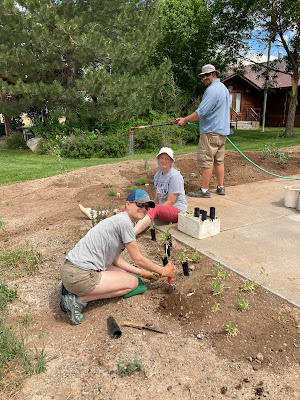
I first heard about “High and Dry Gardens” in Colorado in 2003 or 2004 when I was in graduate school at CSU in Fort Collins. It piqued my interest because my own graduate research was a drought study. The concept behind High and Dry gardens is to trial plants to see how they perform on little to no supplemental irrigation.
I got my graduate degree and moved to Norwood, Colorado in 2006 to work for CSU Extension. After I discovered that there were several other Extension Offices in the state that had High and Dry Gardens, we planted a High and Dry demonstration garden outside our Extension Office.
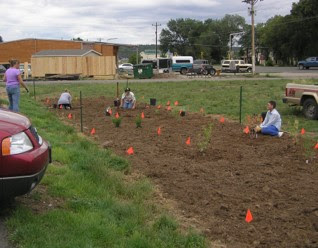
Norwood is a small town on Wrights Mesa, elevation 7020’. We are in Zone 5. Our average annual snowfall is 59.6”. Our average annual rainfall is 15.10” and mostly falls in our ‘monsoon’ period of mid-July through August. Norwood, like the rest of semi-arid Colorado, experiences regular drought and subsequent water shortages and restrictions. It is not uncommon for residents who live outside of the city limits to need to haul water to their homes for household use.
I cross-referenced the plant lists for High and Dry gardens at Extension Offices in Gilpin, Boulder, El Paso, and Custer counties and selected only the plants that were on all plants lists. Even though High and Dry Gardens do not typically plant only natives, ours did because those were the plants in common on the other plant lists.
Our original site was a large rectangular bed on flat ground. Our soil was sandy clay loam soil with a pH of 8.4. We fenced it to keep out deer. Each year, we timed our planting to coincide with the annual summer monsoon. Once the plants were planted, they were watered in and never watered again. In drought years, I did consider applying the average annual rainfall amount but never did.
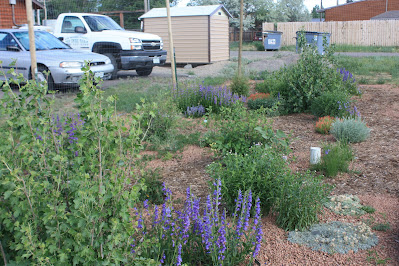
The original Norwood High and Dry Garden was there until 2019 (13 years) when the area was leveled to build a new sheriff’s annex.
The plants that survived and performed best were mostly shrubs. Following is a list of the best performers.
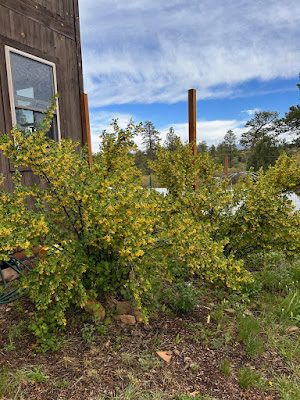
Golden currants, Ribes aureum. All varieties of golden currants require little to no supplemental irrigation. Golden currants are my favorite of the High and Dry shrubs. They have beautiful golden flowers in spring (some varieties flowers are more fragrant than others), followed by edible yellow, orange or black fruit. The shrubs end the growing season with deep-red fall color before the leaves drop for winter.
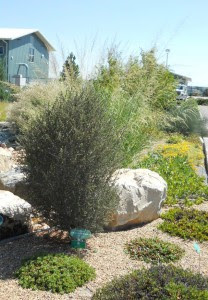
Mountain mahoganies: Cercocarpus montanus, C. ledifolius and C. inticatus. Although the all did well, our favorite of the mountain mahagonies was Cercocarpus ledifolius, curl-leaf mountain mahogany. We had a 6′ x 3’ specimen that kept most of its leaves through the winter.
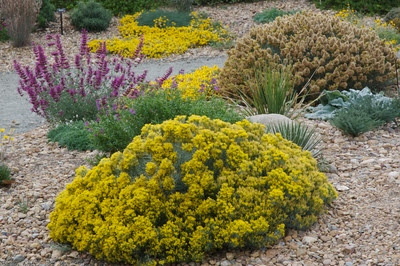
‘Baby Blue’ dwarf rabbitbrush, Chrysothamnus nauseosus var. nauceosus (a Plant Select introduction) was my third favorite shrub in our High and Dry Garden. It grew to a tidy low mound, 12-18” x 3’. The yellow blooms were welcome late summer color.
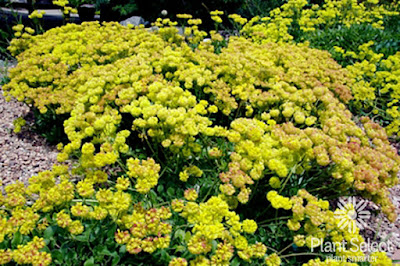
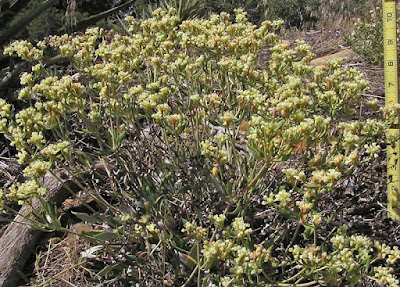
Both ‘Kannah Creek’ sulphur buckwheat, Eriogonum umbellatum (a Plant Select introduction) and James buckwheat, Eriogonum jamesii, performed exceptionally well in our garden. The deer were not able to eat the blooms like in our Plant Select Demonstration Garden because of the fence. Both buckwheats form a low mat of semi-evergreen leaves that get good fall and winter color. In spring and summer, the yellow or cream bracts of the flowers grow about a foot above the foliage.
Rocky mountain penstemon, Penstemon strictus, almost ate the garden. The showy and reliable early- summer blue flowers reseeded prolifically in our gravel mulch! So, we learned to cut the blooms off to prevent reseeding. I found this ironic because most gardening books list this plant as short-lived. Perhaps they are in watered gardens.
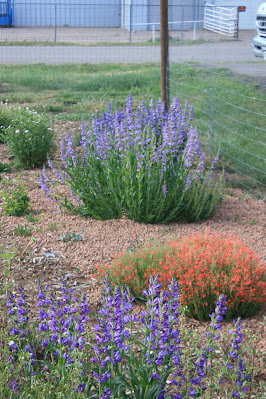
Other plants worth a mention are pussytoes, Antennaria parvifolia; blanket flower, Gaillarida aristata; and bluemist penstemon, Penstemon virens.
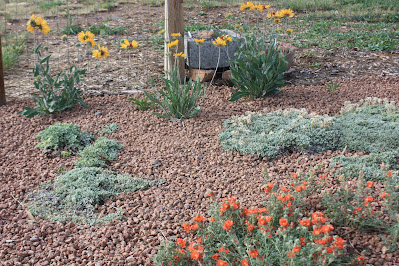
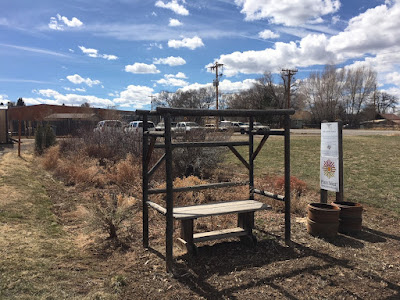
The county gave us a new border for a High and Dry Garden in 2022.