


Many gardeners believe that tree staking during the planting process is necessary, but it is only required in certain situations. More important than staking a tree is ensuring it is planted properly. Refer to GardenNotes #633, The Science of Planting Trees for more details.
When to Stake
Staking is only necessary in the following situations:
- Windy sites: When a tree is planted in a wind tunnel or in an area that is perpetually prone to wind and/or damage from wind, then staking can be justified.
- Protecting the newly planted tree from people or activities: If the tree is planted in a public space that gets high amounts of traffic or is prone to vandalism, stakes may be used to help protect the tree. Sometimes just having posts (without staking straps attached) around the tree may divert vandals or harmful activity.
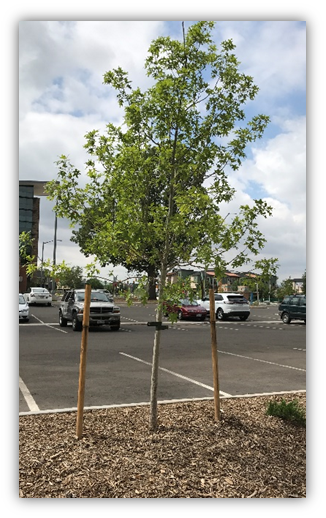
- Supporting the weight of the tree because the tree cannot stand on its own. Landscape managers should avoid buying and planting such trees. However, if the tree was planted but cannot stand on its own, staking straps should be attached six inches above the point where the tree can support itself, but at least three feet below the terminal leader, like in Figure 1. Again, there is a responsibility of consumers to demand quality nursery stock—planting inferior trees should not be a standard practice.
Staking Straps
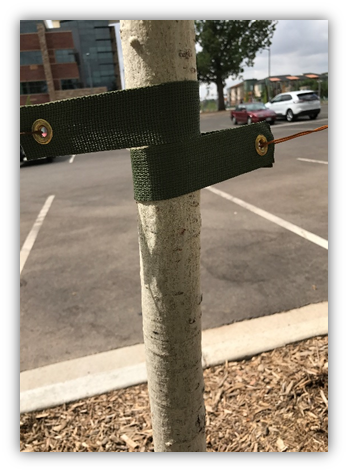
Always use wide canvas straps with grommets at either end to attach staking wires to trees, like in Figure 2. These wide straps help distribute the pressure evenly. Wire threaded through hose concentrates the pressure, causing girdling and other damage.
For details about staking trees properly, refer to the GardenNotes #634, Tree Staking and Underground Stabilization.
Staking can lead to increased tree height at the expense of caliper (diameter) development. It can also lead to a smaller root system, since the tree may not have the ability to sway/move with wind (which builds caliper and roots). Staking has also been found to damage the trunk as soon as six months after planting, causing girdling and compression injury to the trunk. When stakes are used, they should be removed after one growing season. Stakes are often forgotten if left on the tree longer, leading to long-term damage. Materials can girdle or grow into the tree, creating weak points and potential failure.
This publication, reference GardenNotes #654, is developed as part of the Colorado State University Extension Master Gardener Program.