


Quick facts…
- Wind erosion is a prominent concern in much of Colorado
- Wind erosion can limit agricultural production and possess health risks
- Modeling wind erosion is available through the Natural Resources Conservation Service’s (NRCS) Wind Erosion Prediction System (WEPS)
- Several mitigation methods are available
Introduction
Wind erosion occurs when wind energy loosens soil particles at the surface and then moves them across the ground or into the air. The first material to leave is often the most valuable: fine particles and organic matter that help soils store water and nutrients. As those finer pieces are removed, the remaining surface can become coarser, crustier, and less productive. Dry soils with low organic matter content are more susceptible to erosion than healthy soils. Areas without wind breaks for extended distances allow eroded soil to be carried over longer distances and escalate further particle detachment.
Why is Colorado Prone to Wind Erosion
Colorado’s climate and landscapes make wind erosion especially common. Strong winds associated with downslope windstorms are accelerated as they move East down the Rocky Mountains. Atmospheric pressure changes over the state also drive strong winds.
The windiest season in Colorado is between Fall and Spring, which coincides with highly vulnerable soils due to repeated freeze-thaw or wet-dry cycles that can weaken soil aggregates. The peak of wind erosion risk often falls between February and may because plants are often dormant and cover is minimal. Additionally, strong weather systems occur more frequently. Additional risk windows may occur in June before consistent summer moisture, particularly during drought years, and again in the fall from September through November after harvest. Human and natural disturbances also contribute, including grazing pressure, tillage, grading, wildfire, recreation, and traffic.
Soil Erosion and Agricultural Systems in Colorado
Soils have the capacity to resist wind erosion to a certain extent, depending on factors like aggregate stability, structure and organic matter. Clay and organic matter are the most adhesive components of the soil, however, clay particles are the first components of the soil to be eroded due to its small size and weight. Organic matter oxidizes with repeated exposure to air and destruction of fungal hyphae by tillage operations. Soil with low organic matter will dry out faster than those with high organic matter content. Once these adhesive components are lost, erosion of the remaining silt and sand occurs easier.
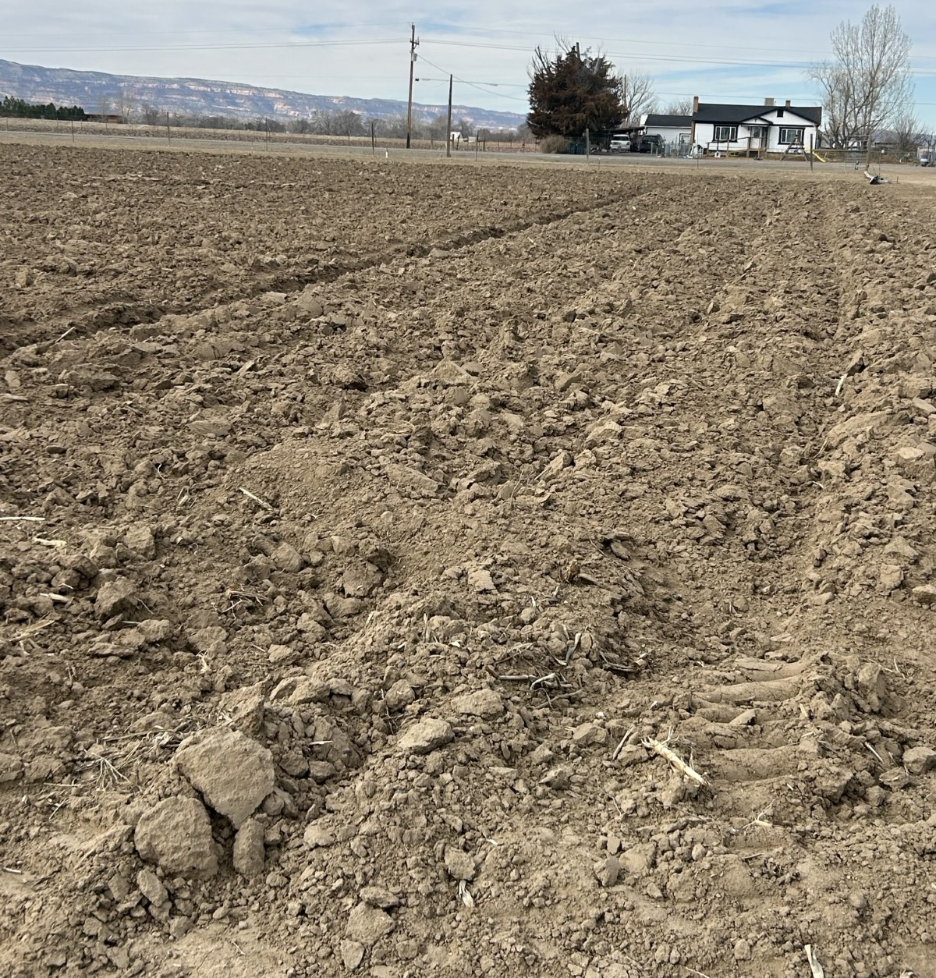
Figure 1. Mold board plowed field. Plowing operations create loose soils that ease seed growth but leave soils exposed to wind erosion.
Agricultural systems and other forms of human activity have altered the soil’s capacity to resist wind erosion for thousands of years. Because of this, and the perceived consequences of soil erosion, the implementation of reduced and no-till systems has been used as an aid to mitigate the effects of agricultural operations. Crop residue left on the soil surface is pulled to the soil thanks to saprophytes that move the decayed matter into the soil via their hyphae. This process can take a long time, but eventually, SOM is replaced, providing soil more stability.
Wind erosion assessment (quick, immediate visual effects vs. NRCS wind erosion prediction tool)
Wind erosion often appears initially as a gradual loss of topsoil, accompanied by a noticeable decline in soil health and productivity. Young plants struggle to survive when blowing sand scours their surfaces, buries them under drifts, or dries them out through constant exposure.
Off site, nuisance dust may coat homes and equipment, clog filters, and irritate eyes and lungs. Wind-driven dust can also reduce roadway visibility, creating sudden hazards for drivers. Soil erosion causes sediment to build up along fences and in ditches, ultimately polluting nearby waterways when washed away by runoff.
The Natural Resource Conservation Service (NRCS) has developed a wind erosion estimation tool that allows conservation professionals to model and estimate soil erosion due to wind. The Wind Erosion Prediciton System (WEPS) can help determine the different “what-if” scenarios based on land management decisions. WEPS provides yearly estimates of tons of soil loss per acre. This value can be compared to the Tolerance level (also known as T value). The T value is the maximum average annual soil loss, often ranging from 1-5 tons per acre per year, although T values above that range are unfortunately not uncommon. Values above 5 tons per acre indicate a non-sustainable system, given that soil is being lost at extremely high rates that will not support agricultural production over time.
The WEPS system has multiple input variables to help predict the long-term average soil loss per year to wind erosion. Scheduling a meeting with your local NRCS office can help you decide which mitigation tools are appropriate for your farm.
Mitigation practices
The most reliable wind-erosion control comes from combining measures. In most locations, success depends on protecting the soil surface, adding roughness that disrupts near-ground wind flow, and reducing wind speed with barriers, while stabilizing disturbed areas quickly before they become chronic dust sources.
Cover
Maintaining surface cover through the windiest months is the single most important step on many sites. On cropland and hay ground, keeping standing stubble and leaving residue on the surface reduces the amount of soil exposed to wind. Where feasible, cover crops or short-duration protective plantings can bridge periods when fields would otherwise be uncovered. (Figure 1)
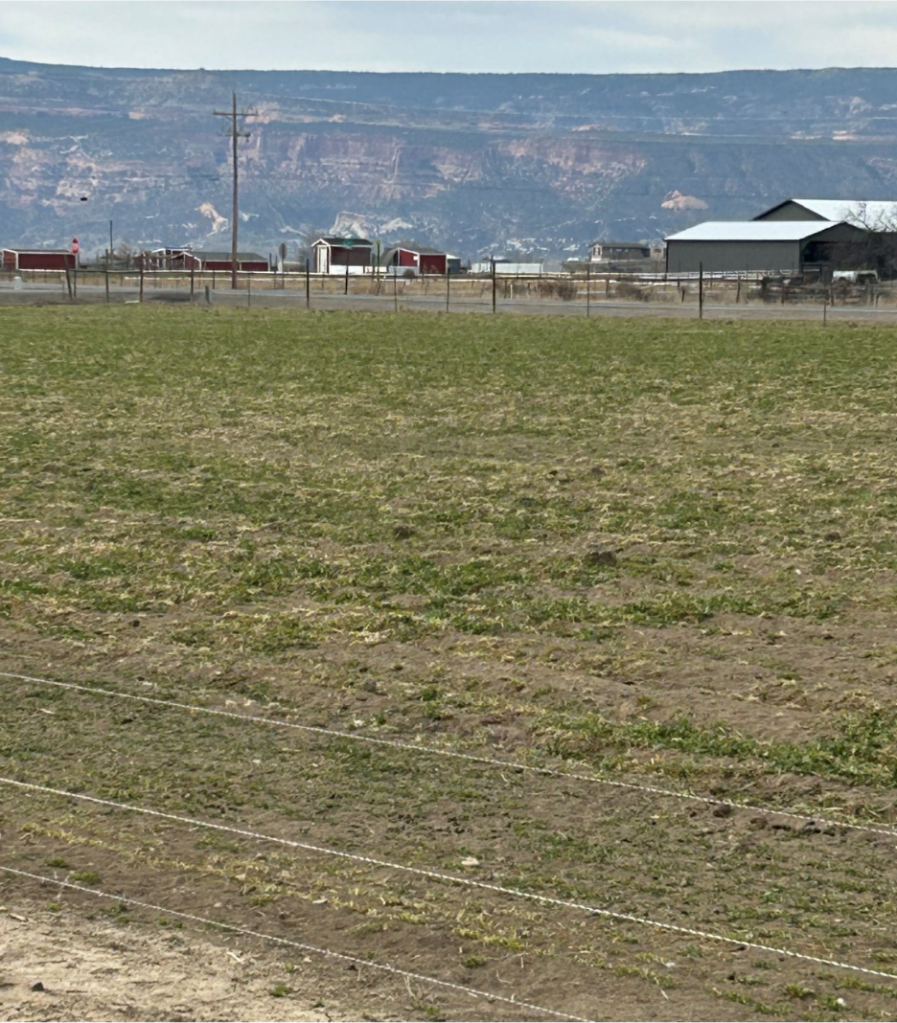
Figure 2.Alfalfa seedlings protecting the soils during winter.
On pasture and rangeland, preventing overgrazing helps maintain ground cover by leaving vegetation cover on the ground. Rotating livestock, establishing rest periods for forages, and reseeding where needed can prevent small bare patches from expanding. Low spots and riparian areas also deserve attention because drifting sediment often accumulates and may move with runoff.
In orchards, vineyards, and row-crop systems on the Western Slope, reducing bare soil in the inter-row area is often a high-impact change. Seasonal or permanent inter-row cover can be used where compatible with operations, and mulched strips or managed vegetation can reduce dust and soil loss. A common failure is using a mulch that is light enough to blow away.
Roughen
Because wind erosion is driven by wind speed right at the surface, a rough surface can significantly reduce soil movement by disrupting airflow and limiting particle detachment. Surface roughness can be established by leaving soil in a cloddy state, creating ridges perpendicular to prevailing winds, or adding micro-berms and contours to large, disturbed areas. Soil roughening offers a good temporary solution to recently disturbed hills and slopes. Roughness tends to work best when paired with some residue or cover. In contrast, excessive tilling or raking creates a powdery finish that is prone to erosion.
Shield
Windbreaks reduce wind speed, trap moving particles, and can protect seedlings and young plants. Temporary barriers are useful when you need quick results around active dust sources. To manage wind and drifting, install snow or wind fences around stockpiles, arenas, and bare pads. For enhanced protection, attach wind-rated fabric to existing fencing. Alternatively, secure straw-bale barriers to prevent them from blowing over. These approaches are often best targeted at stockpiles, construction pads, bare corners or corrals, gardens, and new seedings.
For long-term protection, shelterbelts of trees and shrubs, living hedgerows, and fence-plus-vegetation combinations can provide durable wind-speed reduction and add benefits like habitat and snow management. To optimize protection, windbreaks should be situated on the upwind side of the site, constructed as a continuous barrier to prevent leakage, and configured to mitigate multiple damaging wind patterns. Key success factors include proper establishment and ongoing maintenance, such as weed control, protection from browsing, and supplemental irrigation when necessary.
Stabilize
Stabilize freshly disturbed soil immediately to prevent it from becoming a major source of dust. Effective stabilization methods include covering piles with tarps and wind fencing, applying mulch or erosion-control blankets to bare soil, and using authorized soil binders. Additionally, areas with high traffic should use aggregate surfacing, while bare soil should be stabilized with prompt, climate-conscious reseeding and protection.
Special Situations
Livestock “hot spots”
On many properties, dust frequently originates from a few heavily used, localized spots, including waterers, feeders, gates, loafing areas, and alleyways. To improve these areas, start by installing aggregate pads on a stable base to reinforce the ground. You can prevent bare zones from expanding by regularly rotating or relocating feeders and water sources. Finally, establish durable vegetation around the perimeter to contain the disturbance and keep it from spreading further.
Post-wildfire disturbance
After wildfire, the loss of vegetation allows ash and fine sediment to become airborne easily. To control erosion effectively, prioritize immediate ground cover using mulch or blankets. Avoid further soil disturbance and keep sediment out of roads and ditches to prevent it from washing away during future storms.
References
- Cho, G., Abitew, T. A., Calabrese, S., & Jeong, J. (2025). Wind erosion-induced soil sediment and organic carbon loss under various land management practices in western US Rangeland. Catena, 257, 109159. https://doi.org/10.1016/j.catena.2025.109159
- Colorado Revised Statutes Title 35 – AGRICULTURE (§§ 35-1-101 — 35-81-102) SOIL CONSERVATION (§§ 35-70-101 — 35-73-108); SOIL EROSION (§§ 35-71-101 — 35-73-108) Article 72 – SOIL EROSION – DUST BLOWING – 1954 ACT (§§ 35-72-101 — 35-72-108). Available online at: https://law.justia.com/codes/colorado/title-35/soil-conservation/soil-erosion/article-72/ (Accessed on 5/02/2026.
- Duniway, M. C., Pfennigwerth, A. A., Fick, S. E., Nauman, T. W., Belnap, J., & Barger, N. N. (2019). Wind erosion and dust from US drylands: a review of causes, consequences, and solutions in a changing world. Ecosphere, 10(3), e02650. https://doi.org/10.1002/ecs2.2650
- Fryrear, D. W., & Skidmore, E. L. (1985). Methods for controlling wind erosion. Soil erosion and crop productivity, 443-457. https://doi.org/10.2134/1985.soilerosionandcrop.c24
- Gordon, M., & McKenna Neuman, C. (2009). A comparison of collisions of saltating grains with loose and consolidated silt surfaces. Journal of Geophysical Research: Earth Surface, 114(F4). https://doi.org/10.1029/2009JF001330
- Li, J., Okin, G. S., Alvarez, L., & Epstein, H. (2007). Quantitative effects of vegetation cover on wind erosion and soil nutrient loss in a desert grassland of southern New Mexico, USA. Biogeochemistry, 85(3), 317-332. https://doi.org/10.1007/s10533-007-9142-y
- Nauman, T. W., Munson, S. M., Dhital, S., Webb, N. P., & Duniway, M. C. (2023). Synergistic soil, land use, and climate influences on wind erosion on the Colorado Plateau: Implications for management. Science of the Total Environment, 893, 164605. https://doi.org/10.1016/j.scitotenv.2023.164605
- Nordstrom, K. F., & Hotta, S. (2004). Wind erosion from cropland in the USA: a review of problems, solutions and prospects. Geoderma, 121(3-4), 157-167. https://doi.org/10.1016/j.geoderma.2003.11.012
- Schnarr, C., Schipanski, M., & Tatarko, J. (2022). Crop residue cover dynamics for wind erosion control in a dryland, no-till system. Journal of Soil and Water Conservation, 77(3), 221-229. https://doi.org/10.2489/jswc.2022.00005
- Schwinning, S., Belnap, J., Bowling, D. R., & Ehleringer, J. R. (2008). Sensitivity of the Colorado Plateau to change: climate, ecosystems, and society. Ecology and Society, 13(2). https://www.jstor.org/stable/26268003
- Wilshire, H. G. (2020). Human causes of accelerated wind erosion in California’s deserts. In Thresholds in geomorphology (pp. 415-433). Routledge.
- Zobeck, T. M., & Van Pelt, R. S. (2011). Wind erosion. Soil management: Building a stable base for agriculture, 209-227. https://doi.org/10.2136/2011.soilmanagement.c14