


Leaves are a valuable resource in the landscape. There are productive ways to use them rather than sending them to the landfill as waste. They are a source of organic matter and can be mulched into lawns with a mower, used in the garden as mulch or soil amendment, or used as an ingredient (along with grass clippings, kitchen scraps, and other organic materials) to create compost.
Mow Leaves into the Lawn
Leaves can be directly mulched into a lawn with a lawnmower. This practice can have benefits to the health of the lawn, and the soil in which it is growing.
Research has found that it can increase soil organic matter. Nutrients in soil organic matter will be mineralized and become available for the lawn to use over time, reducing the need for fertilizer. Soil organic matter is also the base of the soil food web so mulching in leaves can help support a healthy soil ecology.
Additionally, mowing in leaves can help preserve soil moisture and reduce weeds by creating a thin layer of mulch on the soil surface. A study at Michigan State University found that mulching leaves into the lawn with a lawnmower reduced perennial weed populations like dandelions and annual weeds like crabgrass after three years. The small leaf pieces sift down onto the soil surface and prevent weed germination from bare soil. [Figure 1]
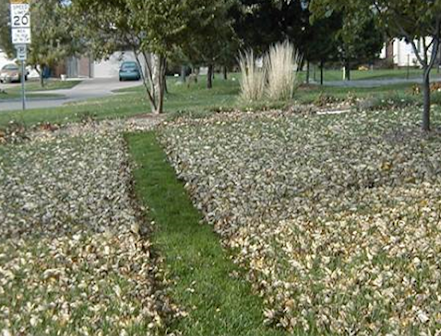
Research at Purdue University found that mulching leaves into the lawn at high rates did not affect turf quality, color, or soil pH. It is important that the leaves are shredded or mulched and not left whole on the lawn. Mulching leaves into the lawn does not lead to thatch accumulation.
When mulching leaves with a lawnmower, set the mower’s deck to the highest setting, remove the bagging attachment and, make at least two passes over the lawn to chop the leaves into small pieces. If you can see some grass through the leaves, the layer is not too thick to mulch.
Add Leaves to Compost Bins
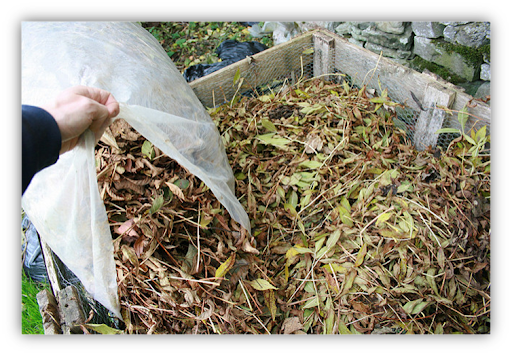
Tree leaves are high in carbon (considered “brown” material) and can be added to compost bins in combination with materials high in nitrogen (“green” materials). [Figure 2] For more information on composting, refer to the GardenNotes #246, Making Compost.
Add Leaves to Garden Beds or Raised Beds
Leaves can be added to garden beds as a source of organic matter. You can add six to eight inches of leaves (ideally shredded or chopped by the lawnmower) into a vegetable or annual flower garden yearly. They can be added as mulch in the fall and then be incorporated into the soil in the spring, which does risk the leaves blowing away in the winter, or they can be turned directly into the soil in the fall. Keeping the soil moist will speed decomposition of leaves. Be cautious about over-amending garden soils and consider having your soil tested to understand current conditions.
Use Leaves as Mulch in the Landscape
Leaves can be used as mulch to insulate tender or newly planted plants. Place a wire cage around the plant and pile three to six inches of shredded leaves inside the cage, next to the plant. As growth begins in the spring, remove the cage and leaves.
This publication, reference GardenNotes #655, is developed as part of the Colorado State University Extension Master Gardener Program.