


Quick facts…
- Slugs can be one of the most damaging pests of vegetable and flower gardens in Colorado.
- Slugs thrive under high moisture conditions. The most effective way to reduce slug problems is to reduce humidity in a garden.
- Metaldehyde baits can help control slugs if they are applied correctly and at the proper time.
- Slugs can be attracted to fermenting materials, such as beer, and trapped.
Introduction
Slugs are destructive and difficult pests to control. They can damage seedlings of many vegetables and flowers, and high populations of slugs can cause difficulties in establishing a crop. Slugs also feed on many fruits and vegetables prior to harvest. This preharvest feeding results in wounds that allow various fungi and bacteria to enter and spoil the crop. In addition, the slime trails produced by slugs can contaminate garden produce.
Slug injury is sometimes difficult to diagnose because slugs hide during the day. Smaller leaves may be eaten entirely, while only the edges of larger leaves may be consumed. Thick leaves are often rasped from the leaf underside. The presence of slime trails is generally the best indication of slug activity.
Figure 1
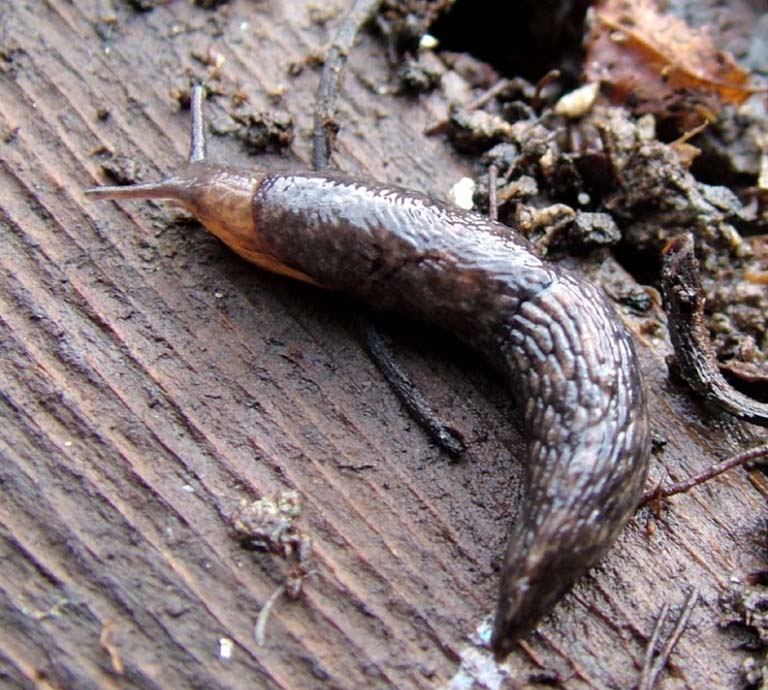
Figure 2
History and Habits
Slugs and snails are gastropods and are more closely related to clams and mussels than other common garden pests, such as insects. Slugs feed on a variety of plant materials, which they eat by rasping with specialized mouthparts. Slugs feed mostly at night, although they occasionally are active on overcast or rainy days. Slugs seek shelter during the day in soil cracks and under debris. During hot, dry weather, they may be temporarily inactive. If slugs are suspected in the garden, it is best to scout at night.
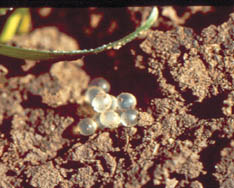
Slugs lay small masses of eggs in soil cracks. The young slugs that hatch from these eggs travel through the soil and damage germinating seeds and root crops. Under favorable conditions, slugs complete their development in a few months. The most common species in Colorado often have two generations per year: one in spring, another in fall.
Techniques for Slug Control:
- Reduce moisture in the garden.
- Remove hiding places for slugs.
- Use traps or trap boards to kill or concentrate slugs.
- Plant trap crops to divert slugs from main crops.
- Use repellents or barriers.
- Apply baits according to label directions.
Cultural Controls
Slugs are mostly water and produce large amounts of protective mucous. Consequently, slugs are susceptible to drying. The level of a slug population depends on the moisture conditions in a garden. Any practices that decrease moisture will reduce slug problems, although effects may not be seen immediately.
To eliminate potential shelter for slugs, remove surface debris in and around the garden and avoid organic mulches (straw, grass clippings). Also, increase air movement around plants and reduce high moisture conditions with trellises and wider plant spacing.
Use drip irrigation, soaker lines, or other techniques to limit water and decrease the humidity around plants. Overhead irrigation should be done early in the day to allow more time for leaves and soil to dry before the nightly activity of slugs.
Attractants and Traps
Slugs are attracted to chemicals produced by many fermenting materials. These materials can be used to make attractant traps (pans of beer or sugar-water can attract, trap, and drown slugs). A single baiting can remain effective for several days, as long as sufficient liquid remains. However, because the range of such traps is only a few feet, it may be necessary to place several throughout the garden to reduce slug populations. Alcohol is not an attractant to slugs.
Selective use of trap boards or moistened newspaper placed on the soil surface also can be used to concentrate slugs that seek shelter under them. Check these shelters every morning and kill any slugs found.
Repellents and Barriers
Slugs often avoid travelling over acid, alkali or abrasive materials. Diatomaceous earth, wood ashes and similar materials placed around plants may provide some protection. However, moisture reduces the effect of these treatments.
Salt also is toxic to slugs and direct applications of table salt to a slug can kill it. This technique has limited usefulness because excessive salt can affect plant health. Certain metal ions also are highly repellent to slugs. Barriers of copper foil exclude slugs from greenhouse benches and raised bed plantings. Other copper-based materials, such as copper sulfate, repel slugs.
Molluscicides
Molluscicides are pesticides effective against slugs and snails, and are often different chemicals than those used to control insects and other garden pests. Slugs are not susceptible to poisoning by most insecticides.
Metaldehyde is the most commonly used and effective molluscicide. It is sold often in the form of granular baits (Bug-Geta, etc.) or as a paste or gel (Deadline, etc.). Metaldehyde is attractive to slugs and causes intense irritation to them upon contact. After contact, slugs often become immobile and secrete large amounts of mucous. Death usually results from loss of water. All metaldehyde products are labeled for use around flower gardens and ornamental plants. Currently available products do not allow direct application among vegetables and edible crops.
Successful use of metaldehyde baits requires careful application and favorable weather conditions. Slugs often can recover from metaldehyde poisoning if high moisture conditions occur. Also, control is poor during cool periods because slugs are relatively inactive. Apply metaldehyde when the evening is warm and the following-day forecast is hot and dry. Young slugs are more susceptible.
The range of metaldehyde attraction is limited, so spread it throughout the infested area. Use 10 or more pieces of bait (flakes, pellets, liquid drops) per square yard. The amount needed for effective control varies depending on the attractiveness of other food in the area. Metaldehyde is rapidly inactivated by sunlight, so spread it underneath leaves late in the day.
Important note: Metaldehyde is attractive to and potentially hazardous to dogs. Do not allow dogs access to metaldehyde packages.
An alternative bait that recently has become available includes iron phosphate (ferric phosphate) as the active ingredient. Trade names include Sluggo, Slug Magic, and Escar-Go!, among others. Data suggest iron phosphate generally is comparable in effectiveness to metaldehyde. Furthermore, iron phosphate products can be used around edible crops and do not pose special hazards to dogs.
Ammonia sprays make excellent contact molluscicides, but must be applied directly to exposed slugs. Because slugs normally feed at night, limit treatments to an overcast evening that follows a late-afternoon rain shower. Household ammonia, diluted to a 5- to 10-percent concentration, is effective for this purpose.
Reference: CSU Fact Sheet 5.515