


Abstract
Wolf conflicts with livestock can be devastating for ranchers. Researchers, ranchers, state and Federal officials, NGO’s and others have worked hard to develop non-lethal mitigation practices that can reduce conflicts, thus allowing more harmonious coexistence. However, almost nothing has been published about the expected costs to apply these practices across varying landscapes. Costs vary substantially across terrains, ecosystems, climatic zones and ranch settings. To that end, we created an Excel tool to allow producers to develop customized enterprise budgets for turbo fladry, mortality management, ranger riders, guard dogs, and night penning. In addition, all of these cost budgets start with a representative example. We present the representative examples here and discuss how any individual might adjust those costs to reflect their own unique situations.
Introduction
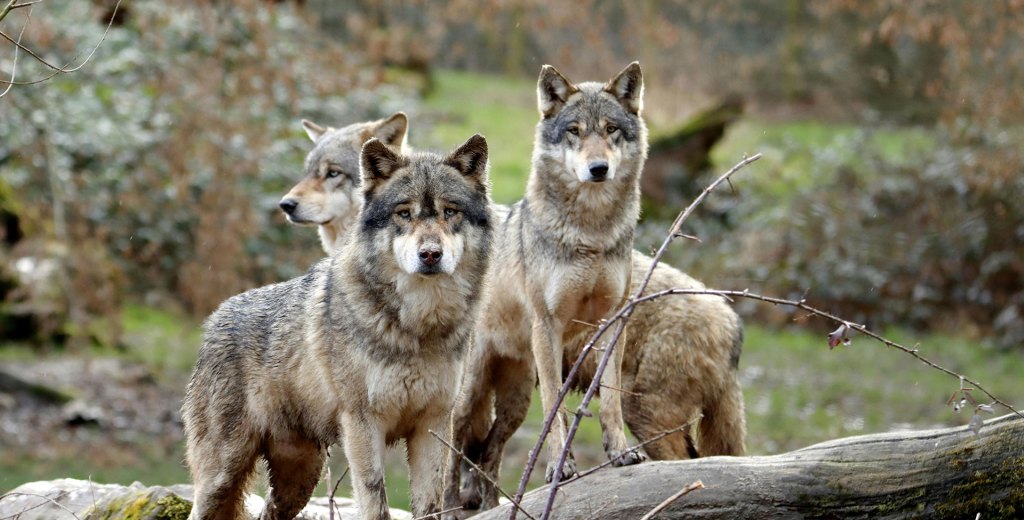
Wolves sometimes target livestock as they hunt for food, leading to conflicts with ranchers. Finding ways to protect livestock is therefore essential as society seeks to enhance wolf populations in several U.S. states. Fortunately, by implementing effective deterrents, such as non-lethal predator control methods, proper fencing, and herd management strategies, producers can reduce losses while minimizing use of lethal control. There are several effective non-lethal and proactive strategies to help prevent wolves from killing livestock.
- Physical barriers, such as reinforced fencing and fladry (flags attached to fences that deter wolves), can help keep wolves away from livestock.
- The use of guard animals, especially dogs, but also including llamas and donkeys, can provide excellent protection particularly in large open landscapes.
- Human presence, such as range riders who patrol grazing areas, also discourages wolves from approaching herds.
- Additionally, noise-making devices, lights, and other scare tactics can serve as temporary deterrents.
- Modifying grazing practices by keeping livestock in closer, well-monitored groups can help reduce risk.
- Removing livestock carcasses, particularly from areas with other livestock that might attract predators, can further reduce the risk of wolf attacks.
By using or combining these methods, ranchers can reduce conflicts while promoting or tolerating coexistence with wolves.
Many U.S. states with wolves provide financial and technical help for ranchers that includes non-lethal prevention. There are several good publications with detailed descriptions, such as (Oregon Department of Fish and Wildlife, 2022; Lance, Primm, & Inman, 2023; Stone, S. A., 2016). Examples can be found throughout this publication, especially in the Appendix.
Despite several good publications about these practices, there is little published about what they cost. Knowing about potential practice costs could be valuable for those considering adopting them or to those wishing to provide financial assistance for their adoption. Producers can use this information to compare different systems that they want to consider and to evaluate whether they are worth their cost compared to the savings provided through a reduction in livestock losses.
We prepared this document to provide information about current costs to adopt a variety of non-lethal practices, including turbo fladry, electrified night penning, carcass removal, range riding, livestock guardian dogs and deterrents. Of course, costs vary substantially depending on the size of the operation, local laws, labor rates and availability, building materials, and other factors. To help better target estimates, we provide free access to an Excel file where anyone can tailor the information to represent their own unique circumstances (Excel file A).
Users may also want to consider making adjustments directly from values printed in this report without using the Excel file. Advice for making adjustments and references and links to other documents with more information are provided in the Appendix.
Enterprise Budgets
On the following pages we provide enterprise budgets with cost estimates for each practice. We support these budgets with detailed information and notes in the Appendix. Since everyone’s situations are different, we also offer information to help users make adjustments that customize costs to meet their own unique needs. We found that many circumstances can affect costs, but in most cases, a user will know whether they apply to their situation. For example, some producers may want to account for an increase in the cost of maintaining electric fence or fladry if they need extra labor because of deep snow or difficult terrain.
To account for annualized costs, each budget utilizes a “useful life” to incorporate practices that use materials that can be reused from year to year. The process to annualize these costs is amortization in which a lump sum value is portioned into yearly amounts based on the item’s useful life, the interest rate, and the original cost (much like a mortgage to pay interest and principal over a given amount of time). In the case of these budgets, a standard interest rate of 4% is assumed, however, this can be adjusted in the excel file.
Turbo Fladry
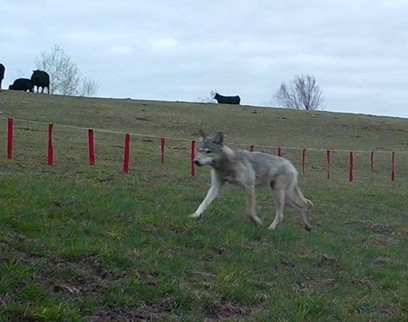
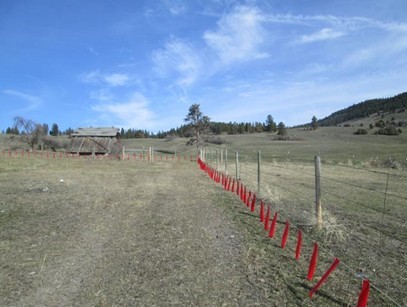
Turbo fladry is a practice that employs a string of nylon flags that are incorporated into electric wire. Wolves are considered neophobic animals, which means they fear things that are unfamiliar. The waving of the bright flags in the wind discourages wolves from approaching the area surrounded by fladry. For turbo fladry to remain effective and wolves to not become habituated to the flagging, experts advise that fladry should not be used for more than a couple of months at a time and only on smaller pieces of property like calving or lambing pastures. The budgets below are for Turbo Fladry. Fladry without electrification (not shown) can save money but is thought to be less effective.
Fladry and electrified fladry can be important tools for small areas, a few acres or less, and only for short periods of time (2 months or less). Weather events, especially wind and snow) can have a big influence on the effectiveness of fladry products by creating situations where sections of the fladry are either on the ground, covered or the flags coil around the holding wire. These situations create gaps and wolves will take advantage of gaps resulting in entry into protected areas as well as opportunities to overcome fear of the product. Therefore, regular maintenance of the fladry fence is very important and with big events may create significant efforts to repair and maintain the product.
Turbo Fladry Fence Enterprise Budget
Total Cost for 1 Mile of Fencing (Estimated Production Costs) – 2025
| ITEM | UNIT | COST PER UNIT | QUANTITY | PER 1 MILE(S) | USEFUL LIFE (Yrs) | ANNUALIZED COST ($/mile/yr) |
|---|---|---|---|---|---|---|
| MATERIALS & SUPPLIES | ||||||
| Flagged Poly Wire + Delivery | mi | $4,668.00 | 1 | $4,668.00 | 5 | $1,048.56 |
| Electric Fence Charger | charger | $300.00 | 1 | $300.00 | 5 | $67.39 |
| Ground Rod Set | set | $62.00 | 1 | $62.00 | 5 | $13.93 |
| Galvanized steel wire | mi | $26.99 | 4 | $107.96 | 5 | $24.25 |
| Fiberglass Posts | 1 post | $1.99 | 275 | $547.25 | 5 | $122.93 |
| Fiberglass Post Insulators | 1 insul. | $0.52 | 275 | $143.00 | 5 | $32.12 |
| T-posts | 1 post | $14.00 | 10 | $140.00 | 5 | $31.45 |
| T-post Insulators | 1 insul. | $0.50 | 10 | $5.00 | 5 | $1.12 |
| Electric Gate Handles | 1 handle | $3.29 | 2 | $6.58 | 5 | $1.48 |
| Fladry Reel | 1 reel | $100.00 | 2 | $200.00 | 5 | $44.93 |
| Total Material Expenses | $6,179.79 | $1,388.15 | ||||
| EQUIPMENT/VEHICLE OR SIMILAR | ||||||
| Pick-Up Truck | mi | $0.67 | 20 | $13.40 | NA | $13.40 |
| Trailer | mi | $0.25 | 10 | $2.50 | NA | $2.50 |
| Snowmobile | mi | $0.00 | 10 | $0.00 | NA | $0.00 |
| Total Vehicle Costs | $15.90 | $15.90 | ||||
| LABOR | ||||||
| Installation | hours | $20.00 | 20 | $400.00 | NA | $400.00 |
| Maintenance and Repair | hours | $20.00 | 20 | $400.00 | NA | $400.00 |
| Total Labor Expenses | $800.00 | $800.00 | ||||
| Total Annualized Costs/Year/1 Mile | $2,204.05 |
**For the purposes of this enterprise budget, materials included will only be those that go directly into the electric fencing and that remain in the field, as well as labor costs. General equipment like gloves, voltmeter, post pounder, etc. that are likely to already be in the possession of a rancher or farmer are treated as fixed costs and excluded from the budget.
Night Penning Livestock
Another option for securing and protecting livestock is by night fencing/penning using various forms of temporary electro net or poly wire. This practice works by keeping livestock in a secure location surrounded by electrified fencing during the night when predation is most likely to occur. This practice can be used in conjunction with other practices such as fox lights, sound alarms or livestock guardian dogs. Guidelines for night penning are included in the “The Electric Fencing Producer Tool Kit” published by the Western Landowners Alliance (Collins et al., 2024) who supported the foundation of this budget sheet.
This document accounts for two different methods of approaching calculated annual costs. The first is the ‘Perimeter Method’ which asks directly how many feet of fencing a producer is interested in and calculates costs from there. The second method, the ‘Quantity of Sheep Method’, which asks the producer how many sheep they plan to pen and from there calculates how many feet of fencing would be required to fulfill the assumption that each sheep has their own 25 square feet of space. We give equivalent examples below using both methods. This method can also be used for cattle, but we only provide information for sheep.
The use of transitory night pens across open rangeland areas is not a common tool employed widely, thus there is not a lot of internal industry knowledge about how to best employ this strategy in a variety of situations. Thus, it is likely that producers that decide to employ this tool will have to be creative in when, where, and how this technique is used. For example, grazing that occurs in wilderness areas or other areas where vehicle use is prohibited, creates challenges for transport of materials through such landscapes. Training the livestock to do this practice is a critical endeavor to help optimize the effectiveness of this practice. Ideally training can occur early before livestock are allowed into remote grazing landscapes.
Perimeter Method
Electrified Night Fencing Budget
Total Costs for a 280′ (Estimated Production Costs) – 2025
| Item | Unit | Cost Per Unit | quantity | cost per 280 feet | Useful life (yrs) | annuanlized cost ($/fence/yr) |
|---|---|---|---|---|---|---|
| MATERIALS & SUPPLIES | ||||||
| Sheep and Goat Netting | rolls | $179.99 | 2 | $359.98 | 3 | $129.72 |
| Fence Charger | charger | $255.99 | 1 | $255.99 | 5 | $57.50 |
| Solar Panel | panel | $219.99 | 1 | $219.99 | 3 | $79.27 |
| Solar Panel Battery | battery | $139.00 | 1 | $139.00 | 3 | $50.09 |
| Total Material Expenses | $974.96 | $316.58 | ||||
| EQUIPMENT/VEHICLE OR SIMILAR | ||||||
| Pick-Up Truck | mi | $0.67 | 5 | $3.35 | NA | $3.35 |
| Total Vehicle Costs | $3.35 | $3.35 | ||||
| LABOR | ||||||
| Installation | hours | $20.00 | 1 | $20.00 | NA | $20.00 |
| Maintenance and Repair | hours | $20.00 | 8 | $160.00 | NA | $160.00 |
| Penning Training | hours | $20.00 | 6 | $120.00 | NA | $120.00 |
| Total Labor Expenses | $300.00 | $300.00 | ||||
| Total Annualized Costs for a 280′ Perimeter Fence | $619.93 |
**Pen is assumed to be circular in shape but is often square.
Quantity of Sheep Method
The first method, shown above, asks producers their desired preference for perimeter length of electrified penning and the budget sheet will autofill based on that input. The second method asks a producer how many sheep they have in their flock and then assumes that each sheep should require 25 square feet of space. This was based on the reports of several individual ranchers and organizations that recommended 16-25 square feet per animal. However, this number can be adjusted based on the preference of the producer in the adjustment questions.
Electrified Night Fencing Enterprise Budget
Total Costs for a 250 Head Flock of Sheep (Estimated Production Costs) – 2025
| item | unit | cost per unit | quantity | per fence for 250 sheep | useful life (yrs) | annualized cost ($/fence/yr) |
|---|---|---|---|---|---|---|
| MATERIALS & SUPPLIES | ||||||
| Sheep and Goat Netting | rolls | $179.99 | 2 | $359.98 | 3 | $129.72 |
| Fence Charger | charger | $255.99 | 1 | $255.99 | 5 | $57.50 |
| Solar Panel | panel | $219.99 | 1 | $219.99 | 3 | $79.27 |
| Solar Panel Battery | battery | $139.00 | 1 | $256.99 | 3 | $92.61 |
| Total Material Expenses | $1092.95 | $359.10 | ||||
| EQUIPMENT/VEHICLE OR SIMILAR | ||||||
| Pick-Up Truck | mi | $0.67 | 5 | $3.35 | NA | $3.35 |
| Total Vehicle Costs | $3.35 | $3.35 | ||||
| LABOR | ||||||
| Installation | hours | $20.00 | 1 | $20.00 | NA | $20.00 |
| Maintenance and Repair | hours | $20.00 | 8 | $160.00 | NA | $160.00 |
| Penning Training | hours | $20.00 | 6 | $120.00 | NA | $120.00 |
| Total Labor Expenses | $180.00 | $300.00 | ||||
| Total Annualized Costs of Fencing for a 250 Head Flock of Sheep | $662.45 |
Range Riding
Range riding is a wolf-livestock conflict reduction practice that employs skilled riders to monitor livestock and predator interactions. Range riding involves increased human presence on rural rangelands by implementing consistent monitoring of predator presence, implements predator hazing when necessary and monitors the health and behavior of the herd to reinforce group resilience. Range riders can be current ranch operation owners or employees, or they can be contracted out from federal and state wildlife programs and other NGOs. The range riding season typically spans 6 months to coincide with the cattle grazing season from the beginning of May to the end of October, however this may alter slightly depending on the region and needs of the location.
Range riding is proving to be a popular tool for minimizing risk on large open range grazing systems. An important question surrounding the practice of range riding is whether the range riders focus on managing the livestock or managing the wolves. This is an important distinction because each strategy requires different skill sets. The reality is that an effective range rider will focus on both livestock and predator but how much time is spent on each endeavor will depend heavily on the goals of the producer, the context of the grazing scenario, and the abilities of the range rider. It is therefore important for those considering this practice to identify their priority and then find personnel well suited to those priorities.
Range Riding Enterprise Budget
Total Costs for one Managed Parcel (Estimated Production Costs) – 2025
| Items | unit | cost per unit | quantity | total | salvage value | annualized cost |
|---|---|---|---|---|---|---|
| MATERIALS & SUPPLIES | ||||||
| Cell phone/gps | month | $40.00 | 6 | $240.00 | NA | $240.00 |
| Bear Spray | item | $40.00 | 1 | $40.00 | NA | $40.00 |
| Tarps/bags | item | $19.98 | 2 | $39.96 | 3 | $14.40 |
| Total Material Expenses | $319.96 | $294.40 | ||||
| EQUIPMENT/VEHICLE OR SIMILAR | ||||||
| Pick-Up Truck | mi | $0.67 | 2160 | $1,447.20 | NA | $1,447.20 |
| Trailer | mi | $0.25 | 1440 | $360.00 | NA | $360.00 |
| Horse | day | $15.00 | 96 | $1,440.00 | NA | $1,440.00 |
| ATV/UTV | mi | $0.22 | 96 | NA | NA | NA |
| Total Vehicle Costs | $3,247.20 | $3,247.20 | ||||
| LABOR | ||||||
| Range Rider | hours | $30.00 | 864 | $25,920 | NA | $25,920.00 |
| Total Labor Expenses | $25,920 | $25,920.00 | ||||
| Total Annual Costs (1 rider, 0 ATVs, 1 horse(s), 6 months, 30 hours/wk, and 25000 acres) | $29,461.60 | |||||
| Split across 5 operations: | $5,892.32 |
**Factors used for these calculations can vary significantly. These include forest cover, terrain, range rider skills, carnivore activity, safety precautions, scope of rider duties, etc. Also, additional equipment, such as drones, can add costs.
Carcass Removal
A practice that involves separating a deceased carcass or bone pile from an active ranching operation and properly decomposing the remains so that they can be reused for fertilizer or further carcass composting. Livestock carcasses as well as aged bone piles can act as an attractant for predators such as wolves. Thus, relocating carcasses to off-site centralized facilities can help in limiting the presence of wolves. The largest variable in these costs is probably size. Costs go down as the size goes up, which has led some producers to create cooperative efforts. A simpler version of this system does not include composting, as carcasses are disposed of in alternate places such as landfills.
Creating successful carcass management projects can be a benefit by having multiple producers from an area work together to share costs of this practice. For example, having a truck and driver that routinely services an area can help reduce costs because of economy of scale. In creating such a communal endeavor, it is important to keep in mind the importance of privacy so that carcasses are not identified to any particular producer.
Colorado – Bin System Carcass Composting Enterprise Budget
Budget for ~ 100 Head of Livestock (Estimated Production Costs) – 2025
| Item | unit | cost per unit | quantity | total | useful life (yrs) | annualized cost ($/herd/Yr) |
|---|---|---|---|---|---|---|
| MATERIALS, SUPPLIES & PERMITS | ||||||
| Long-Stem Compost Thermometer | 1 therm. | $64.99 | 1 | $64.99 | 10 | $8.01 |
| Hay moisture probe | 1 probe | $199.00 | 1 | $199.00 | 10 | $24.53 |
| Compost Site Lease Fee | fee | $150.00 | 1 | $150.00 | NA | $150.00 |
| Wood Chips (bulking agent) + delivery fee | cubic yard | $25.00 | 300 | $6,800.00 | NA | $6,800.00 |
| Sprinklers | sprinkler | $104.96 | 3 | $314.88 | 5 | $70.73 |
| Water well installation | well | $5,000.00 | 1 | $5,000.00 | 5 | $1,123.14 |
| Hose timer | timer | $69.99 | 2 | $139.98 | 5 | $31.44 |
| Electric Fence | 0.25 mile | $1,702.30 | 1 | $1,702.30 | NA | $1,702.30 |
| 10′ Jersey barriers + delivery fee | barrier | $615.00 | 20 | $12,300.00 | 10 | $1,516.48 |
| Concrete pad | sq ft | $9.00 | 1200 | $10,800.00 | 10 | $1,331.54 |
| Total Material Expenses | $37,471.15 | $12,758.18 | ||||
| EQUIPMENT/VEHICLE OR SIMILAR | ||||||
| Pick-Up Truck | miles | $0.67 | 3000 | $2,010.00 | NA | $2,010.00 |
| Front-end/skid steer loader | day | $100 | 100 | $10,000.00 | NA | $10,000.00 |
| Total Machinery Costs | $12,010.00 | $12,010.00 | ||||
| LABOR | ||||||
| Installation | hours | $30 | 80 | $2,400 | 10 | $295.90 |
| Maintenance | hours | $30 | 100 | $3,000 | NA | $3,000.00 |
| Carcass Pick-up | hours | $30 | 30 | $900 | NA | $900 |
| Total Labor Expenses | $6,300 | $3,295.90 | ||||
| Total Annualized Costs | $28,064.08 | |||||
| Total Annualized Costs/Head of Livestock | $280.64 |
**Costs include composting components such as bulking material, bin structures, perimeter fencing, carcass collection and other common composting materials.
**Any costs to comply with water contamination or other regulations (e.g. water quality monitoring, drainage collection, site and regulatory fees, etc.) are not included, but could be substantial depending on local regulations.
Carcass Composting Fence Enterprise Budget
Total Costs for 0.25 Mile(s) of Fencing (Estimated Production Costs) – 2025
| item | unitt | cost per unit | quantity | per mile(s) | useful life (yrs) | annunalized cost ($/mile/yr) |
|---|---|---|---|---|---|---|
| MATERIALS & SUPPLIES | ||||||
| Woven Wire Fencing | roll | $452.25 | 7 | $3,165.75 | 5 | $711.11 |
| Turbo Braid | roll | $124.99 | 7 | $874.93 | 5 | $196.53 |
| Electric Fence Charger | charger | $300.00 | 1 | $300.00 | 5 | $67.39 |
| Ground Rod Set | set | $62.00 | 1 | $62.00 | 5 | $13.93 |
| Fiberglass Posts | 1 post | $1.99 | 68.75 | $136.81 | 5 | $30.73 |
| Fiberglass Post Insulators | 1 insul. | $0.52 | 68.75 | $35.75 | 5 | $8.03 |
| T-posts | 1 post | $14.00 | 10 | $140.00 | 5 | $31.45 |
| T-post Insulators | 1 insul. | $0.50 | 10 | $5.00 | 5 | $1.12 |
| Electric Gate Handles | 1 handle | $3.29 | 2 | $6.58 | 5 | $1.48 |
| Geared Reel | 1 reel | $100.00 | 2 | $200.00 | 5 | $44.93 |
| Total Material Expenses | $4,926.82 | $1,106.70 | ||||
| EQUIPMENT/VEHICLE OR SIMILAR | ||||||
| Pick-Up Truck | mi | $0.67 | 20 | $13.40 | NA | $13.40 |
| Trailer | mi | $0.25 | 10 | $2.50 | NA | $2.50 |
| Total Vehicle Costs | $15.90 | $15.90 | ||||
| LABOR | ||||||
| Installation | hours | $20.00 | 40 | $800.00 | 5 | $179.70 |
| Maintenance and Repair | hours | $20.00 | 20 | $400.00 | NA | $400.00 |
| Total Labor Expenses | $1,200.00 | $579.70 | ||||
| Total Annualized Costs/Year/0.25 Mile | $1,702.30 |
Livestock Guardian Animal
Livestock guardian dogs can be a useful conflict reduction measure for wolf-livestock predation. The practice utilizes large dog breeds that have historically been bred to protect domesticated animals such as livestock. Unlike pet dogs, livestock guardian dogs (LGDs) are bonded and cohabitate with their livestock, acting as a full-fledged member of the flock or herd. These dogs serve as an extra layer of protection to livestock by conducting perimeter patrols, marking territory, barking/alerting and fighting or chasing predators.
The use of guard dogs as a practice for reducing predation risk has a long history in the U.S. and other places around the world and is generally a well accepted practice. However, for producers that are unfamiliar with wolves, the use of guard dogs in these situations can create new challenges. The typical breeds (i.e., white dogs) used for protection against predators like coyotes and black bears may not be as suitable for use with wolves or may require a different configuration of individuals to enhance their effectiveness. Wolves bring new challenges because they are large and more effective predators and can create large packs. Questions about the optimal number of dogs and the type of breeds are important to consider. New breeds of guard dogs that are bigger or have more aggressive behavior toward predators may seem appealing but in areas with lots of recreation can create new problems as well. The number of guard dogs also is a cost/benefit exercise because of increased costs associated with more dogs but also because of the social dynamics of having multiple dogs in one area. Finding the optimal balance is an important endeavor and consideration.
Livestock Guardian Dog Enterprise Budget
Estimated Production Costs) – 2025
| Items | unit | cost per unit | quantity | total | useful life (yrs) | annuLIZED COST ($/DOG(S)/YR) |
|---|---|---|---|---|---|---|
| MATERIALS & SUPPLIES | ||||||
| Guard Dog + transportation fee | animal | $1,101.00 | 1 | $1,101.00 | 6 | $210.03 |
| Neuter/spay | procedure | $300.00 | 1 | $300.00 | 8 | $44.56 |
| Dog food | lb | $1.67 | 686 | $1,145.95 | NA | $1,145.95 |
| Annual vaccinations | vaccines | $403.00 | 1 | $403.00 | NA | $403.00 |
| Microchip | microchip | $50 | 1 | $50.00 | 8 | $7.43 |
| Shelter | shelter | $250.00 | 1 | $250.00 | 5 | $56.16 |
| Insurance | fee | $100.00 | 1 | $100.00 | NA | $100.00 |
| Miscellaneus items | NA | $200.00 | 1 | $200.00 | NA | $200.00 |
| Total Material Expenses | $3,549.95 | $2,167.12 | ||||
| LABOR | ||||||
| Training | hours | $20.00 | 100 | $2,000.00 | 8 | $297.06 |
| Total Labor Expenses | $2,000.00 | $297.06 | ||||
| Total Annual Cost for 1 Guardian Dog(s) | $2,464.18 |
Deterrent Devices
Fox Lights – A predator deterrent that is meant to mock the light that would come from someone walking around patrolling with a flashlight. Depending on the brand purchased, the fox lights will flash blue, white and red light periodically in specific sequences. A sensor automatically turns the light on at night and off at dawn and can be seen from approximately 2 kilometers away.
Solar Sound Alarms – A predator deterrent device that typically has a sensor to detect the motion of unwanted animals that reach a range of 16-26 feet of a specific location. When triggered, the alarm will emit a 130 dB sound alarm and strobe light. These alarms can be either solar or USB charged.
Game Cameras – Unlike a traditional deterrent device, a game camera will not deter predators in the moment, but reviewed footage can give insight into predator movement and frequency allowing better opportunity to more effectively employ other deterrents and practices.
Disclaimer and other considerations:
**None of these devices are being promoted as a paid partnership of any kind.
**The annualized cost range of each device is calculated assuming a five-year life span of each of these devices with a 4% interest rate. **There likely exist products that lie in a price range outside of these estimated ranges depending on sales, year sold, changes in manufacturing, etc
References
Bass, T., Colburn, D., Davis, J., Deering, J., Fisher, M., Flynn, R., Lupis, S., Norton, J., & Schauermann, N. (2005). Livestock mortality composting.
https://www.sare.org/wp-content/uploads/CompostingManual-final-webview.pdf
Big Hole Watershed Committee. (n.d.). Carcass Removal and Composting. Big Hole Watershed Committee.
https://bhwc.org/project/carcass-removal-composting/
Collins, M., Justus, L., Hyde, M., Talmo, R., Owens, B., Few, A., & Beaver, J. (2024, April 23). Electric Fencing Producer Tool Kit. Western Landowners Alliance. https://westernlandowners.org/publication/electric-fencing-toolkit/
Conservation Northwest. (2021, November 2). Range Rider Pilot Project: Conservation Northwest. Conservation Northwest – Protecting, Connecting and Restoring Wildlands and Wildlife. https://conservationnw.org/our-work/wildlife/range-rider-pilot-project/
Costanzo, B. (2020, March 2). Texas A&M Agrilife Research and Extension Center at San Angelo. https://sanangelo.tamu.edu/2020/03/02/the-guardian-way-march-2020/
Lance, N., Primm, S., & Inman, K. (2023). Wolf resource guide: Hands-on resource guide to reduce depredations. Colorado Parks & Wildlife. https://www.clearcreekcounty.us/AgendaCenter/ViewFile/Item/8448?fileID=17302
Montana Department of Transportation. (2007, November). Roadkill Carcass Composting. https://mdt.mt.gov/publications/docs/manuals/roadkill-composting.pdf
Natural Resources Defense Council. (2020, October). INSTALLING TURBO FLADRY: AN INFORMATIONAL GUIDE. https://extension.colostate.edu/wp-content/uploads/2022/01/installing-turbo-fladry-guide-ib.pdf
Oregon Department of Fish and Wildlife. (2022, September 1). ODFW Non-Lethal Measures to Minimize Wolf-Livestock Conflict . https://olis.oregonlegislature.gov/liz/2023R1/Downloads/CommitteeMeetingDocument/267548
Payne, J., & Pugh, B. (2017, March 1). Farm mortality composting of livestock carcasses – Oklahoma State University. On-Farm Mortality Composting of Livestock Carcasses. https://extension.okstate.edu/fact-sheets/on-farm-mortality-composting-of-livestock-carcasses.html
Primm, S., Andrews, B., & Robinson, A. (2018). Electrified Fladry for Deterrence of Gray Wolves (Canis Lupus) – An Evolving Manual of Best Practices.
https://extension.colostate.edu/wp-content/uploads/2022/01/FladryManual.pdf
Redden, R., Tomecek, J., & Walker, J. (2015, September). Livestock guardian dogs. https://sanangelo.tamu.edu/files/2013/08/Livestock-Guardian-Dogs1.pdf
Saskatchewan Agriculture, Food and Rural Revitalization. (2005, January). Composting Animal Mortalities: A Producer’s Guide. https://flsart.org/acmwg/carcass_disposal_guidance/eis_carcass_management.pdf
Stone, S. A. (2016). Livestock and Wolves: A Guide to Nonlethal Tools and Methods to Reduce Conflicts.
https://defenders.org/sites/default/files/publications/livestock_and_wolves.pdf
University of California Cooperative Extension. (2019, March). Livestock guardian dogs. Livestock Protection Tools Fact Sheets – Livestock Guardian Dogs. https://ucanr.edu/sites/Rangelands/files/305121.pdf
Washing Department of Fish and Wildlife. (2015, October 24). Fact sheet 5: Fencing, Fladry, and night-‐penning. Living with Livestock and Wolves: Tools for Coexistence. https://westernwildlife.org/wp-content/uploads/2015/10/Fact-Sheet-5-Fencing-Fladry-and-Night-penning.pdf
Appendix
Notes and Details to Support Enterprise Budgets
Note: A key to internet link addresses is at the end of this Appendix
Adjustment questions in Excel
- How many miles of fencing do you need?
- Do you live in an area that is particularly rocky or has rugged terrain or deep snow?
- Will you require a snow machine for installation?
Total fencing cost is determined by length in miles. Areas with rough terrain raise the cost by being more difficult to fence, and areas with deep snow require moving the fence up and down. You can address all of these by simply adding a fraction onto the total cost or on any item cost.
Supplemental Readings
- NRDC: INSTALLING TURBO FLADRY – AN INFORMATIONAL GUIDE (Natural Resources Defense Council, 2020)
- People and Carnivores – Electrified Fladry (Primm et al., 2018)
- Washington Department of Fish and Wildlife (WDFW, 2015)
Assumptions and data:
* The (Natural Resources Defense Council, 2020) has a detailed producer guide that provides a list of required materials for turbo fladry and additionally provides the basics of the material list for this budget sheet. Some of the quantities of materials from the NRDC were given as a range, so in that case the median number was listed as the quantity within this budget sheet.
* Based upon published informational guides and suggestions from people who regularly install turbo fladry, fencing is typically only effective for a two-to-three-month period, which is averaged over 75 days here to calculate labor costs (Natural Resources Defense Council, 2020).
* Factors used for these calculations can vary significantly. These include snow, wind, terrain, and labor.
Junco Industries is one of the only large-scale manufacturers of turbo fladry in the United States. Based on communication with the chief business development officer, the 2024 prices can be viewed in the tables below. Three different fladry products are available for purchase with each product using PBSC4 wire and using 18-inch-long flags, spaced 18 inches apart from each other. For the most basic fladry, a quarter mile is priced at $1,167 which includes delivery costs.
| Pricing for 5 Miles or Less: | |||||
| Material | Price/0.25 mi | Wire | Flag length | Space between flags | Price/mile |
| Deluxe Fladry, 420D Red Nylon | $1,167.00 | PBSC4 | 18” | 18” | $4,668.00 |
| Polyester UV Coated 600D fabric | $1,206.00 | PBSC4 | 18” | 18” | $4,824.00 |
| 18oz Vinyl coated Polyester Scrim | $1,243.00 | PBSC4 | 18” | 18” | $4,972.00 |
*Prices include cost of delivery/transportation
| Pricing for 6+ Miles: | |||||
| Material | Price/0.25 mi | Wire | Flag length | Space between flags | Price/mile |
| Deluxe Fladry, 420D Red Nylon | $1,137.00 | PBSC4 | 18” | 18” | $4,548.00 |
| Polyester UV Coated 600D fabric | $1,155.00 | PBSC4 | 18” | 18” | $4,620.00 |
| 18oz Vinyl coated Polyester Scrim | $1,212.00 | PBSC4 | 18” | 18” | $4,848.00 |
*Prices include cost of delivery/transportation
Most prevalent retailers: Tractor Supply Co., Premier 1 Supplies, ULINE and Amazon
- (1) Electric Fence Charger: Electric Fence Energizers – Premier1Supplies $300
- (2) Ground Rod Set: field-guardian-complete-grounding-kit-6-ft-900125 at Tractor Supply Co.
- (3) Grounding Kit: 6 ft. Complete Grounding Kit $62
- (4) Galvanized Steel Wire: Red Brand 1,320 ft. x 170 lb. Galvanized Electric Fence Wire, 17 Gauge at Tractor Supply Co ($26.99 x 4) = $107.96
- (5) Fiberglass Posts: CountyLine 3/8 in. x 4 ft. Fiberglass Rod Post at Tractor Supply Co ($1.99 x 275) = $547.25
- (6) Fiberglass Post Insulators: Patriot Rod Post Insulators, Yellow, 25-Pack at Tractor Supply Co ($0.52 x 275) = $143
- (7) T-Posts: ULINE Search Results: Safety Fence T Post ($14 x 10) = $140
- (8) T-Post Insulators: American Farm Works Screw-On T-Post Insulators for 1.25 and 1.33 in. Studded T-Posts, Yellow, 25-Pack at Tractor Supply Co ($0.50 x 10) = $5
- (9) Electric Gate Handles: Rubber Gate Handle at Tractor Supply Co ($3.29 x 2) = $6.58
- (10) Fladry Reel: Amazon.com: EFencSolv Electric Fence Mega Geared Reel PK1 : Patio, Lawn & Garden ($100 x 2) = $200
For installation of fladry, many producers might have different approaches. A standard fladry reel should be able to hold about 3,000 feet of polywire. Therefore, two reels would be required per mile, or a producer could choose to refill the reel and only use one. Additionally, some producers might incur additional costs if they choose to use a method to more efficiently spool out the polywire like using a strap backpack mechanism or implementing a system onto an ATV or UTV. Some states, like Colorado and Montana, make a special installation cart available by request.
Gas Mileage
The gas mileage pricing in the budget sheet is based on the 2024 IRS standard mileage rate for operating an automobile for business, charitable, medical or moving purposes such as for use on a ranch. This amount comes out to be $0.67/mi. As to account for trailer wear and tear, 0.25/mile was assigned based on similar pricing for trailer use for range riding for the Rocky Mountain Landowner Collaborative cost scenarios.
There is a question included in the Excel file that asks the user if they need a snowmobile for installation in the case that they live somewhere that may still have a deep layer of snow on the ground, requiring a snowmobile for installation. If the user responds “No” the budget will not include the cost of using a snowmobile.
Similar to ATV/UTVs, snowmobiles typically get a range from 10-20 mi/gallon. The price of gas on 9/2/24 according to the EIA was $3.29/gal. For the sake of a conservative guess, 15mi/gal was chosen for the calculations. That would result in a price of approximately $0.22/mile
Labor
Based on conversations with individuals experienced with electric fence installation, individuals reported that it could take about 4 people five hours to install a mile of turbo fladry fencing. That would equate to approximately 20 hours of installation labor annually however terrain and weather conditions could impact this significantly.
Reports from multiple people indicated that electric fencing typically requires 2 hours of maintenance per week. Under the assumption that the turbo fladry would be employed for approximately 2.5 months (10 weeks) that equates to approximately 20 hours of maintenance labor annually. Labor was priced at $20/hour although this can vary by employer and state. $20 is meant to serve as a place holder and the Excel user would have the ability to alter the price to more accurately reflect their scenario.
Additional factors such as ruggedness of terrain, type of soil, and the presence of snow can ultimately impact the feasibility of installation. To account for some of these external factors that impact installation, one of the questions asked to users will be “Do you live in an area that is particularly rocky or has rugged terrain or deep snow?”. The user can choose to say “Yes” or “No”. If the answer is yes, there will be a 1.2 multiplier (a default multiplier when more information is unavailable) added to the installation and maintenance time requirements.
Disclaimer and other considerations:
The biggest factor impacting the feasibility of electric fence installation is snow as well as land terrain and ruggedness. Installation usually coincides with the beginning of grazing season in the late spring. Depending on operation location snow presence can be a real consideration as it may require the use of a snow machine as well as increased installation time requirements as the ground will potentially be hardened, and snow presence would require digging for post installation.
Another consideration is the system in which you choose to spool and unspool the turbo fladry. This budget sheet includes an electric fence geared reel, but other producers may choose to implement a more involved system that integrates the reel into a shoulder strap system or use an automated fladry spooling system connected to an ATV. These systems have the potential to decrease installation time but increase upfront costs.
Wind is another factor that must be considered for maintenance requirements. Intense wind can cause the fladry flags to wrap around the fencing which diminishes the visual impact of the flagging and requires increased maintenance time.
Adjustment Questions in Excel – Perimeter method

Adjustment Questions in Excel – Quantity of sheep method

Supplemental Readings
- Western Landowners Electric Fencing Tool Kit (Collins et al., 2024)
- Defenders of Wildlife – Livestock and Wolves (Stone, S.A., 2016)
- Washington Department of Fish and Wildlife (WDFW, 2015)
Sheep Spacing Guides
- (11) Understanding How Much Room Does A Sheep Need – Essential Guide
- (12) Creating A Good Home For Sheep – The Open Sanctuary Project
- (13) How Much Space Do You Need To Raise Sheep? – Family Farm Livestock
Assumptions and data:
Sheep and Goat Netting
- (14) Starkline 48 in. x 164 ft. Positive/Negative Electric Sheep and Goat Netting at Tractor Supply Co ($179.99/roll) – Each roll is 48” tall and 164’ long. The mesh is composed of 10 horizontal strands with vertical strands placed every 7 inches. The netting incorporates 14 preinstalled PVC posts with 6 galvanized double-spiked stakes, so no additional support material is needed.
Fence Charger
- (15) Energizer: Speedrite 3000 Dual Purpose Energizer, 3 joule — Jeffers $255.99
- (16) Solar Panel: Ghost Controls 30W Monocrystalline Solar Panel Kit with Brackets, No Post at Tractor Supply Co $219.99
- (17) Solar Panel Battery Price: Ghost Controls Battery Box Kit with 2 Batteries and Harness at Tractor Supply Co $139.99
Labor
Collins et al., (2024) state that it takes roughly 15 minutes to set up and take down night penning fence, with occasional repairs, the fence will last up to three years and that only light maintenance and repairs are needed throughout the grazing season. To err on the conservative side, one hour of labor was allocated for installation/removal and 30 mins a week was allocated for maintenance hours. If your operation has particularly difficult terrain, consider increasing this labor requirement to better reflect your needs.
Additionally, sheep won’t instinctively know to go to the temporary penning during the night so they must be trained via consistent herding into the enclosure until they instinctively know to head there themselves. One way that has been suggested to allow animals to become adjusted is to use the fencing during feeding times (Stone, 2016). It is also suggested to move the fencing around every so often to not overly disturb the forage. Therefore 6 hours of training was allocated to train the sheep to use the pen.
Disclaimer and other considerations:
For night penning to work properly, sheep or goats do have to be trained to use the fencing. Failure to do so will cause more wear and tear on the penning, which ultimately decreases the lifespan of the fencing. Additionally, because night penning is designed to be a more temporary system with more frequent set-up and take down, weather considerations can impact the installation times. Wet season particularly will increase time demands for set-up.
Adjustment Questions in Excel
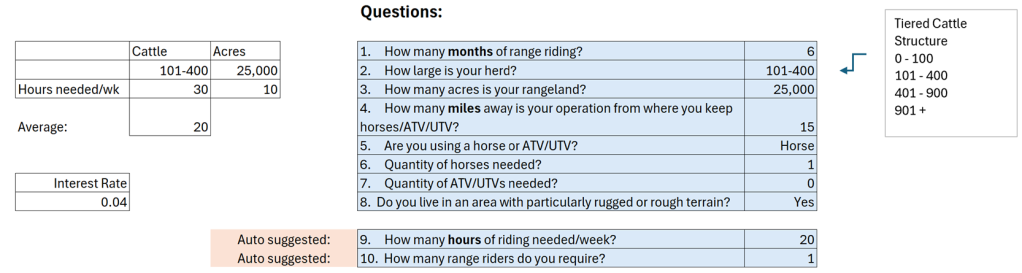
There are several questions that could affect this budget, including the size, expressed in acres or cattle, length of season, distance, etc. Make adjustments in the cost to arrive at riding location, hours of riding per week, etc. The image from the Excel file shown above includes boxes to the right and left that are used to create the question box.
Supplemental Readings
- Western Landowners – Range Riding Tool Kit (Collins et al., 2024)
- Conservation Northwest – Range Rider Pilot Project (Conservation Northwest, 2021)
- Colorado State University – Wolf Resources Guide (Lance et al., 2018)
Assumptions and data:
The largest expenses for range riding come from employment of labor and transportation costs (horses/ATV/UTV) rather than from materials or supplies.
Truck and Trailer
- (18) Based on the same IRS guidelines from before, truck mileage was priced at $0.67/mile and trailer mileage (wear and tear) was priced at $0.25. A major contribution to the costs for a practice like this is the size and scope of the operation which ultimately indicates the amount of transportation and labor that is needed.
For example, based on how the user responds to a set of questions will impact how the budget sheet autofills. In this scenario, there is one range rider, using one horse and no ATVs covering 25,000 acres working 20 hours/week for 6 months.
Range Riding
The number of head and number of acres were the two inputs for which the labor hours suggested were calculated.
Tiered cattle structure suggested for labor requirements:
- 0-100 head would equate to a one-person operation, or ½ FTE at a cost of $25,000 (20 hours)
- 101 – 400 → 1.5-person operation → ¾ FTE at a cost of $40,000 (30 hours)
- 401 – 900 → two-person operation → 1 FTE at a cost of $50,000 (40 hours)
Range riding often occurs over the grazing season which is typically 6 months long. Cost scenarios from the NRCS indicated they used a total of 480 hours of range riding labor over the course of a season which breaks down to 20 hours of labor/week for 50,000 acres. In a different scenario they used a total of 960 hours which breaks down to 40 hours/week for 150,000 acres. Using simple math, this further breaks down to approximately 0.0004 and 0.0003 hours/acre respectively.
Using a combination of these two labor requirement methods, the following formula with the scenario used in the budget sheet which was 300 head of cattle on 25,000 acres of land:

There is an additional question that asks the user “Do you live in an area with particularly rugged or rough terrain?” The user can choose to say “Yes” or “No”. If the answer is yes, there will be a 1.2 multiplier added to the labor time requirements.
Other
- (19) Range Rider Pilot Project | Conservation Northwest *A skilled range rider can cost up to $20,000 or more in a grazing season
ATV/UTV Gas Mileage
ATVs and UTVs typically get a range from 10-20 mi/gallon. The price of gas on 9/2/24 according to the EIA was $3.29/gal. For the sake of a conservative guess, 15mi/gal was chosen for the calculations. That would result in a price of approximately $0.22/mile
Daily Horse
$15/day — Average daily cost to use a horse for the grazing season. This is meant to include depreciation, feed, and vet care while riding remote ranges and forest allotments to manage and monitor livestock. This cost is taken from the daily cost listed for the BHWC’s Upper Big Hole Range Rider program.
Material and Supply Costs
- (20) Bear Spray: Frontiersman Bear Spray (9.2 oz) | Deter Wildlife Attacks – Default Title – My Patriot Supply $40
- (21) Tarps: Everbilt 8 ft. x 10 ft. Brown and Silver Heavy Duty Tarp PY008 – The Home Depot ($19.98/item)

Most of the excel questions are related to size, such as the number of carcasses, how many have to be picked up from remote locations, and the distance for pickups. Some producers have created central storage where members can drop off carcasses for later pickup.
Supplemental Readings
- Oklahoma State Extension – Mortality Composting (Payne & Pugh, 2017)
- SARE – Livestock Mortality Composting (Bass et al., 2005)
- Florida SART – Composting Animal Mortalities: A Producer’s Guide (Saskatchewan Agriculture, Food and Rural Revitalization, 2005)
Assumptions and data:
Ultimately there are several assumptions that must accompany carcass composting as a mitigation practice due to the variation in which the practice may be conducted. The two most common ways to compost livestock are bin and windrow composting. Bin composting is a when a compost pile is contained by some sort of 3-sided square structure. These three-sided structures can consist of many different materials such as hay bales, jersey barriers, make-shift wooden structures, wood pallets, etc.
Windrow composting is a compost pile that is uncontained and shaped so that it forms an upside-down “V” so that water and other weather elements naturally run off the piles. There are two stages of carcass composting and windrow composting will often be used in conjunction with bin composting as the second stage of the decomposition process (Saskatchewan Agriculture, Food and Rural Revitalization, 2005).
Jersey Barrier
Other non-profit organizations have implemented community style carcass composting sites where ranchers either drop off their deceased livestock or someone comes and collects the carcasses. A common theme among many of these groups was that they implemented jersey barriers to act as the walls of their bins. (Big Hole Watershed Committee, n.d.) and (Montanta Department of Transportation, 2007).
The company 48 Barriers charges $12,300 for 20 used jersey barriers which includes the cost of delivery. Therefore, the per unit cost for a jersey barrier is $615/barrier. This cost, however, is subject to change as location changes, but acts as a reasonable expectation of price. The price does not include offloading; thus, the recipient/customer is expected to be in possession of their own equipment to do so and be able to offload within one hour of delivery to not incur additional fees. There is also the possibility the jersey barriers can be donated via state DOTs. Other possibilities for bin walls include self-made structures or large haybales.
Jersey barrier specifications:
Condition – used
Dimensions – 10’L x 24”W x 32”H Weight – 3,900 lbs./barrier
Weight – 3,900 lbs./barrier
Potential Set-up (diagram):
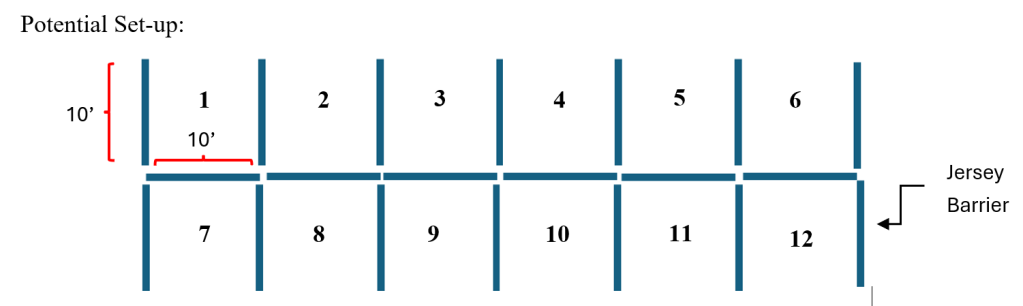
The most efficient way to set up 20 barriers is in the configuration above which provides 12 10’x10’ bins. Generally, a mature cattle carcass will need approximately 9 by 10 feet of room. A couple calves/yearling or a few sheep carcasses could fit in the same amount of space (Bass et al., 2005). The primary stage of composting, which usually takes around 3-6 months depending on the size of the carcass would occur in the bins
The second stage of composting, which usually takes another 3-6 months depending on the size of the carcass, would occur in open windrow piles within the sites’ secured fencing. However, practiced composting facilities can often sufficiently compost multiple carcasses within a pile in much less time. Composting also takes less time the smaller the livestock animals is in size and weight.
Concrete Slabs
- (22) Concrete Slab: How Much Does a Concrete Slab Cost? (2025 Prices) $6-$12/sq foot
Having a concrete slab or clay substrate foundation at the base of a compost pile is recommended by many producer guides to livestock carcass composting as this can provide a barrier between the leachate from the compost pile and the ground that could result in biohazardous soil conditions. Concrete slabs can range from $6-$12/sq foot. This budget sheet assumes a middle range of $9/sq foot and requirement of 1200 sq feet (10’ x 10’ x 12’) as referenced by the visual representation above.
- (23) Long-stem Compost Thermometer: Agtec Heavy Duty Fast Response Compost Thermometer 36in (0-200°F) $64.99
- (24) Hay Moisture Probe: Agratronix Portable Hay Moisture Tester with Calibration Clip HT-PRO $199
- Compost Site Lease Fee $150 – This is based on the Montana Department of Transportation fee for the Big Hole Watershed Committee composting project. *Other states are likely to have different lease fees depending on state regulations.
- (25) Sprinkler and hose: Gorilla ToughLite 5/8 in. x 100 ft. Heavy Duty Garden Hose HYB55800 – The Home Depot $104.96 x 3 = $314.88
- (26) Hose timer: Rain Bird Professional Grade Hose End Timer at Tractor Supply Co $69.99 x 2 = $139.98
Well Installation
There can be potentially large differences in terms of water access and general health and water quality standards related to composting from state to state and even locationally within a given state. A composting facility may need to drill a well to either test the quality of the ground water within the site or if there is limited access to water for the purpose of wetting the compost piles, a facility may need to consider drilling a well to access groundwater for use beyond simply testing. Well installation pricing can vary considerably depending on the depth and width of the well along with the surrounding soil conditions. Typically, they range anywhere from $3,700 to $15,300 or $25-$65 per cubic foot. This enterprise budget will assume a lower cost well installation as water needs would likely be relatively low due to the seasonality of the operation.
Electric Fence Components and Pricing
A small-scale carcass composting facility or really any composting operation needs fencing capable of preventing predators/scavengers from coming inside. The Montana Blackfoot Challenge recommends using woven wire that has been integrated with top, hot wire. A site capable of composting 100 head of cattle, it was assumed only about a quarter mile of fencing would be needed. There is an annualized enterprise budget for an individualized quarter mile woven wire fencing system above that acts as a direct input into the carcass composting enterprise budget sheet.
- (28) Woven wire: KIWI S-Knot Woven Wire, 16/60″/2″, 12 1/2ga, 200′ Roll $452.25 x 7 = $3,165.75
- Kencove, a manufacturer of farm fence supplies, produces a variety of woven wire fence rolls. The link above is for roll of 5’ fencing with 2×4” spacing and is 200’ in length. In order for the fencing to cover a ¼ mile distance, seven rolls would be needed. Woven wire fences are meant for more permanent fencing solutions.
- (29) Turbo Braid: Gallagher Turbo Braid 1312 ft. Plus 328 ft. Extra 7/64in Diameter Highly Conductive Braided Poly Wire with SS and Copper Strands at Tractor Supply Co $124.99 x 7 = $874.93
- Turbo braid was chosen as the hot wire as it is more durable than standard poly wire as it is thicker, braided instead of twisted, has more conductivity and holds up better in the wind. The length of this specific roll of turbo braid is 1,312ft. Assuming that a four or five strand system would be integrated, roughly a 6 roll of turbo braid would be required
- (1) Electric Fence Charger: Electric Fence Energizers – Premier1Supplies $300
- Ground Rod Set: field-guardian-complete-grounding-kit-6-ft-900125 at Tractor Supply Co.
- (2) 6 ft. Complete Grounding Kit $62
- (10) Geared Reel: Gallagher Reel ~ Standard 1320 — Powerflex $100 x 2 = $200
- (5) Fiberglass posts: CountyLine 3/8 in. x 4 ft. Fiberglass Rod Post at Tractor Supply Co. $1.99 x 69 = $137.31
- (6) Fiberglass post insulators: Patriot Rod Post Insulators, Yellow, 25-Pack at Tractor Supply Co. $0.52 x 69 = $35.88
- (9) Electric Gate Handles: Rubber Gate Handle at Tractor Supply Co ($3.29 x 2) = $6.58
Bulking Agent Price
Livestock carcasses are higher in nitrogen so to properly compost, a generous amount of a bulking agent that is high in carbon is required so that the (C:N) ratio is at a sufficient range – typically between 25:1 and 40:1 (Saskatchewan Agriculture, Food and Rural Revitalization, 2005). The most used bulking agent materials are sawdust, woodchips, hay, straw, topsoil, crop residue, etc.
For the purposes of this budget sheet, we’re assuming that the average weight of livestock is 300 lbs., as this is taking into consideration that typically the majority of livestock loss consists of young calves with less frequent losses of cattle and sheep such as cows, heifers, bulls, steers, yearlings, rams, ewes, and lambs.
A typical rule of thumb is that 1 cubic yard is required per 100lbs of carcass (Payne & Pugh, 2017). Therefore, with the assumption that there are 100 head of livestock (cattle and sheep) at an average weight of 300lbs/head, then 300 cubic yards of the bulking agent would be needed:
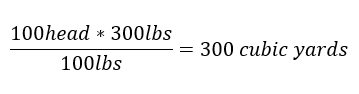
(These numbers can be adjusted according to the specific composting site)
As previously mentioned, multiple materials are suitable for use as the bulking agent. This budget sheet uses woodchip pricing as the input, but depending on where a composting site is regionally, it might be easier or more cost effective to source other materials high in carbon. Expenses can also be cut by using donated chopped crop residue from other agriculturalists.
Woodchips $25/cubic yard
Pricing for bulking materials can depend on the type of material, the delivery location/distance, and whether excess material like woodchips or hay can be sourced from nearby agricultural operations. Typically, the cost for a cubic yard of a bulking agent can range from $15-$30.
As previously mentioned, multiple materials are suitable for use as the bulking agent. This budget sheet uses woodchip pricing as the input, but depending on where a composting site is regionally, it might be easier or more cost effective to source other materials high in carbon. Expenses can also be cut by using donated chopped crop residue from other agriculturalists.
Woodchips $25/cubic yard
Pricing for bulking materials can depend on the type of material, the delivery location/distance, and whether excess material like woodchips or hay can be sourced from nearby agricultural operations. Typically, the cost for a cubic yard of a bulking agent can range from $15-$30.
- (30) Bulk Sawdust Pickup & Delivery Prices | Hull Forest Products (For bulk >85 cubic yards it is $14.50/yard + delivery)
- (31) Wood Chips for Biomass Fuel & Reactive Playground Surfacing | Hull ($20/yard FOB mill)
- (32) Retail Sawdust and Mulch Sales – River City Hardwoods ($30/yard for mulch) – ($20/yard of sawdust)
A $800 delivery fee was added to the yearly bulking agent costs based off NRCS pricing info.
Furthermore, about roughly 30% of the mature compost from previous piles can be recycled back into new piles (Saskatchewan Agriculture, Food and Rural Revitalization, 2005). So, to account for this on-site material recycling, 0.8 was multiplied by the final required amount to show that a conservative 20% of the material could come from within-system.
Equipment price
A small-scale composting facility must have semi-regular access to a large piece of equipment that has the ability to lift heavy bulking agents as well as livestock carcasses at varying stages of compost. Previous informational guides have indicated that equipment such as front-end or skid-steer loaders are suitable for this work. Cost scenario data from the NRCS explained that they rented a tractor 100 days out of the year and the farmer they rented it from estimated the cost to be $100/day. ($100 x 100) = $10,000
Labor costs
As of right now, the budget sheet lists hours required for installation at 80 and yearly maintenance/labor at 100 hours which would break down to just over 4 hours a week for 6 months to include activities such as carcass pick-up, pile turning and creation, pile temp checking, hosing, and other maintenance requirements. These numbers are currently only estimates.
Most carcass composting facilities have the option to either have producers drop off their carcasses or have someone come pick them up. For an operation with approximately 100 carcasses, the budget sheet assumes 75% of the carcasses are picked up by the facility and that the average roundtrip mileage for each pickup is 40 miles. These numbers are only placeholders and can be adjusted by the user to account for their site specifications.
Disclaimer and other considerations:
This budget sheet is meant to represent an expected average for annual costs associated with a carcass composting facility. Ultimately every facility is unique and will face individual costs and state specific requirements related to water quality testing, permit fees and construction requirements that impact final costs. Materials listed within the carcass composting budget sheet such as bulking agents (wood chips, hay, crop residue, etc.) from producers, jersey barriers from the state department of transportation and other raw material have been donated in the past to similar organizations that have undertaken large-scale carcass composting. In order to keep expectations for prices more realistic, it is assumed within this budget sheet that no materials are in kind or gifted, but there are likely opportunities to receive some reduced cost or no-cost material inputs.
Weather: Depending on the region, it may be good to consider a bin system with some sort of overhead shelter which can protect from excessive wind and rain. Compost piles cannot become over saturated with water otherwise they run the risk of not composting correctly.
Netting and fencing: Predator and scavenger access can be a real concern meaning proper electric fencing is crucial to success. This budget sheet calculates costs for mesh netting with hot wire, but fencing costs can vary. Another consideration which this budget sheet does not include is overhead netting. Not all facilities have this, but that might be a consideration depending on flying scavengers like birds and disease spread concerns.
Water: A composting facility’s access to water is a major factor when considering price variability. To access water, some facilities may need to drill a well. It is also important to abide by state water quality regulations which may call for different water quality testing standards as well as requirements for substrate or concrete pile bases and drainage systems. There may also be specific limitations for what purposes mature compost can be used for within your state.

Supplemental Readings
- University of California Cooperative Extension (University of California Cooperative Extension, 2019)
- Texas A&M AgriLife Extension LGDs (Redden et al., 2015)
- Texas A&M AgriLife Extension LGD Diets (Costanzo, 2020)
Assumptions and data:
Guard Dog Pricing and Delivery Fee
Ultimately, the cost of acquiring a guard dog will vary depending on the breed, breeder and the distance the dog must be transported. The price of the livestock guardian dog as well as the delivery fee for this budget sheet is based on the purchase of Turkish Kangal guardians for the USDA APHIS Wildlife Services’ Nonlethal Initiative for Livestock Protection Program.
The FY 2021 Annual Accomplishments report, linked above, states that they were able to purchase 11 Kangal puppies for a slightly discounted amount of $7,200. This would divide out to be approximately $655/puppy. The report’s cost breakdown also states that vehicle costs added up to $4,908.41. Although the report doesn’t explicitly state what these costs are attributable to, it can be assumed that they were likely the cost of gasoline to drive the puppies across the state and to their respective homes. That would mean transportation costs break down to approximately $446/puppy for procurement and delivery fee of $1,101/puppy.
Some other sources that support this price range for livestock guardian puppies are:(Redden et al., 2015) estimated the cost of LGDs to be $1,000 the first year and $500 the subsequent years. This would suggest that purchase price for this publication to be approximately $500 in 2015 dollars.
- (34) Livestock Guardian Dogs | Willow City Farm – This LGD breeder requests a $100 deposit and $500 additional payment at time of pick up, for a total cost of $600 for a Great Pyrenees puppy which is quite similar to the $655 price tag for the Kangal puppies (pre deliver/transportation cost).
- (35) Livestock Guardian Dog Breeder: Breeds Instinctive, Working LGDs ($500 – $5000)
Neuter/Spay Costs:
- (36) How Much Does It Cost to Spay or Neuter a Dog? 2024 Price Guide – Dogster ($150 – $700)
- (37) How Much Does It Cost to Neuter or Spay a Dog? – Spend On Pet ($150 – $700)
Annual Vaccination Fees
It is assumed that a rancher would likely provide their livestock guardian dog (LGD) with annual vaccinations that are common of other domesticated dogs. The annual vaccination cost listed in the budget sheet above clumps together heartworm prevention, flea and tick prevention, distemper vaccination, deworming and rabies shots.
| Annual Vaccinations (Averages) | |
| Heartworm prevention | $78 |
| Flea and tick prevention | $120 |
| Distemper vaccination | $50 |
| Deworming | $140 |
| Rabies shot | $15 ($30 required every ~2 years) |
| Total | $403 |
Most veterinary hospitals do not advertise the cost of their vaccinations and preventative services on their websites, so animal care blogs were used to price check current animal care service fees. Many websites listed rabies shots ranging from $15-$45 and needing to be administered every 1-3 years which averages to approximately $15/year and was added on to the other annual preventative care from the table above.
- (38) How Much Do Dog & Puppy Vaccinations Cost? (2024 Price Guide) – Dogster
- (39) Dog Vaccinations Cost: What You’ll Pay
- (40) Rabies Vaccine for Dogs: How Often Do Dogs Need Shots? – Care Credit
Microchip Cost
Not all LGDs have microchips but it’s a relatively low-up front cost with high returns. They can be helpful if someone from the public happens to take a LGD to the shelter, mistaking it for a domestic dog that has gotten loose. They typically cost around $50.
- (41) How Much Does It Cost to Microchip a Dog? (2024) – Vety $25-$60
- (42) Microchip Cost For Dogs – 2024 Guide – Forbes Advisor $50
Working Dog Liability Insurance (WDLI)
WDLI is an insurance made specifically for livestock producers who use LGDs or herding dogs for livestock protection and management. Policies start at an annual price of $100 for the first LGD and often reduce significantly in price for each additional dog.
Dog Food
The cost of dog food will ultimately vary from rancher to rancher depending on what variety of food they choose to feed their LGD, the breed of LGD and whether the dog is a puppy or an adult. LGDs tend to be larger dog breeds with very active lifestyles, causing their required caloric intake to be high. (Costanzo, 2020) indicates that to maintain the weight of a 100 lb. neutered, working LGD, 5-6 cups of food a day is standard.
Assuming a daily requirement of 6 cups/day (1.88 lbs.), a requirement of 686.2 lbs. of dog food/dog would be required over the course of a year. According to some of the most popular dog food brands (linked below), commercial dog food typically goes for around $1.67/lb.
686.2lb x $1.67/lb. = $1,145.96/yr
- (44) Iams ProActive Health Adult Large Breed Dry Dog Food | PetFlow ($2/lb.)
- (45) Purina Pro Plan High Protein, Digestive Health Large Breed Dry Dog Food, Chicken and Rice Formula | Pet Supplies Plus ($2.05/lb.)
- (46) Pedigree High Protein Adult Dry Dog Food Beef And Lamb Flavor Dog Kibble, 44 Lb – Walmart.com ($0.96/lb.)
Shelter
LGDs often live with the livestock they protect, so available shelter will vary from situation to situation depending on how sheep/cattle are kept. This budget includes the general cost of a dog house made for larger dog breeds sold at Tractor Supply Co.
Miscellaneous $200
The purpose of this category is to provide a safety net for any yearly expenses not included in the most obvious expenses that accompany owning a livestock guardian dog. For example, leashes, collars, food dispensers, additional vet expenses, etc.
Labor
For a LGD to be effective they must bond to their livestock while still a young puppy, typically between 8-16 weeks of age (Redden et al., 2015), (University of California Cooperative Extension, 2019). Although guardian dogs are bred to protect their stock, like any young animal, they need to be guided and observed. A good rule of thumb is that a LGD should not be unsupervised until the age of ~2. This budget sheet, like the previous ones, lists labor at $20/hour. The budget sheet also lists labor hours for training time at 100 for a LGD at its puppy stage and is only meant to account for active time spent training that is taken away from other work/responsibilities. This includes familiarizing the puppy with livestock, other guardian dogs, operation perimeters and correct initial bad behaviors. This labor hour estimate is only a rough estimate of the training required for a LGD and subject to change by situation.
Disclaimer and other considerations:
This budget sheet is a best estimate at livestock guardian dog pricing, however with any animal comes a variety of health care costs. The risk of injury or death of a LGD is always present and unexpected medical costs can be incurred. Some state wolf depredation programs compensate for LGD depredation. There are also various insurance plans that potentially cover costs related to injury and death for working dogs.
Best practice also recommends having more than one LGD for the most effective outcome as LGD puppies often learn best from more established dogs. Additionally, two or more dogs can better work together to protect and mark territory. Another important consideration is that LGDs have a limited number of working years where they perform at their prime as both puppies and mature dogs do not have the same agility and working proficiency as a young adolescent dog.
| LINK NUMBER | DISTRIBUTER | DIRECT LINK |
| (1) | Premier Supplies | Electric Fence Energizers – Premier1Supplies |
| (2) | Tractor Supply Co. | field-guardian-complete-grounding-kit-6-ft-900125 at Tractor Supply Co. |
| (3) | The Home Depot | 6 ft. Complete Grounding Kit |
| (4) | Tractor Supply Co. | Red Brand 1,320 ft. x 170 lb. Galvanized Electric Fence Wire, 17 Gauge at Tractor Supply Co |
| (5) | Tractor Supply Co. | CountyLine 3/8 in. x 4 ft. Fiberglass Rod Post at Tractor Supply Co |
| (6) | Tractor Supply Co. | Patriot Rod Post Insulators, Yellow, 25-Pack at Tractor Supply Co |
| (7) | Uline | ULINE Search Results: Safety Fence T Post |
| (8) | Tractor Supply Co. | American Farm Works Screw-On T-Post Insulators for 1.25 and 1.33 in. Studded T-Posts, Yellow, 25-Pack at Tractor Supply Co |
| (9) | Tractor Supply Co. | Rubber Gate Handle at Tractor Supply Co |
| (10) | Amazon | Amazon.com: EFencSolv Electric Fence Mega Geared Reel PK1 : Patio, Lawn & Garden |
| (11) | Farm Animal Report | Understanding How Much Room Does A Sheep Need – Essential Guide |
| (12) | Open Sanctuary | Creating A Good Home For Sheep – The Open Sanctuary Project |
| (13) | Family Farm Livestock | How Much Space Do You Need To Raise Sheep? – Family Farm Livestock |
| (14) | Tractor Supply Co. | Starkline 48 in. x 164 ft. Positive/Negative Electric Sheep and Goat Netting at Tractor Supply Co |
| (15) | Jeffers | Speedrite 3000 Dual Purpose Energizer, 3 joule — Jeffers |
| (16) | Tractor Supply Co. | Ghost Controls 30W Monocrystalline Solar Panel Kit with Brackets, No Post at Tractor Supply Co |
| (17) | Tractor Supply Co. | Ghost Controls Battery Box Kit with 2 Batteries and Harness at Tractor Supply Co |
| (22) | Home Guide | How Much Does a Concrete Slab Cost? (2025 Prices) |
| (23) | Agriculture Solutions | Agtec Heavy Duty Fast Response Compost Thermometer 36in (0-200°F) |
| (24) | Mytee Products | Agratronix Portable Hay Moisture Tester with Calibration Clip HT-PRO |
| (25) | Home Depot | Gorilla ToughLite 5/8 in. x 100 ft. Heavy Duty Garden Hose HYB55800 – The Home Depot |
| (26) | Tractor Supply Co. | Rain Bird Professional Grade Hose End Timer at Tractor Supply Co |
| (27) | Home Guide | 2025 Well Drilling Costs | Average Water Well Installation Cost |
| (28) | Kencove | KIWI S-Knot Woven Wire, 16/60″/2″, 12 1/2ga, 200′ Roll |
| (29) | Tractor Supply Co. | Gallagher Turbo Braid 1312 ft. Plus 328 ft. Extra 7/64in Diameter Highly Conductive Braided Poly Wire with SS and Copper Strands at Tractor Supply Co |
| (30) | Hull Forest | Bulk Sawdust Pickup & Delivery Prices | Hull Forest Products |
| (31) | Hull Forest | Wood Chips for Biomass Fuel & Reactive Playground Surfacing | Hull |
| (32) | River City Hardwoods | Retail Sawdust and Mulch Sales – River City Hardwoods |
Author information
- Mia Morones, Colorado State University, Research Assistant
- Dana Hoag, Professor, Agricultural and Resource Economics
- Dan Mooney, Associate Professor, Agricultural and Resource Economics
- Stewart Breck, Research Scientist, USDA Wildlife Services
- Jon Salerno, Associate Professor, Human Dimensions of Natural Resources