


Key Points…
- Use shrubs for screening, privacy, windbreaks, wildlife habitats, landscape color, and texture.
- Deciduous shrubs provide a seasonal change of interest in the landscape.
- Well-placed shrubs take into account available space, exposure, and soil conditions.
- Table 1 lists shrubs for elevations below 6,000 feet that are widely available in garden centers and nurseries.
Introduction
Shrubs are immediately noticeable in the landscape because they are at eye level. Flower and fruit displays, interesting foliage shapes and colors, and even bark color and texture add interest. Shrubs can visually anchor a building to a site, guide the eye toward or away from certain views, and bridge the space between lower-growing perennials and taller trees. Deciduous shrubs offer seasonal changes not found with evergreen shrubs.
Because of their varied size, shrubs are versatile landscape performers. A 2-foot shrub can complement perennials in the flower bed, while a 20-foot hedge can screen even the largest property. Some shrubs may be pruned to a single or few stems for growth as small specimen trees. Pruning others flat to decorate a wall in an espalier can provide a focal point for a courtyard or walkway. Space shrubs singly or mass them in small odd-numbered groups to fill in a shrub border. Spacing closely in a line will allow plants to grow into a hedge or screen. The spacing at planting depends on the growth habit and mature size of the shrub species, as well as the intended purpose.
Before purchasing shrubs, decide the function you need them to perform in the landscape. Are you interested in screening an undesirable view, intercepting the glare of car headlights from the street, hiding the house foundation, reducing the wind velocity, attracting birds, or adding flowers or fall color?
After determining the function, write down a description of the intended planting site to include soil texture (clay, sand, etc.), available moisture, and exposure (compass direction and sunny vs. shady). Remember, as landscapes mature, a sunny site may change to a shady one.
Colorado growing conditions present both challenges and opportunities. Dry, sunny days and cool nights make plant diseases relatively rare and prolong or intensify flowering. Late frosts may damage the flowers of spring flowering shrubs. Soil conditions often are not conducive to growing certain species. Both climate and soil conditions vary widely across the state, meaning some shrubs may grow well in one area but not in others.
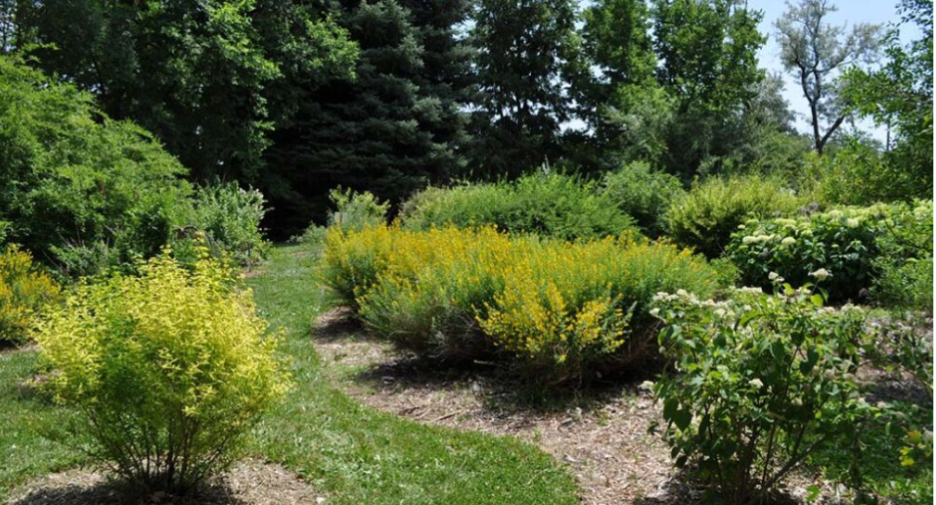
The following list, while not comprehensive, provides information on the more commonly available deciduous shrubs for elevations below 6,000 feet. For a listing of shrubs adapted to higher elevations, refer to fact sheet Trees and Shrubs for Mountain Areas. Drought-tolerant shrubs are listed in Xeriscaping: Trees and Shrubs. Native shrubs suitable for landscapes are listed in Native Shrubs for Colorado Landscapes.
Table 1. Most commonly available shrubs for elevations below 6,000 feet.
| Plant Name | Soil Moisturea | Exposureb | Flower Colorc and Month | Fruitd | Fall Colore | Comments |
|---|---|---|---|---|---|---|
| SMALL SHRUBS (less than 4 feet high when mature) | ||||||
| Berberis thunbergii atropurpurea | ||||||
| Purpleleaf Japanese barberry | ||||||
| ‘Crimson Pygmy’ | L-M | S-PSh | NI | R | R-Pu | Reddish-purple foliage. |
| Golden NuggetTM | L-M | S-PSh | NI | R | O | Golden foliage. |
| Caryopteris spp. | L-M | S-PSh | Bl-P/7-9 | Tan | NI | Cut back in late winter. |
| Blue mist spirea | ||||||
| Cornus sericea ‘Kelseyi’ | H | S-PSh | NI | NI | R-Pu | Mounded; red stems. |
| Kelsey dogwood | ||||||
| Cotoneaster apiculatus | M | S-PSh | P/5 | R | R | Mounded habit. |
| Cranberry cotoneaster | ||||||
| Cotoneaster horizontalis | M | S-PSh | P/5 | R | R-Pu | Good tall groundcover; distinctive branching pattern. |
| Rock cotoneaster | ||||||
| Hydrangea arborescens | ||||||
| Smooth Hydrangea | ||||||
| ‘Annabelle’ | M-H | Sh-PSh | W/7-9 | NI | NI | Large, showy flowers. |
| Incrediball® | M-H | Sh-PSh | W/7-9 | NI | NI | Very large flowers. |
| Invincibelle® Spirit | M-H | Sh-PSh | P/7-9 | NI | NI | Very large flowers. |
| Hypericum kalmianum | L-M | S-PSh | Y/7-9 | NI | O-Pu | Blue-green foliage; hardier. |
| Hypericum (St. John’s- wort) | ||||||
| ‘Hidcote’ | M | S-PSh | Y/7-9 | NI | NI | Cut back to ground in fall. |
| Ligustrum vulgare ‘Lodense’ | L-M | S-Sh | W/6-7 | B | NI | Dark green foliage held late. |
| Privet, ‘Lodense’ | ||||||
| Lonicera spp. | ||||||
| Honeysuckle | ||||||
| ‘Emerald Mound’ | M | S-Sh | W/5-6 | R | NI | Mounded habit. |
| ‘Wolfii’ | M | S-Sh | P/5-6 | – | NI | Fragrant, trumpet-like flowers. |
| ‘Clavey’s Dwarf’ | M | S-Sh | W/5-6 | R | NI | Good hedge. |
| Potentilla fruticosa | L-M | S-PSh | Y-W/6-9 | NI | NI | Compact, rounded. |
| Potentilla (shrubby cinquefoil) | ||||||
| ‘Abbotswood’ | W | Spreading. | ||||
| ‘Coronation Triumph’ | Bright Y | Upright. | ||||
| ‘Gold Drop’ | Golden Y | Compact. | ||||
| ‘Jackmannii’ | Deep Y | Upright. | ||||
| ‘Katherine Dykes’ | Light Y | Spreading. | ||||
| Prunus besseyi | ||||||
| Pawnee Buttes® | L | S | W/4-5 | B | R-Pu | Low groundcover. |
| Creeping Western sandcherry | Plant Select® 2000. | |||||
| Ribes alpinum | L-M | S-Sh | NI | NI | Y | Good for hedge. |
| Alpine currant | ||||||
| Rhus aromatica ‘Gro-low’ | L-M | S-PSh | Y/3-4 | R | R-Pu | Vigorous, widespreading. |
| Gro-low sumac | ||||||
| Ribes trilobata | ||||||
| ‘Autumn Amber’ | ||||||
| Autumn Amber Threeleaf sumac | L | S | Y/3-4 | R | O-Y | Low groundcover. |
| Spiraea x bumalda | ||||||
| Bumald spirea | M-H | S-PSh | P-Pu/6-8 | NI | Br-Pu | Spreading, flat-topped. |
| ‘Anthony Waterer’ | R-rose | |||||
| ‘Froebelii’ | P | Slightly taller. | ||||
| ‘Goldflame’ | P | R-O | Yellow-green foliage. | |||
| Spiraea japonica ‘Little Princess’ | M | S-PSh | P/6-7 | NI | Br | Delicate, mounded. |
| Little Princess spirea | ||||||
| ‘Alpina’ | M | S-PSh | P/6-7 | NI | Br | Low groundcover. |
| Symphoricarpos x chenaultii | M | S-PSh | NI | R-P | NI | Blue-green leaves; persistent fruit; lower growth. |
| Hancock coralberry | ||||||
| MEDIUM SHRUBS (4-6 feet high when mature) | ||||||
| Aronia melanocarpa | M-H | S-PSh | W/5-6 | B | O-R | Glossy green foliage. |
| Black chokeberry | ||||||
| Berberis thunbergii | L-M | S-PSh | NI | R | O-R | Spiny; hedges or barrier. |
| Berberis thunbergii atropurpurea | P-R | Reddish-purple foliage. | ||||
| Purpleleaf Japanese barberry | ||||||
| ‘Rose Glow’ | Pink blotches on leaves. | |||||
| Berberis x ‘Tara’ | L-M | S-PSh | Y/5-6 | R | O-R | Arching-rounded growth habit. Heavily spined. |
| Emerald CarouselTM barberry | ||||||
| Buddleia davidii | M | S-PSh | L/6-7 | NI | NI | Cut back in late winter. Many varieties. |
| Butterfly bush | ||||||
| Chaenomeles speciosa | M | S-PSh | R/P/W/4 | Y | NI | Spiny stems; large fruit only occasionally. |
| Flowering quince | ||||||
| Cornus sericea ‘Isanti’ | M-H | S-PSh | W/5-6 | W | R-Pu | Red twigs; compact habit. |
| Isanti dogwood | ||||||
| Euonymus alatus | ||||||
| ‘Compacta’ | M | S-Sh | NI | P/O | R | Slightly winged twigs. |
| Compact burning bush | ||||||
| Ligustrum x vicaryi | M | S | W/6-7 | NI | NI | May show winter dieback. |
| Golden vicary privet | ||||||
| Perovskia atriplicifolia | L | S | L-Pu/7-9 | NI | NI | Very small, fine leaves; cut back to 6” in late winter. |
| Russian sage | ||||||
| Philadelphus coronarius ‘Aureus’ | M-H | S | W/5-6 | NI | NI | Yellow foliage all season. |
| Golden mockorange | ||||||
| Prunus x cistena | M | S-PSh | P/5-6 | B-Pu | Pu | Purple foliage all season. |
| Cistena plum (purpleleaf sand cherry) | ||||||
| Prunus glandulosa | M | S | P/4-5 | NI | NI | Flowers precede leaves. |
| Dwarf flowering almond | ||||||
| ‘Alba’ | W | Single flowers. | ||||
| ‘Rosea Plena’ | P | Double flowers. | ||||
| Rhus trilobata | L | S-PSh | Y/4 | R | Y-O-R | Native; pungent foliage. |
| Threeleaf sumac (skunkbush) | ||||||
| Ribes aureum | L-M | S-PSh | Y/4-5 | B | R-Pu | Native; fragrant flowers. |
| Golden currant | ||||||
| Ribes odoratum | L-M | S-PSh | Y/4-5 | B | Y-R | Clove scented flowers. |
| Clove currant | ||||||
| Salix purpurea nana | M-H | S-PSh | NI | NI | NI | Fine texture; needs winter moisture. |
| Dwarf arctic willow | ||||||
| Spiraea x vanhouttei | L-M | S-PSh | W/5-6 | NI | Br | Graceful, arching habit. |
| Vanhoutte spirea | ||||||
| ‘Renaissance’ | L-M | S-PSh | W/5-6 | NI | Br | Very similar. |
| Symphoricarpos albus | L-M | S-PSh | P-W/6-7 | W | NI | Very adaptable. |
| Snowberry | ||||||
| Syringa meyeri ‘Palibin’ | L-M | S-PSh | L-P/5-6 | NI | NI | Rounded, dense habit. |
| Lilac, dwarf Korean | ||||||
| Syringa patula ‘Miss Kim’ | L-M | S | Bl-L/5-6 | NI | R-Pu | Rounded, dense habit. |
| Miss Kim lilac | ||||||
| Viburnum opulus ‘Compactum’ | M-H | S-PSh | W/5-6 | R | NI | Showy, persistent fruit. |
| Compact European cranberrybush viburnum | ||||||
| Viburnum trilobum ‘Compactum’ | M-H | S-PSh | NI | NI | R | Dense, rounded. |
| Compact American cranberrybush viburnum | ||||||
| Weigela florida | M | S-PSh | P/5-6 | NI | NI | Trumpet-shaped flowers. |
| Weigela | ||||||
| ‘Red Prince’ | M | S-PSh | R/6 | NI | NI | |
| Wine and Roses® | M | S-PSh | P/6 | NI | NI | Purple foliage. |
| LARGE SHRUBS (greater than 6 feet tall when mature) | ||||||
| Amelanchier spp. | M | S-PSh | W/4-5 | R-Pu | YOR | Shrub or small tree. |
| Serviceberry (Juneberry) | ||||||
| Caragana arborescens | L | S | Y/5 | NI | Y | Very adaptable. |
| Siberian peashrub | ||||||
| Cornus sericea | M-H | S-PSh | W/5-6 | W-Bl | R-Pu | Red stems in winter. |
| Redtwig dogwood | ||||||
| ‘Baileyi’ | W-Bl | Red stems in winter. | ||||
| ‘Flaviramea’ (yellowtwig dogwood) | W-Bl | Yellow stems in winter. | ||||
| Cotinus coggygria | M | S-PSh | P-W/7 | NI | Pu-O | Flowers like “pink smoke.” |
| Smoketree | ||||||
| ‘Royal Purple’ | Purple leaves; less hardy. | |||||
| ‘Nordine’ | Purple leaves; hardier. | |||||
| Cotoneaster lucidus | L-M | S-PSh | P/5 | B | R-O | Screening or hedge use. Can re-seed. |
| Hedge cotoneaster | ||||||
| Euonymus alatus | M | S-Sh | NI | P/R/O | R | Winged stems; pink fruit. |
| Burning bush (winged euonymus) | ||||||
| Euonymus europaeus | M | S-Sh | NI | R-Pu/O | R-Pu | Shrub or small tree. |
| Spindletree (European euonymus) | ||||||
| Forsythia spp. | M | S | Y/3-4 | NI | Y-Pu | |
| Forsythia | ||||||
| ‘Meadowlark’ | Hardy flower buds. | |||||
| ‘Northern Gold’ | Smaller; flower buds hardy. | |||||
| ‘Northern Sun’ | Flower buds hardy. | |||||
| Hibiscus syriacus | M | S-PSh | V/7-8 | NI | NI | Showy, late flowers. |
| Rose-of-Sharon (shrub althea) | ||||||
| Hydrangea paniculata ‘Grandiflora’ | M-H | S-PSh | W/7-8 | NI | NI | Large flower clusters. |
| PeeGee hydrangea | ||||||
| ‘Limelight’ | M-H | PSh-Sh | G-P/7-8 | NI | NI | Upright – rounded. |
| Kolkwitzia amabilis | L-M | S-PSh | P/5-6 | NI | Br | Shredding bark; coarse texture. |
| Beautybush | ||||||
| Ligustrum vulgare ‘Cheyenne’ | M | S-PSh | W/6-7 | B | NI | If sheared, no flowers or fruit. Holds leaves late. |
| Cheyenne privet | ||||||
| Lonicera korolkowii | L-M | S | P/5 | R | NI | Resistant to aphids. |
| Blueleaf honeysuckle | ||||||
| Lonicera tatarica | L-M | S-PSh | R/5 | R | NI | Some resistance to aphids. |
| Tatarian Honeysuckle | ||||||
| ‘Arnold Red’ | ||||||
| Philadelphus x virginalis | M-H | S-PSh | W/5-6 | NI | NI | Fragrant flowers; coarse texture. |
| Mockorange | ||||||
| Philadelphus lewisii | L-M | S-PSh | W/5-6 | NI | NI | Fragrant flowers; coarse texture. Plant Select® 2001. |
| Cheyenne® | ||||||
| Cheyenne Mockorange | ||||||
| Physocarpus opulifolius | M | S | W/5-6 | NI | Y-O | Shreddy bark; adaptable. |
| Common ninebark | ||||||
| ‘Dart’s Golden’ | Yellowish-green foliage. | |||||
| ‘Luteus’ | Golden yellow foliage. | |||||
| Diabolo® | L-M | S | W/5-6 | NI | Br | Red-purple foliage. |
| Prunus tomentosa | L-M | S-PSh | P-W/4 | R | Y | Edible fruit attracts birds. |
| Nanking (Manchu) cherry | ||||||
| Prunus triloba | M | S-PSh | P/4 | NI | NI | Double pink flowers. |
| Double flowering plum | ||||||
| Prunus virginiana | M | S-PSh | W/5 | R-Pu | Y | Suckering, attracts birds. |
| Common chokecherry | ||||||
| ‘Schubert’ (Canada red cherry) | Green leaves turn maroon. | |||||
| Rhamnus frangula ‘Columnaris’ | M | S-PSh | NI | R-B | Y | Thornless; vertical habit. |
| Columnar buckthorn (Tallhedge) | ||||||
| ‘Asplenifolia’ | M | S-PSh | NI | R-B | Y | Long, narrow leaves. |
| Fernleaf buckhorn | ||||||
| Rhus glabra | L-M | S-PSh | G-Y/5-6 | R | R-O | Suckers; best in poor soil. |
| Smooth sumac | ||||||
| Rhus typhina | L-M | S-PSh | G-Y/5-6 | R | R-O | Larger; suckers; best in poor soil. |
| Staghorn sumac | ||||||
| ‘Laciniata’ | Deeply cut leaves. | |||||
| Tiger Eyes® | L-M | S-PSh | G-Y/5-6 | R | R-O | Bright yellow leaves. |
| Salix discolor | H | S | Gray/3-4 | NI | NI | Early catkins (flowers), very susceptible to canker. |
| Pussywillow | ||||||
| Sambucus canadensis ‘Aurea’ | M-H | S | W/6-7 | R-B | NI | Golden leaves; edible fruit. |
| Golden elder | ||||||
| Sambucus nigra | ||||||
| Black LaceTM | M-H | S | W/6-7 | R-B | NI | Lacy, dark purple foliage. |
| Sorbaria sorbifolia | M | S-PSh | W/6-7 | NI | NI | Lush foliage; suckering. |
| Ash-leaf spirea (Ural false-spirea) | ||||||
| Syringa x chinensis | M | S | Pu/5 | NI | Y | Small leaves, loose flowers. |
| Chinese lilac | ||||||
| Syringa x prestoniae | M | S | Bl-L-P-Pu/5-6 | NI | Y | Blooms later. |
| Canada lilac | ||||||
| ‘James McFarlane’ | P | Upright growth habit. | ||||
| ‘Miss Canada’ | P | NI | Y | Slightly smaller. | ||
| Syringa vulgaris | M | S | V/5 | NI | NI | Prone to powdery mildew. Many varieties. |
| Common lilac (includes “French hybrids”) | ||||||
| ‘Charles Joly’ | R-Pu | Double flowers. | ||||
| ‘President Grevy’ | Lt Bl | Double flowers. | ||||
| Viburnum x burkwoodii | M | S-PSh | P-W/4-5 | R-B | NI | Leathery leaves persist. |
| Burkwood viburnum | ||||||
| Viburnum lantana | L-M | S-PSh | W/4-5 | R-B | Pu-Br | Leathery leaves persist. |
| Wayfaring tree viburnum | ||||||
| ‘Mohican’ | More compact form. | |||||
| Viburnum lentago | M | S-PSh | W/4-5 | Bl | ROPu | Can be used as a small tree. |
| Nannyberry viburnum | ||||||
| Viburnum opulus | M-H | S-PSh | W/5-6 | R | R-Pu | Fruit persists; aphid prone. |
| European cranberrybush viburnum | ||||||
| ‘Roseum’ (Snowball) | NI | Showier flowers; aphid prone; no fruit. | ||||
| Viburnum x rhytidophylloides ‘Alleghany’ | M | S-PSh | W/5-6 | R-B | Pu-Br | Leathery leaves persist. Plant Select® 1997. |
| Alleghany viburnum | ||||||
| Viburnum trilobum | M-H | S-PSh | W/5-6 | R | R-Pu | Showy, persistent fruit; less aphid prone. |
| American cranberrybush viburnum | ||||||
| ‘Wentworth’ | M-H | S-PSh | W/5-6 | R | R-Pu | Showy, persistent fruit, less aphid prone. |
| Soil moisture: L=Low M=Medium H=High | ||||||
| Exposure: S=Sun PSh=Partial shade Sh=Shade | ||||||
| Flower color: Bl=Blue G=Green L=Lavender P=Pink Pu=Purple R=Red W=White Y=Yellow V=varies with cultivar NI=Not Important Months numbered 1 – 12 | ||||||
| Fruit: B=Black Bl=Blue O=Orange P=Pink Pu=Purple R=Red W=White Y=Yellow NI=Not Important | ||||||
| Fall color: Br=Bronze O=Orange Pu=Purple R=Red Y=Yellow NI=Not Important | ||||||